
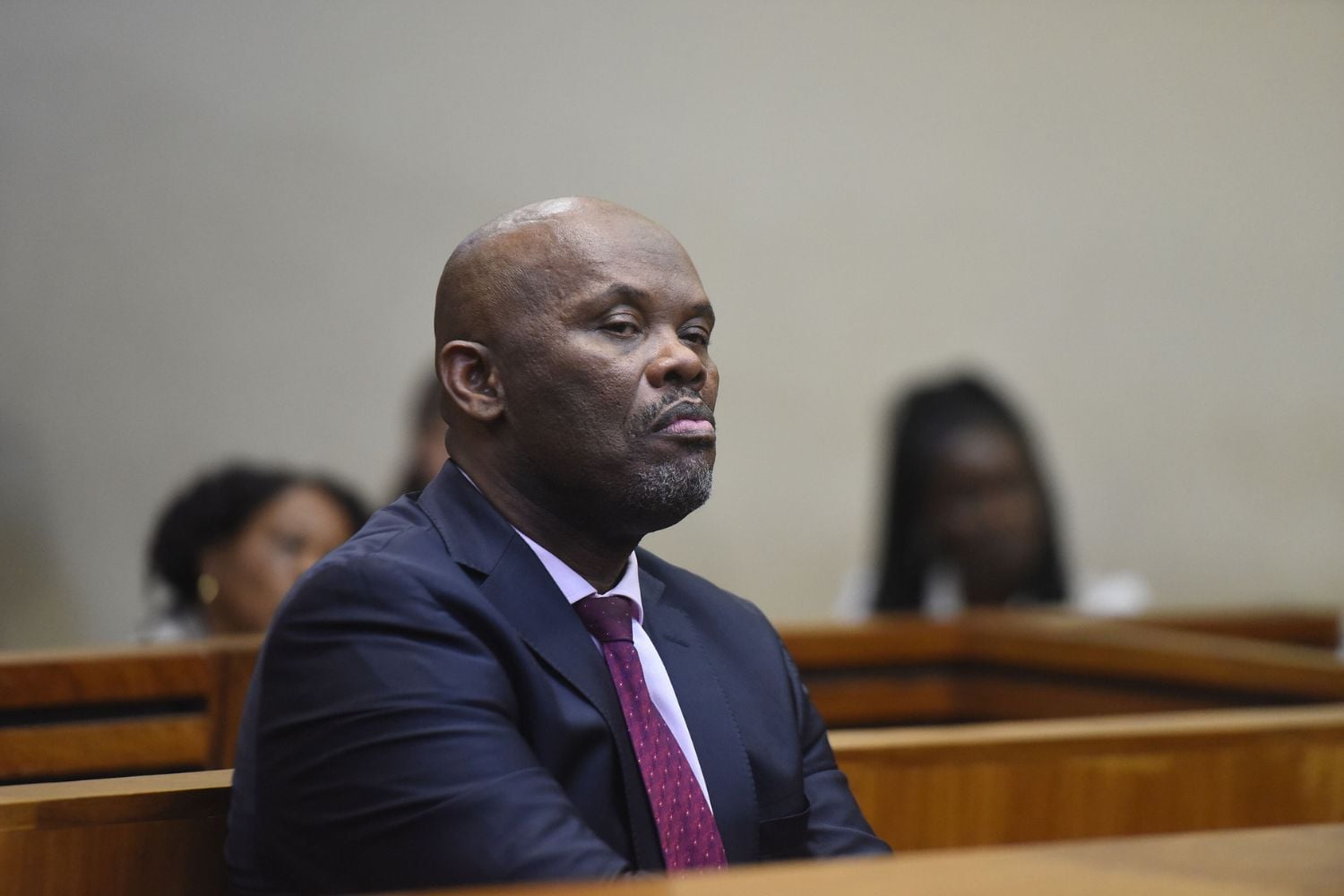
The prosecutor argued that the defence's approach had brought the matter close to a trial. Warning: This article contains details that some readers may find upsetting. The state has argued that Shadrack Sibiya’s attempt to portray the case against him as weak could undermine his bid for bail, pointing to several admissions made by the former deputy national police commissioner. Prosecutor Velile Makasana delivered the state’s closing arguments in the bail proceedings before the Randburg Magistrate’s Court on Thursday, 15 October 2026. Sibiya is facing charges of sexual grooming, human trafficking, rape, and contravention of the Firearms Control Act following his arrest at The Grand strip club in Sandton on 21 September. He is accused of sexually grooming the 16-year-old daughter of his alleged former bodyguard and driver, only identified as Mr M, and raping an 18-year-old. While the former senior police official has denied the allegations, the alleged victims have urged the court to keep him behind bars as his release would leave them fearing for their lives. State opposes Shadrack Sibiya bail in rape, sexual grooming case Makasana told the court on Thursday that the defence had focused on challenging the strength of the state’s case instead of satisfying the legal requirements for bail in a Schedule 6 case. The Criminal Procedure Act (CPA), specifically Section 60(11)(a), requires an accused charged with a Schedule 6 offence to prove that exceptional circumstances warrant their release on bail. The prosecutor relied on a 2009 Supreme Court of Appeal (SCA) judgment, referred to as ‘Mathebula vs S‘, which dealt with the standard required when an accused challenges the merits of the prosecution’s case during bail proceedings. Makasana pointed out that the ruling established that an accused who seeks to rely on the perceived weakness of the state’s case must go further and demonstrate, on “a balance of probabilities”, that an acquittal is likely. He argued that an attack on the prosecution’s case was not necessary to discharge the onus, which rested on Sibiya as the applicant “It is clear that, as part of the strategy of the defence in this case, they employed tactics of attacking the state’s case with a view to trying to show that there are exceptional circumstances proven by the applicant to warrant that he must be released on bail. “Your Worship, looking at these particular authorities that I’ve referred to, this tactic cannot succeed. “They haven’t come even close to showing that the state case is weak,” the prosecutor told Magistrate Hleziphi Mkhasibe. Prosecutor highlights admissions The state’s opposition to the bail application further centred partly on what Makasana described as admissions made by Sibiya during the proceedings. “I can safely say, with the admissions to place before court, the trial is halfway through. It’s not in dispute that he had sexual intercourse with an 18-year-old. “It’s not in dispute that he received the pornographic material [of the 16-year-old]. It’s not in dispute that he distributed that [material], knowing very well that that was unlawful,” Makasana argued. The prosecutor continued: “To employ the tactic of trying to show that the state case is weak is actually working against them because now the authorities are saying they must actually prove, on a balance of probabilities, that they will be acquitted during the trial.” Mkhasibe sought clarity on the status of the investigation, asking how far the state had progressed with its preparations. Makasana indicated that the probe was at “an advanced stage”, with all witness statements having been obtained. “There are just a few issues that the state and the investigating officers will need to tie up, but they are well in advance,” the prosecutor responded. State cautions against treating bail hearing as a trial Despite the alleged admissions, Makasana acknowledged that Sibiya remained presumed innocent until proven guilty. He, however, criticised the length of the proceedings, highlighting that the purpose of a bail hearing differs from that of a criminal trial, where the court must ultimately determine whether the accused is guilty of the charges. “This bail lasted far longer than it was expected due to the fact that the defence employed a strategy of dealing with it as if it was dealing with a trial. “I’m highlighting the fact that that was not necessary. The rules of bail are quite clear. The legislation is quite clear,” Makasana added. The court is set to deliver judgment next Tuesday, 20 October.
Shadrack Sibiya’s own admissions could haunt his bail bid, state argues
Full Article
Original Source
Read the full article at Citizen →KhanList aggregates and links to publicly available news content. We do not host full articles from third-party sources. Always verify important information with original sources.