
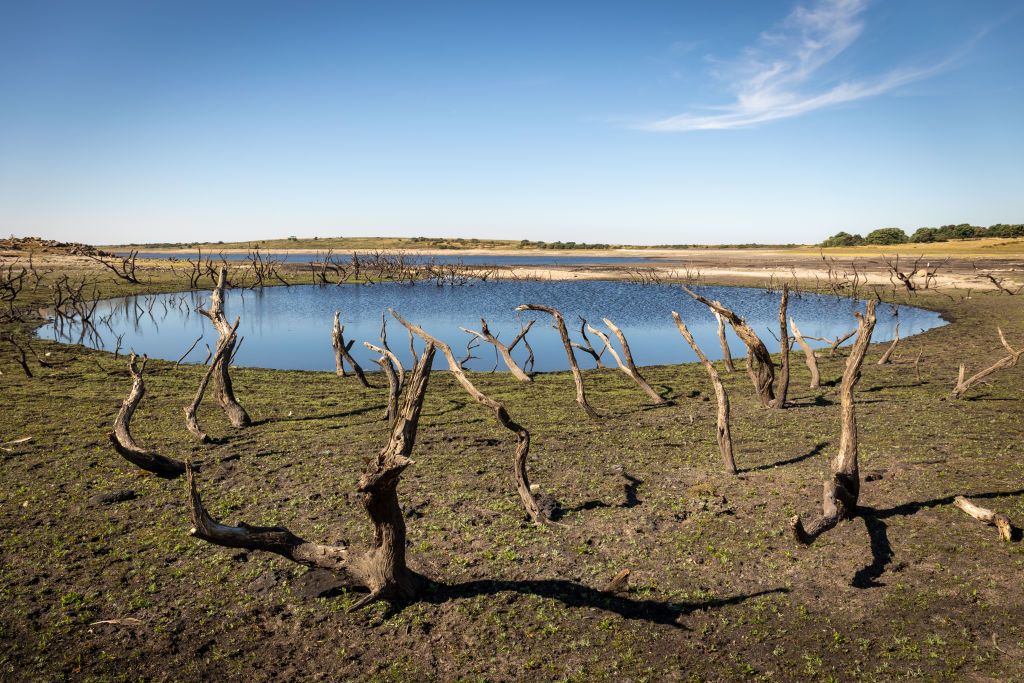
A severe drought has been declared for parts of England for the first time since 1995, pushing the government to step up emergency planning as reservoir levels sink far below seasonal norms. Areas of Cornwall, Devon, Dorset, Somerset, East Sussex and West Sussex were moved into the highest drought category on Thursday, according to the government. The Environment Agency has also been told to prioritize public supplies where necessary over environmental protections, allowing companies to conserve more water in reservoirs. The severe drought declaration marks a sharp escalation in England’s water crisis after the hottest summer on record and months of exceptionally low rainfall. The extreme temperatures, which fueled wildfires and damaged crops, exposed a water system already struggling with leaks and outages as demand surged. Read more: Londoners Find ‘Horrendous’ Cracks in Their Homes After Successive Heat Waves While household supplies remain uninterrupted, hosepipe bans are in place and ministers have ordered daily monitoring of reservoirs and rivers, plus increased checks on water withdrawals. Ardingly reservoir in West Sussex is just 19% full, while Wimbleball in Somerset at 16%, compared with around 75% expected at this time of year. The last severe drought in England impacted Yorkshire in 1995. Devon hasn’t experienced such conditions since 1976. Photograph: Old tree skeletons are exposed due to extremely low water levels at Colliford Lake near Bodmin in Cornwall, UK; photo credit: Matt Cardy/Getty Images Copyright 2026 Bloomberg. Was this article valuable? Thank you! Please tell us what we can do to improve this article. Thank you! % of people found this article valuable. Please tell us what you liked about it. Here are more articles you may enjoy.
Severe Drought Hits Parts of England for First Time Since 1995
Full Article
Original Source
Read the full article at Insurancejournal →KhanList aggregates and links to publicly available news content. We do not host full articles from third-party sources. Always verify important information with original sources.