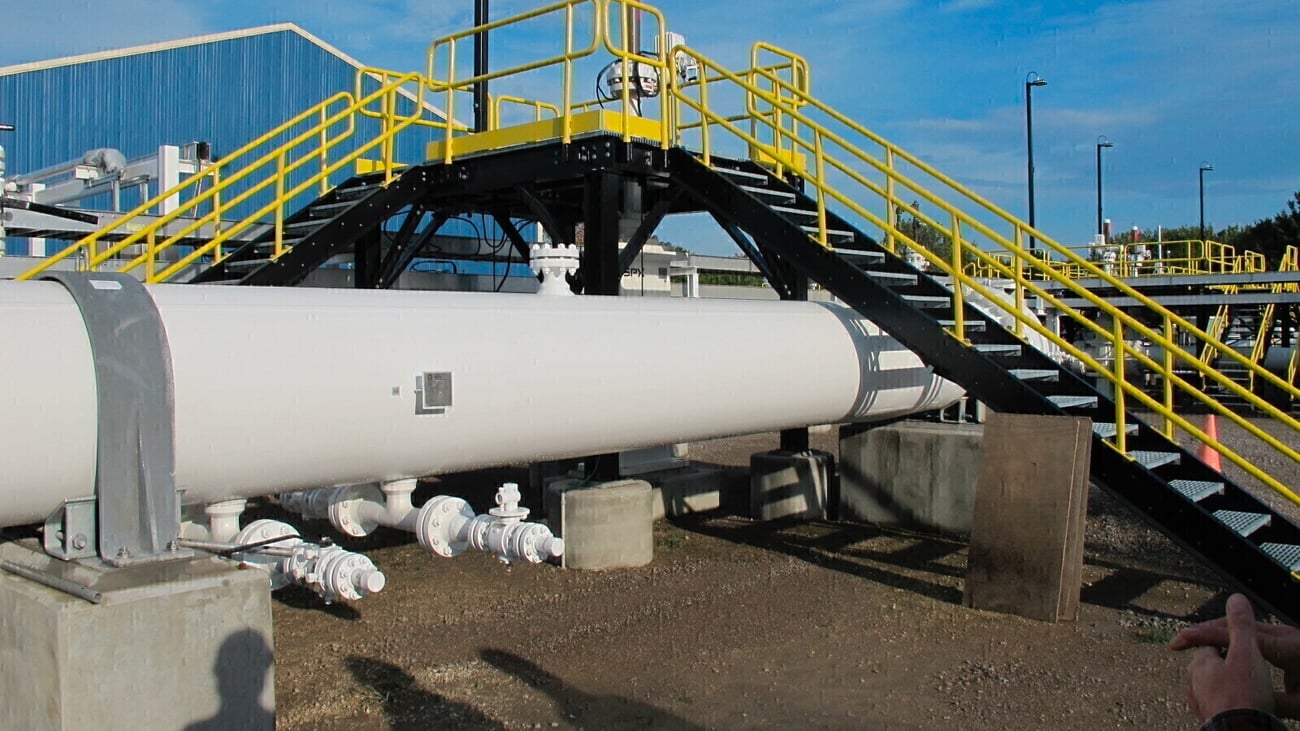
Enbridge’s Line 5 carries oil and natural gas liquids between the United States and Canada, cutting through 12 miles of the Bad River Reservation.(CN) — A Seventh Circuit panel ruled Thursday that Enbridge Energy’s trespassing across the Bad River Reservation cannot continue unchecked but stopped short of shutting the pipeline down entirely.“Make no mistake: Enbridge must remove the pipeline from the allotted parcels. The grace period we direct the district court to afford Enbridge is the product of the broader public context in which the pipeline operates, and it does not reflect our approval of the company’s behavior,” U.S. Circuit Judge Michael Scudder wrote in the 52-page opinion.Enbridge’s Line 5 oil and gas pipeline begins on the Lake Superior shore of northwestern Wisconsin, runs across the state, through both of Michigan’s peninsulas and beneath the Straits of Mackinac before ending in Ontario, Canada.The 645-mile pipeline also cuts through 12 miles of tribal land owned by the Bad River Band of the Lake Superior Tribe of Chippwea Indians, which has sought its removal.In June 2023, U.S. District Judge William Conley, a Barack Obama appointee, gave Enbridge three years to reroute Line 5 around the reservation and ordered the company to pay more than $5 million in damages for trespassing.Both parties appealed to the Seventh Circuit, forcing Conley to stay part of his prior order requiring Enbridge shut the line down completely if it missed the three-year deadline.The complex case pits two treaties against each other: The 1854 Treaty which created the Bad River Reservation, and the Transit Treaty between the U.S. and Canada which prohibits either nation from intentionally impeding or redirecting the transmission of hydrocarbons along pipelines such as Line 5.Ruling on the appeal Thursday, the Seventh Circuit panel agreed Line 5 must be rerouted as soon as possible to protect the interests of the Band.However, the panel found the portion of Conley’s order to halt operations of Line 5 entirely if the rerouting was not complete within three years to be unreasonable. He called the deadline overly aggressive and an abuse of discretion.The potential international fallout from a Line 5 shutdown cannot be underestimated, Scudder wrote for the panel. With the ever changing landscape and needs of the Band as the river erodes the soil around the pipeline, increasing risk of rupture, Conley should retool the remedy.“We urge the district court to adopt measures that build oversight and accountability into the injunctive relief, whether reporting requirements or monetary sanctions, to ensure that the company completes this reroute as soon as possible,” Scudder, a Donald Trump appointee, wrote.As for restitution, Conley assessed the award based on a measure of Enbridge’s total profits from Line 5’s route through the reservation and a confusing secondary factor that relied on the benefit Enbridge realized from putting its capital toward anything but rerouting the line.This resulted in a double-count of profits and economic benefit, the panel found, and ordered Conley to choose one factor or the other.The United States and Canada filed amicus briefs opposing Conley’s shutdown order but backing the plan to reroute the pipeline..U.S. Circuit Judges Frank Easterbrook, a Ronald Reagan appointee, and Amy St. Eve, a George W. Bush appointee, joined Scudder on the panel.During oral arguments, the judges accused the Band of not taking any steps to address its environmental concerns over the Bad river, where the soil covering the pipeline is eroding. But the Band said it should not be responsible for alleviating the problem Enbridge’s pipeline created and that to shore up barriers at the river meander would only extend the company’s trespass.The erosion creates risk of rupture, which is the foundation for the Band’s federal common law nuisance claim.Conley had ordered Enbridge to adopt an aggressive monitoring and response plan to curb the risk of rupture, but the panel reversed based on an analysis of the Pipeline Safety Act. The act tasks a specialized agency with monitoring and responding to the exact kind of risk at the core of the Band’s public nuisance claim, so there is no gap for the common law to fill.“An agency, acting with greater agility, scientific knowledge and technical expertise, is better positioned than a federal court to manage the regulatory tradeoffs needed to maintain environmental safety and to protect the national interest in energy,” Scudder wrote. “We see no role for the equitable power of the courts to improve on Congress’ chosen pipeline safety monitor.”The parties did not respond to requests for comment by press time.Subscribe to our free newslettersOur weekly newsletter Closing Arguments offers the latest about ongoing trials, major litigation and rulings in courthouses around the U.S. and the world, while the monthly Under the Lights dishes the legal dirt from Hollywood, sports, Big Tech and the arts.Additional Reads
Seventh Circuit won’t shut down gas pipeline trespassing on tribal lands
Full Article
Original Source
Read the full article at Courthousenews →KhanList aggregates and links to publicly available news content. We do not host full articles from third-party sources. Always verify important information with original sources.