
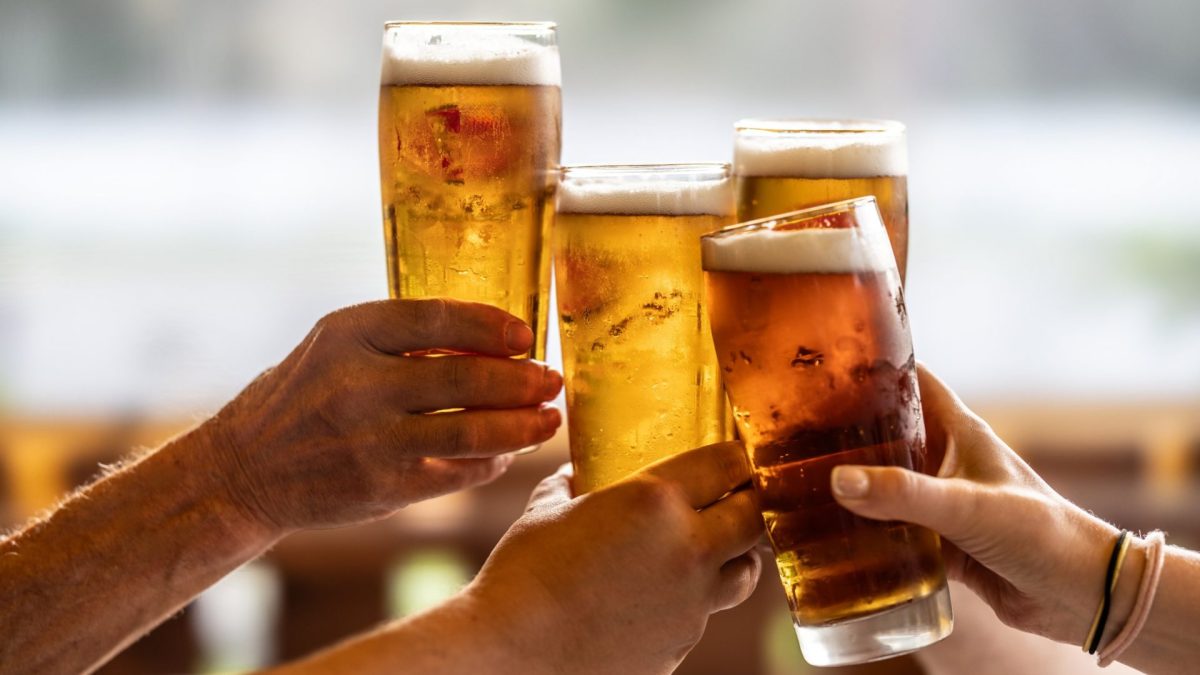
For many, summer is synonymous with booze. Whether sipped during balmy evenings socialising, at weddings, on holiday or trying to survive heatwave stress, even the most sensible of drinkers might have found themselves surpassing the 14 units a week limit this season. The figure was introduced in 2016 after a major review of the evidence on alcohol and health found drinking within the guidelines would constitute a one per cent lifetime risk of dying from alcohol across the population. In other words, drink less than 14 units a week, and the research suggests you’re at low risk of alcohol harm. Of course, that doesn’t mean no risk – any alcohol is bad for our health – and there’s no definitive tipping point at which drinking becomes exponentially harmful. Shorts However, according to health surveys, one in five (21 per cent) of people in England drink more than the recommended units – and we all know how honest most people are about their alcohol intake. Men are twice as likely to go over the 14-unit guideline as women. “It’s very easy to go above the limits,” says Dr Naveed Asif, a GP at The London General Practice in Harley Street. “Often my patients are surprised when we tot up how many glasses of wine they go through.” He recommends sticking to one pint, one glass of wine or a couple of shots every alternative day. If your 14 units a week – roughly six glasses of wine, six pints of beer or 10 G&Ts – slipped down a little too easily of late, you might, as the temperature finally cools, be left wondering – what’s the damage? Here’s what happens when we exceed the recommended limit – and what the experts think. The more you drink, the greater your risk of cancer The link between booze and breast cancer is “well established” says Dr Asif. Alcohol metabolises into a compound that damages cell DNA, as well as promoting inflammation and raising oestrogen levels in the blood which can encourage breast cancer cells to multiply. A 2024 meta-analysis found less than one 10g drink a day (a UK unit contains 8g alcohol) or seven units a week increases the risk of breast cancer by 10 per cent. Statistically, the risk is still small. According to Cancer Research UK around eight per cent of breast cancer cases – or 4,400 a year – are caused by alcohol. Dr Asif doesn’t insist on abstinence – “breast cancer is the most common cancer in women, so that’s basically saying to all women, ‘don’t drink,’” – so much as awareness: “Alcohol, if you’re drinking it regularly, will put your risk up.” Booze is bad for gut health “Short term, it causes leaky gut. The next day you’ll often have a change in stool, you’ll feel bloated,” says Dr Asif, who adds that alcohol disrupts healthy gut bacteria and our ability to absorb and retain vitamins. Even one large glass of wine is enough to produce inflammatory markers in a blood test a few days later, he says, and with prolonged drinking inflammation, can lead to cell damage and increased bowel cancer risk. Alcohol has been strongly linked to bowel cancer. According to a study in the journal Nature Communications, someone on 18 units a week, or around two drinks a day, would raise risk by around 15 per cent. Fortunately, a major 2023 study found reducing intake by around 10 units – so getting back within the 14-unit limit- lowered risk by 14 per cent. Drinking less is good for blood pressure Alcohol increases blood pressure and “there’s a risk of atrial fibrillation (when the upper chambers of the heart beat irregularly),” says Dr Asif. “You feel it as a rapid heartbeat.” There isn’t the same weight of evidence linking moderate drinking to heart problems as there is to cancer – but go beyond 12 units a week and the reported risks are higher. According to data from a 2024 meta-analysis in the journal Hypertension, someone drinking 18 units a week – around six large glasses of wine – has an eight to nine per cent higher chance of developing high blood pressure than someone on 10.5 units a week. Bingeing impacts sleep and mood “Alcohol crosses the blood-brain barrier effectively. So within the hour you’ve got impairment of judgement, co-ordination,” says Dr Asif. Add in disrupted sleep, and unsurprisingly, mental health is affected. The charity Alcohol Change found risk of anxiety rose to 32 per cent among women drinking 15 to 34 units per week and men drinking 15 to 49 units – levels classed as “hazardous” by government guidelines, and which mean upwards of seven glasses of wine a week. “The mental health risks are a good example of immediate risks,” says Dr Peter Rice, an addiction psychiatrist and chair of The Institute of Alcohol Studies. “Alcohol is present in a lot of self-harm and suicide, whereas something like cancer will be a risk that may manifest decades later.” Men are more susceptible, he adds, whereas “risks of long-term disease are higher for women and that’s partly because their alcohol level in the bloodstream is a bit higher.” Regular excessive drinking raises dementia risk Drink to excess regularly and “you’ve got cumulative brain damage,” says Dr Asif. “You can get micro-strokes in the brain over time. Your reaction starts to slow.” In 2024 a major systematic review found risks started at around 15 units a week – an amount a fifth of UK adult drinkers consume – above which dementia risk was 23.5 per cent higher than non-drinkers. Most studies are still observational and Dr Rice suggests this as an “emerging field” but “to reduce risk, limiting alcohol intake would be a sensible thing to do.” Dr Asif suggests reducing consumption “as soon as you begin to feel yourself slowing down” – even if you’re not exceeding 14 units. “When you’re in your 20s you can drink alcohol and be fine the next day, but in your 30s or 40s, you’ll realise even one drink, you feel the effects.” Overdoing it ages and flushes the skin Wake up with more obvious wrinkles after a night out and it’s likely because your skin’s dehydrated, “but over time, with prolonged alcohol use – it doesn’t need to be misuse – you get dilation of blood vessels,” says Dr Asif. “You see people with rosacea (a skin condition causing redness and flushing) due to inflammation or dilation of blood vessels.” Inflammatory conditions such as eczema are exacerbated, he adds, and when first assessing patients for liver damage, “skin is one of the biggest indicators… You start to get spots, blemishes, discolouration.” A study in the Journal of the American Academy of Dermatology following 82,737 women for 14 years found those who drank 13 to 25 units per week had a 37 per cent higher chance of rosacea. Drink less, and you’’ll quickly feel the benefits Any reduction is worthwhile, says Dr Rice, who stresses that with cancers such as breast and bowel the risk is linear, “so if you could move from 20 to 15 units, that’s well worth doing. It’s also likely to bring your blood pressure down a bit.” And if you do cut down or cut out alcohol completely, you’ll quickly reap the benefits, adds Dr Asif. “In the vast majority of fit and well patients, usually within a few days your liver will recover.” High blood pressure and poor skin might take months to rectify, but within one to two weeks, he says, “you’ll notice you’re having better quality sleep, more energy.”
Seven things that happen if you drink more than 14 units of alcohol a week
Full Article
Original Source
Read the full article at Inews →KhanList aggregates and links to publicly available news content. We do not host full articles from third-party sources. Always verify important information with original sources.