
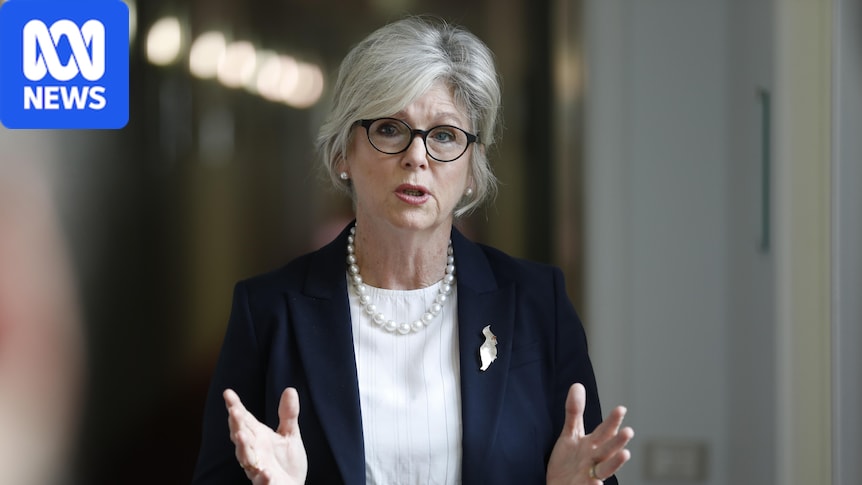
Seven out of 10 Australian politicians believe their mental health has been damaged by their experiences in public office, a landmark new survey indicates.Social media abuse, physical threats, fears for their families and poor behaviour from peers have driven some MPs to thoughts of suicide and self-harm, caused them to stay quiet on some issues, and in some cases to leave the job entirely.Yet the vast majority — 85 per cent of respondents — continue to take pride in their work and say they would still encourage others to stand for public office.The survey — Fit To Lead, conducted in Australia by the Berlin-based Better Politics Foundation, and released today — canvassed 288 elected representatives from federal, state and local government.Kimberly McArthur, the Australian-born co-CEO of Better Politics, said the study was "to our knowledge, the largest ever conducted on the experiences, wellbeing and safety of being a politician across Australia's levels of government.""I am sorry to say 71 per cent of state and federal parliamentarians and 61 per cent of councillors say the job has adversely impacted their mental health or wellbeing," she said.The survey Fit To Lead canvassed 288 elected representatives from federal, state and local government. (ABC News)'Toxic behaviour, absolute slog'Among those reporting poor mental health, social media was by far the most widely cited contributing factor, with 97 per cent of those affected saying online negativity and abuse caused them harm, and 65 per cent classifying that harm as "significant".And around one in five of those whose mental health was affected said they had entertained thoughts of self-harm or suicide.Of the 21 federal MPs who answered the survey's optional questions about self-harm, seven confirmed that they had experienced such thoughts in extreme moments of work-related stress."The number of answers to this question was relatively small," the report stated. "Nonetheless, it is a truly worrying sign. If true across all the country's political leaders, self-harm ideation could be higher than in other high-stress jobs."Across all federal and state MPs surveyed, other significant stress factors beyond social media included travel and time away from family (59 per cent), internal party conflict (49 per cent) and fears for physical safety (44 per cent).Several respondents had elected to leave public office entirely."The idea that our children might ever be subjected to discrimination, ridicule or bullying as a result of my job fills me with dread and informs my decision to retire," said one unnamed state MP.David Meacheam, a local councillor who was elected to the Central Highlands Council in Tasmania in 2022, did not recontest last month when his term expired.In comments to the Fit To Lead study authorised for release, he recalled that on joining the council he signed "an excellent, multi-page undertaking to behave civilly, to focus on the welfare of our community"."Yet the toxic behaviour of some elected colleagues dominates my life," he said. "It makes what should be a constructive pursuit of worthy local goals an absolute slog."The attack on Helen Haines is a shocking recent example of the treatment politicians can experience. (ABC News: Annie Brown )Independent MP Helen Haines, who sustained life-changing injuries when struck by a vehicle outside her electorate office last month, participated in the Better Politics study as one of its public champions."We don't want to make politics comfortable, but we do want it to be safe," she told researchers. "You shouldn't have to wear a flak jacket, emotionally or physically, to do the job."The survey collected responses from roughly equal numbers of men and women; the results indicated life in public office clearly differed according to gender."I am frequently threatened with physical or sexual violence by people that disagree with my views and my male colleagues do not have this experience," said one anonymous female federal MP.Eighty per cent of female respondents across state and federal parliaments say their workplace is worse than any other they have experienced. Among men, 59 per cent held that opinion.No 'pity party' but change overdueAcross the board, however, elected representatives want better access to support. Nearly 50 per cent said they would benefit from mentoring programmes and life coaching to deal with the stressors of public life, but only 11 per cent said they already had access to these services.Andrew Wallace, the LNP Member for Fisher, said the perception in politics around asking for help needed to change."We need a political culture where seeking support is seen as strength, not weakness, and robust debate never becomes personal intimidation or abuse."Notwithstanding the report's grim findings, McArthur said it should be read as "a call, not a lament"."Most of the leaders I spoke with are hopeful," she said. "Despite the difficulties, abuse and safety fears, 85 per cent of respondents said they would still encourage someone to run for office. None of the leaders I spoke with wants a pity party."She said public life could be made more survivable if all participants paid attention to the consequences of their actions."If you run a parliament or a party, the culture is yours to change. If you fund civic life, you now know this is a clear need. If you work in the media, are an influencer, or have ever sent an abusive message to a politician, you should think about the line between democratic critique and abuse that harms democracy."Alastair Campbell, the British podcaster, author and former Blair government press secretary, campaigns for mental health in public office and will address the report today at the National Press Club.Interviewed by 2GB host Ben Fordham last week, Campbell said the way politicians were habitually discussed in media coverage amounted to a "virtual dehumanisation"."You know, they're all corrupt, they're all in it for themselves, they're all the same," he said. "None of those things are true."
Seven in 10 MPs say politics has damaged their mental health
Full Article
Original Source
Read the full article at Abc →KhanList aggregates and links to publicly available news content. We do not host full articles from third-party sources. Always verify important information with original sources.