
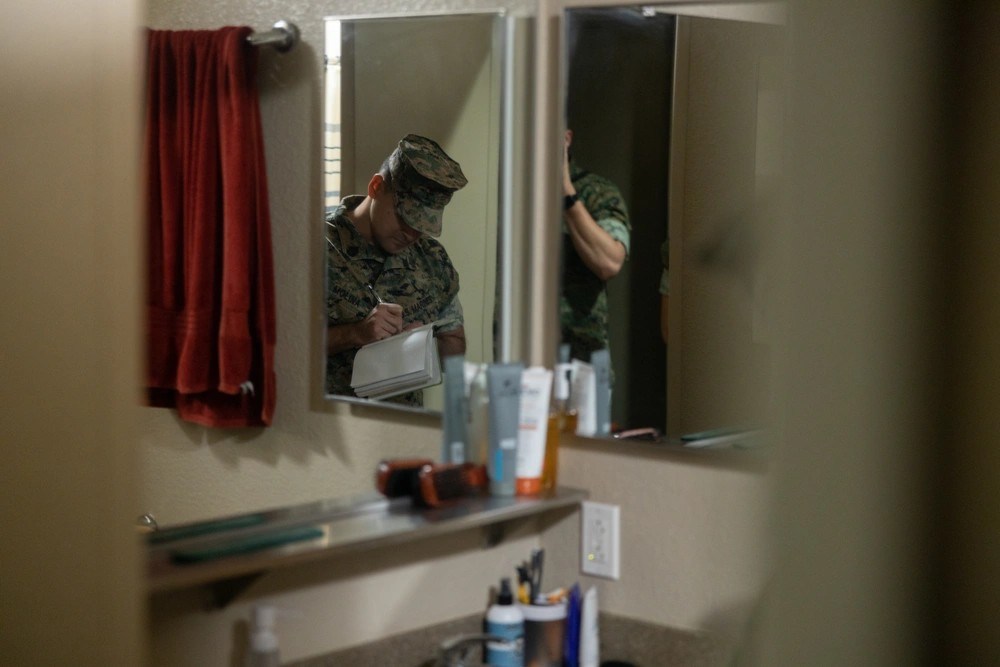
Within five days of a new Pentagon directive, all military services must confirm their compliance by attempting to resolve emergent living conditions within 24 hours or relocate the affected service member. Departments are required to inspect all service members’ rooms and report to the Barracks Task Force the number of service members currently affected by “emergency” conditions, relocations completed and rooms vacated, according to a Nov. 10 memo signed by Secretary of Defense Pete Hegseth. By Friday, all services are also required to report to the task force any actions taken to fix the conditions, along with projected timelines for restoring the rooms to “habitable occupancy,” and any policy or resource barriers that need Pentagon resolution. “Unit integrity, room availability, manpower shortages, maintenance delays, lack of funding or conflicting Military Department policies do not justify continued occupancy of unacceptable housing,” the memo reads. Barracks Task Force Senior Advisor Dakota Meyer says military leaders have less than a week to move any service member living in emergency conditions in unaccompanied housing. The Barracks Task Force, led by Medal of Honor recipient and Marine Corps reservist Dakota Meyer, stood up last year in an effort to address the military’s subpar living conditions. As Hegseth’s senior advisor, Meyer is traveling to installations across the country, looking at their barracks, meeting with service members and identifying how to curtail any issues blocking the resolutions. So far, Meyer has been to seven installations and is slated to visit around 30 bases by the end of December, he told reporters Friday at a Defense Writers Group discussion. The installations being visited by Meyer were identified as “main power projection” locations with the largest issues regarding living conditions. During the discussion, Meyer detailed accounts of service members sleeping in their cars for air conditioning, going weeks without hot water, living in insecure rooms without working locks and living in rooms with black mold caused by water leaks. Some service members have told Meyer that if given spackle and paint, they would fix holes in the walls themselves. The Nov. 10 memo refers to an Oct. 6 directive signed by Mark Dale, the assistant secretary of war for energy, installations, and environment, establishing three categories for barracks maintenance requests: emergency, urgent and routine. Emergency includes conditions that pose safety hazards, requiring immediate attention and a response within one hour, action within 24 hours or relocation of the service member until the problem is fixed. Urgent is classified as an item that doesn’t immediately endanger a service member’s health but could result in damage to government property or well-being if a repair is postponed. Routine includes conditions requiring repairs to maintain a “safe, clean, or comfortable standard.” The October guidance calls for work orders in all three categories to be addressed within 15 business days, though emergencies require an initial response within one hour and corrective action or relocation within 24 hours. If needed, service members would be relocated to other on-base housing or hotel accommodations. Hots&Cots, an online forum that posts reviews of barracks and dining facilities, shared a copy of the October memo on social media. Meyer told reporters that during his travels, he’s already had to relocate at least a dozen service members on the spot and even gone so far as to shut down a whole building. He declined to identify the installations where those incidents occurred. “These service members that I’ve been put in a position to be responsible for where they go to bed at night, there is only one acceptable outcome, and that’s to fix it,” he said. “And if I don’t fix it, then that’s a failure.”
Services to report number of troops affected by ‘emergency’ living conditions
Full Article
Original Source
Read the full article at Militarytimes →KhanList aggregates and links to publicly available news content. We do not host full articles from third-party sources. Always verify important information with original sources.