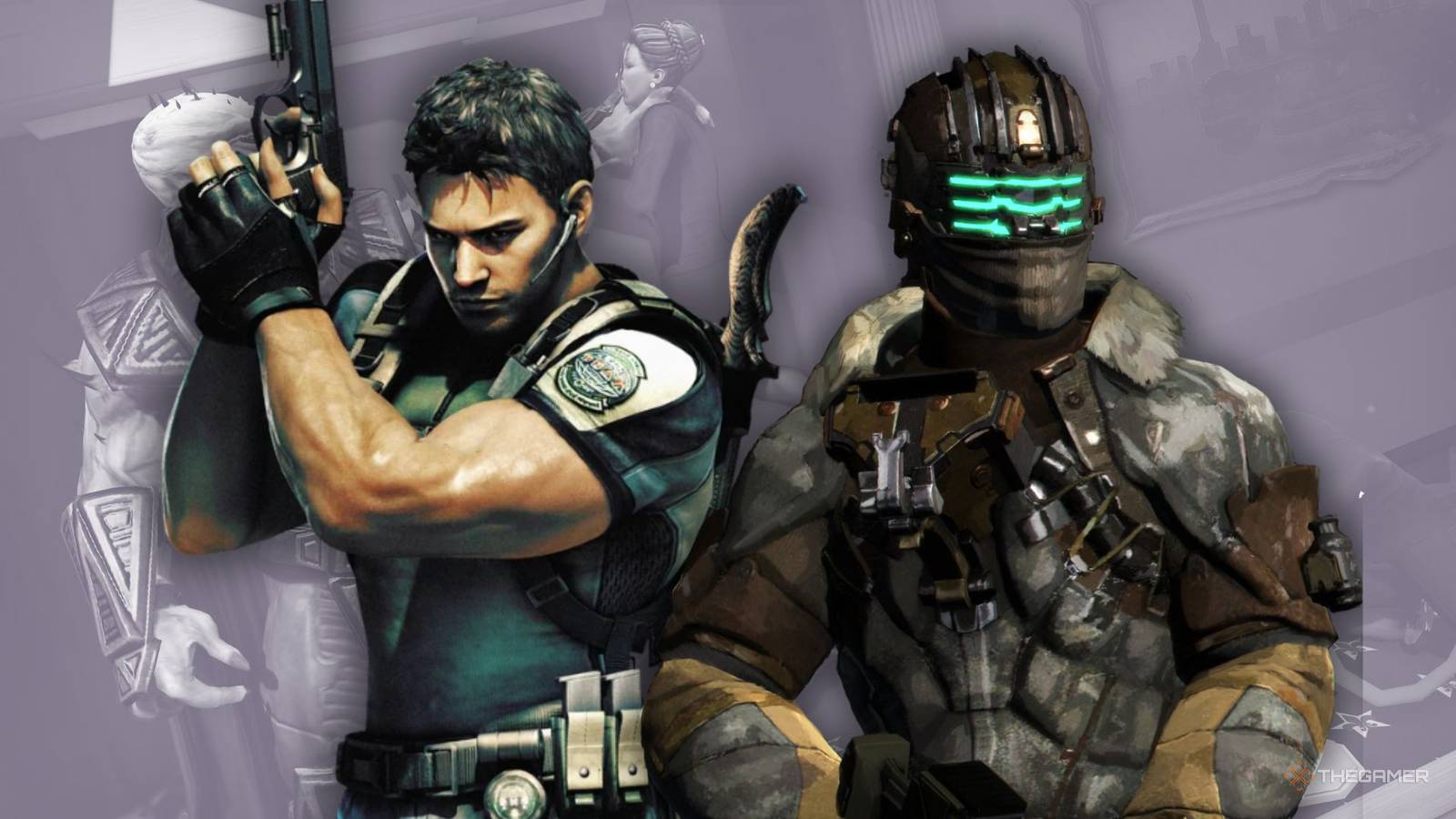
Published Jul 31, 2026, 11:00 PM EDT Ben Jessey is a self-publishing staff writer here at TheGamer who has been writing about video games since 2019. While he has been at TheGamer for a while, he has also written for GameRant, ScreenRant, and WhatCulture in the past. Before all that, he was earning a degree in Film and Television Studies at Leeds Trinity University. RPGs and action-adventure games are what he’s most experienced in, but Ben has great knowledge of most types of games. This is why he has been able to write hundreds of video game guides since 2019, along with numerous gaming lists. For each guide, he conducts extensive playtesting to ensure accuracy and that all relevant information is included. Constantly providing new entries into a video game series can be tricky. You want to continue to evolve a series so it doesn't get stale, but you don't want to lose what made the series great. Unfortunately, many developers have done the latter. They've released sequels that don't quite feel how the previous instalments felt, whether it's due to a change of tone, genre, style, or something else. This doesn't necessarily mean they're bad games. They just don't suit the series they're a part of. Here are some examples. Mario Party 9 Mario Party 1-8 are all fundamentally the same. They have different minigames, boards, and various other distinctive things, but they're traditional virtual board games where each player moves separately. And the main appeal of them is the joy you get from defeating your friends and family, particularly if you've screwed them over on your way to victory. For some reason, the new developers, NDcube, decided to veer from the core formula for Mario Party 9. The main difference is that the game sticks every player in the same car, so everyone technically moves together. You have no control over what path you take or where you land, so there is far less strategy in the game. This lowers competitiveness because everyone relies more on luck, especially since minigames are less frequent and there aren't as many chances to screw each other over. Wolfenstein: Youngblood The reboot series of Wolfenstein, including The New Order and The New Colossus, breathed new life into the old shooter series. The shooting mechanics in both games were good, but the main reason why these titles stood out was the emotional storytelling and impactful, serious cutscenes. In the sequel, Youngblood, much of that is absent. The tone is more lighthearted, and the storytelling is less interesting. In fact, the narrative feels secondary in Youngblood and isn't that important. The gunplay is more of the focus, making it not feel like the previous two titles. Banjo-Kazooie: Nuts And Bolts Banjo-Kazooie was once a beloved 3D platforming series where you used the combined talents of a bear and a bird to collect things around various maps. They were classic collect-a-thon titles. Then came the third main entry, Nuts and Bolts. This instalment still includes the iconic bear and bird duo, plus there is still some platforming. However, unlike the first two games, much of the adventure revolves around constructing and driving vehicles. This is not an evolution that fans of the series craved. It just turns the game into something that’s very different from the previous entries. Dragon Age 2 The original Dragon Age was a classic RPG that took you on an epic adventure. During the said adventure, you visited all sorts of interesting places, as you got to see a lot of the game's world. Part of this is what made the game so special. Sadly, you don't get the same big adventure in Dragon Age 2. This game is a lot smaller, as most of the story takes place in the city of Kirkwall. So, the openness and large scale of the first instalment is gone. On top of that, the combat mechanics and customization are simplified. Saints Row 4 During its existence, the Saints Row series has changed quite a bit. The first game was quite a serious open-world crime game. Saints Row 2 was a bit sillier, and Saints Row: The Third was very goofy. Despite the increased silliness in these games, all three entries were still about a street gang known as The 3rd Street Saints taking on other gangs. Saints Row 4 went away from the traditional formula. No longer are you a normal gang in this game. You're the US President, and you're fighting an invading alien force. You're barely using cars or guns, as you have various superpowers that can help with transportation and combat. All of this makes the game feel like something other than Saints Row. Resident Evil 5 Every Resident Evil game has had some level of action in it. However, the early games were still more focused on horror, as they included plenty of scares and an eerie atmosphere. Over time, the series changed a little bit. For instance, Resident Evil 4 put more emphasis on action, but there was just enough spookiness in it to appease fans of the series. Resident Evil 5, however, goes a bit too far. The game gives you a co-op partner, places you in bright settings, and has zombie-like creatures that wield guns. So, there is a lot of action, but very little horror. As a result, it moves too far away from what the series is supposed to be, even though it's not a bad game in general. Mafia 3 The first two Mafia games kind of had open worlds. They were set in big cities, but there wasn't much in those cities. Therefore, they basically served as a backdrop to your main story adventures. This allowed for some tight, linear storytelling revolving around your character's life in the mob. Mafia 3 actually opts for a true open world sandbox experience. This means that the narrative is a bit more open. Something is lost in the process, though. Missions are less story-focused, and the pacing of the narrative is very different. Plus, since you're not a member of the Mafia, it doesn't feel as much like a classic Mafia movie as the other games. DmC: Devil May Cry While fast-paced action has always been important in the Devil May Cry series, it isn't the only thing that makes these games what they are. Another staple of the series is the silver-haired protagonist, Dante. He's a demon-killing badass, but he's also goofy and very witty, so he adds a lot of personality to the games. The 2013 reboot changes Dante too much. First of all, he doesn't have the long silver hair, but that isn't the main issue. This new Dante is a lot more foul-mouthed and edgy. As a result, he doesn't have the goofy charm of the original. That hurts the appeal of this sequel and makes it feel like less of a Devil May Cry game. Dead Space 3 Walking around dark, atmospheric hallways and being jumped by terrifying monsters is what the first two Dead Space games were all about. You were also always alone, which helped make you feel isolated and enhanced the fear factor. They were pure horror titles. What isn't a pure horror title is Dead Space 3. It is much more action-oriented than previous entries, and certainly less scary. For starters, that isolation is gone because you have a co-op buddy. Plus, areas are brighter and generally less claustrophobic. The game doesn't provide that true Dead Space terror. Pac-Man 2: The New Adventures Everyone knows how a Pac-Man game is meant to work; you must move around a maze, eating dots and avoiding ghosts. However, a few titles have veered from that a little bit over the years. Yet, none are as egregious as Pac-Man 2: The New Adventures. It isn't actually the second Pac-Man game, despite its name, as there had already been a bunch of them. Because of the name, though, you'd be forgiven for thinking it's more of a natural follow-up to the first entry, but it is not that at all. Instead, it's a point-and-click adventure game where you walk around as Pac-Man, doing quests. It is nothing like the original. In Japan, the game was called Hello! Pac-Man, so it isn't a numbered sequel over there.
Sequels That Lost What Made The Original Games Great
Full Article
Original Source
Read the full article at Thegamer →KhanList aggregates and links to publicly available news content. We do not host full articles from third-party sources. Always verify important information with original sources.