
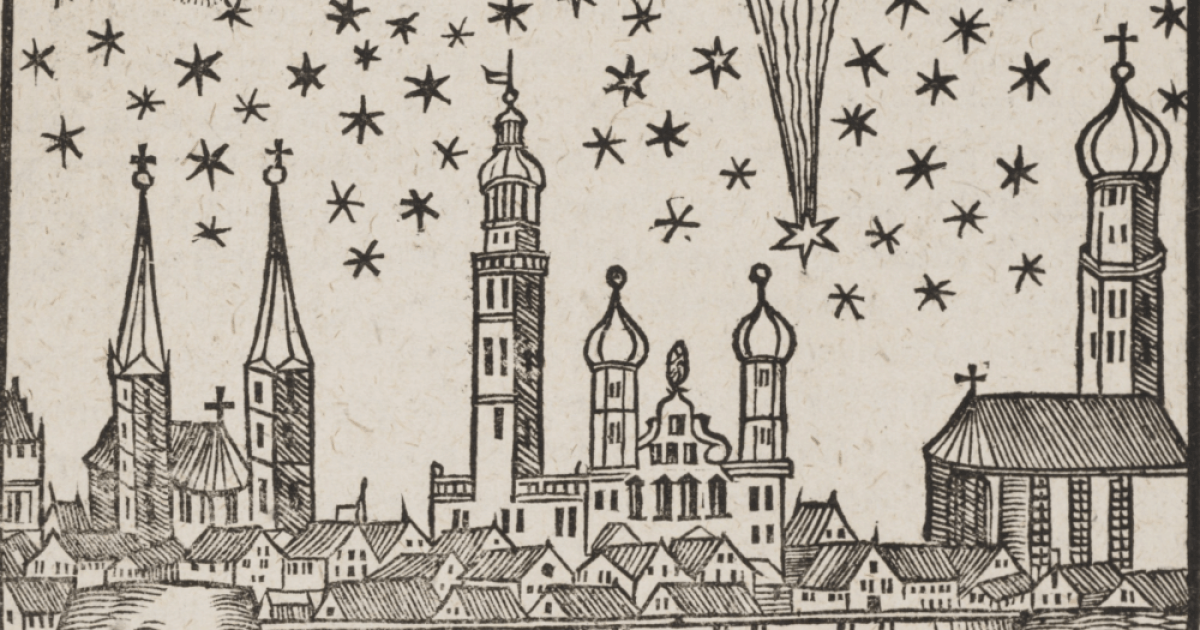
Today in the history of astronomy, Johannes Kepler observes the first in a series of three Great Comets. | Published: September 6, 2026 Viewing of the comets of 1618 was widespread across Asia and Europe, providing for many artistic depictions of the sight -- like this image of a comet over Augsburg, Germany. Credit: Elias Ehinger (1573-1653]/Public domain, via Wikimedia Commons The fall of 1618 was a standout when it came to notable comets, boasting three visible to the naked eye. In late August, C/1618 Q1 appeared, first spotted in the skies over Hungary. Johannes Kepler observed the comet throughout the month of September, spotting it from Linz, Austria, through a small telescope on Sept. 6. It was the first known observation of a comet through a telescope. The second comet (C/1618 V1) was seen in early November, with observations recorded in Indonesia on Nov. 9 and Italy by the 10th. Then, at the end of the month, an even more spectacular comet appeared, seen first in the skies over Asia: C/1618 W1. The brightest of the three celestial visitors, it reached an apparent magnitude of 0–1 by Nov. 29, and sported a long tail. Astronomers across Europe noted their observations of the comet, including Kepler, who spotted it on Nov. 29th and continued to measure its orbit until Jan. 7. As was common at the time, many astrologers and theologians interpreted the series of comets as harbingers of doom or punishment, often connecting them to the impending Thirty Years’ War (1618-1648). Elisa Neckar is senior production editor of Astronomy magazine, and the editor of the Today in the History of Astronomy feature on Astronomy.com.
Sept. 6, 1618: The first comet seen through a telescope
Full Article
Original Source
Read the full article at Astronomy →KhanList aggregates and links to publicly available news content. We do not host full articles from third-party sources. Always verify important information with original sources.