
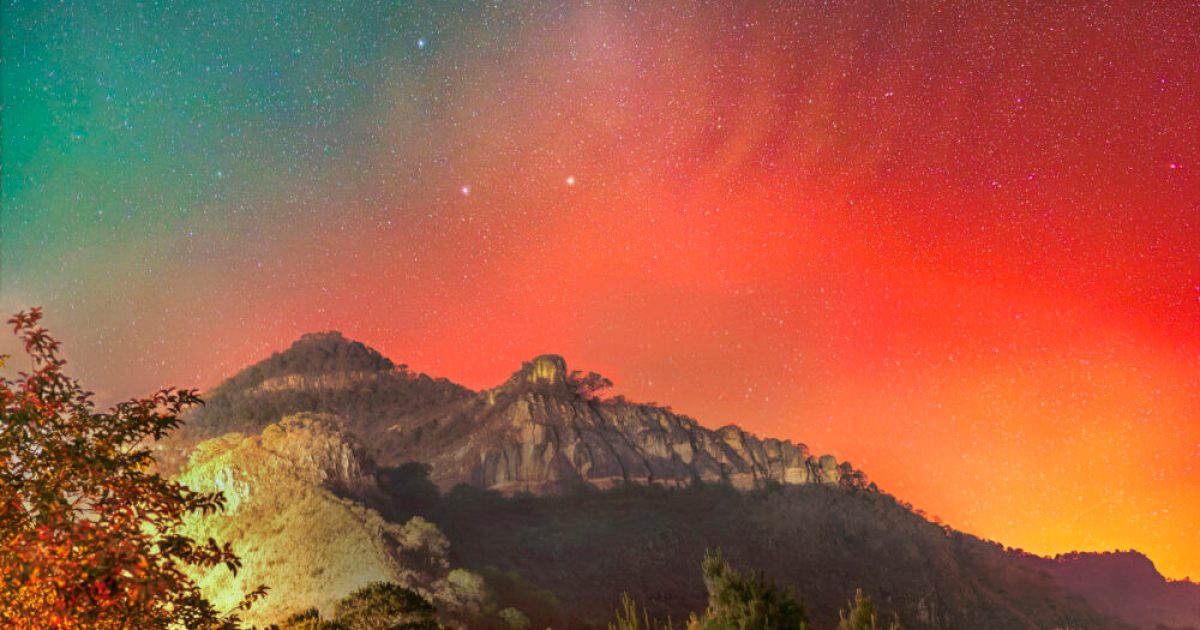
Today in the history of astronomy, the strongest geomagnetic storm in recorded history peaks. | Published: September 2, 2026 Like the Carrington Event, the May 2024 aurorae were strong enough to be seen much farther south than normal -- as in this shot, taken near Mazatlán, Mexico. Credit: René Saade On Sept. 1, 1859, amateur astronomer Richard Carrington observed a massive eruption of bright light from the Sun’s surface. It was the first recorded observation of a solar flare. Within only 17.5 hours, a coronal mass ejection (CME) – an expulsion of plasma and magnetic waves that often accompanies flares and prominences – reached Earth, causing the largest geomagnetic storm in recorded history. On the modern NOAA scale, it would have classified as a G5, the highest possible level, and research into ice core samples has suggested it was at least twice as large as any other storm for 500 years. Aurorae danced in the sky as far south as the Caribbean and Central America, lighting up the night. Telegraph systems worldwide failed, with sparks shooting from the machines and telegraph paper going up in smoke. Today, NOAA’s Space Weather Prediction Center can issue warnings and system improvements have been made since the strong 1989 and 2003 geomagnetic storms; infrastructure proved relatively resilient during the recent May 2024 storm. But a Carrington-level event could still have catastrophic consequences on modern GPS, satellites, global communications, and power grids. Elisa Neckar is senior production editor of Astronomy magazine, and the editor of the Today in the History of Astronomy feature on Astronomy.com.
Sept. 2, 1859: The Carrington Event peaks
Full Article
Original Source
Read the full article at Astronomy →KhanList aggregates and links to publicly available news content. We do not host full articles from third-party sources. Always verify important information with original sources.