
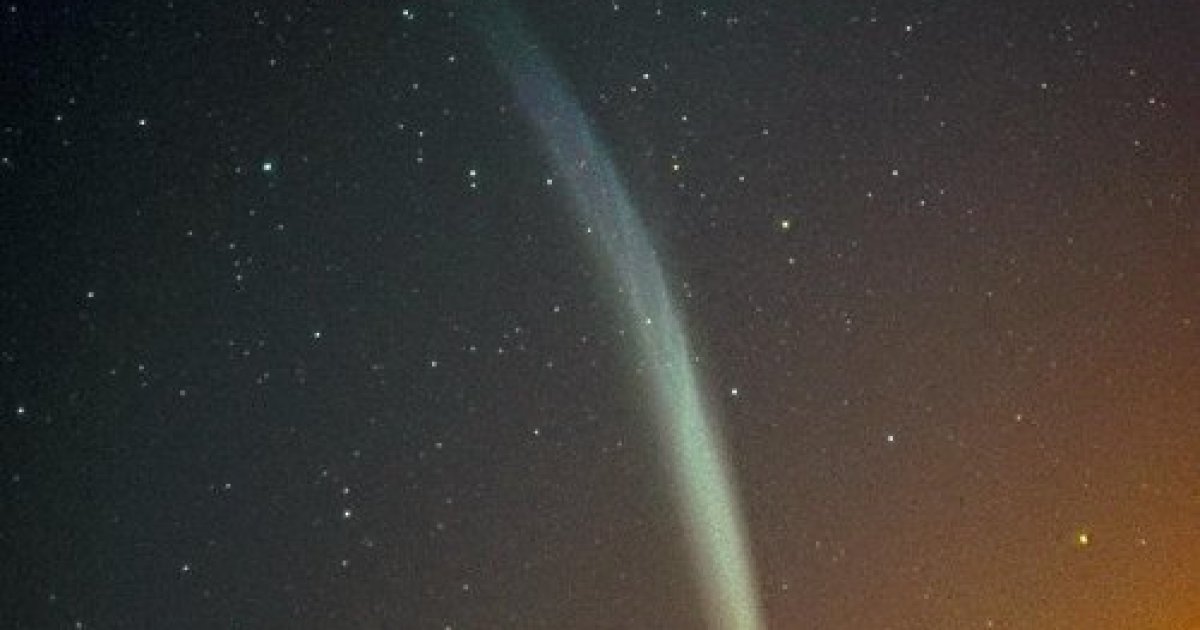
Today in the history of astronomy, two astronomers spot a Great Comet. | Published: September 18, 2026 On Sept. 18, 1965, Kaoru Ikeya and Tsutomu Seki each discovered what would become Comet Ikeya-Seki. Their sightings came within only about 15 minutes of each other. Credit: Roger Lynds/NOAO/AURA/NSF On Sept. 18, 1965, amateur astronomer Kaoru Ikeya and professional astronomer Tsutomu Seki each independently discovered what became the greatest comet of the century, Ikeya-Seki. When researchers calculated its orbit, they found it was a sungrazer — a comet that passes extremely close to the Sun. Small sungrazers usually evaporate or are torn apart by tidal forces. Large ones, however, can not only survive, but might also become extremely bright. Observers hoped Ikeya-Seki would fall into the latter category. They didn’t have long to wait. The comet reached perihelion (its closest point to the Sun) Oct. 21, when it was just 290,000 miles (467,000 kilometers) above our daytime star’s surface. At its brightest, the comet reached an astounding magnitude –10, meaning that it shone about 10 percent as bright as the Full Moon, or 110 times brighter than Venus ever gets. Elisa Neckar is senior production editor of Astronomy magazine, and the editor of the Today in the History of Astronomy feature on Astronomy.com.
Sept. 18, 1965: Discovery of Comet Ikeya-Seki
Full Article
Original Source
Read the full article at Astronomy →KhanList aggregates and links to publicly available news content. We do not host full articles from third-party sources. Always verify important information with original sources.