
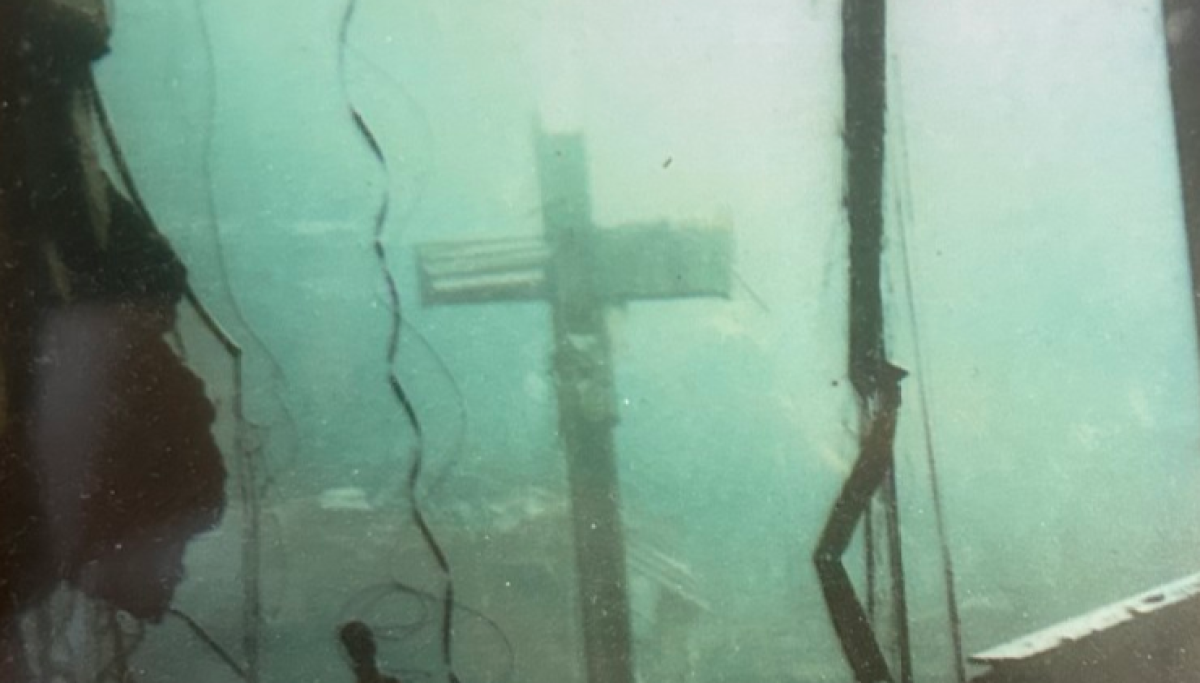
I first met my father-in-law on the morning of my wife’s sister’s wedding. I arrived at the church alone, my wife being off on bridesmaid duty. I hovered on the periphery of the parking lot while a sea of Italian Long Islanders shot their cuffs and kissed each other on the cheek.Ken, 6-foot-3 and tanned with a thick head of white hair, spotted me and waded through the crowd. I’d been rehearsing the moment for weeks: meeting the father of the girl I wanted to marry. His face opened, and he held out his big right hand. I did my best to shake it like a man with nothing to prove.The next morning, the whole family went to the beach. I stood shirtless a few feet off in the sand, twisting to rub sunscreen into my back. Suddenly, I felt a big hand between my shoulder blades, and Ken took the bottle out of my hand. “I got you, Peter,” he said in his bass voice. They were at once the tenderest and most intimidating four words I’d ever heard. They said, “You’re welcome here, but I can crush you like a grape.”Later that year, over the holidays, the family — Ken, his wife Virginia, eight kids, their significant others, and a couple of sets of aunts and uncles — was having drinks after dinner, everyone talking at once. Unable to find a clean opening to get him alone to ask for his blessing, I blurted out, “Hey Ken, want to play darts?”We went down to the basement and started a game. To break the awkwardness, I asked him about a picture hanging on the wall of a steel cross. Before long, he was telling me about Sept. 11.A Latin lesson on Long Island I spent most of the conversation looking for a way out — no segue on earth gets you from the rubble of the Twin Towers to asking a man for his daughter’s hand. And the question couldn’t wait.But I retained a few of the most harrowing details, and over the years I asked him about it here and there. With the 25th anniversary approaching, I sat down with him to hear it from the start to the finish.Ken’s wife, Virginia, was nine months pregnant with her sixth child, on the morning of the attacks. A homeschool mom, she had all five kids at home on Long Island. Ken called home when he heard a plane hit a building, maybe the Empire State Building. Virginia turned on the news and watched the second plane disappear into the World Trade Center. She called Ken back; he’d already been called into the firehouse in Queens. She turned off the TV and kept calm for the kids, continuing their Latin lesson.The only vehicles on the Long Island Expressway that morning were firefighters and cops, all flying in at about 100mph. He reached the firehouse around 10:30 a.m.The bus to Ground Zero Ken and about 50 other firemen went to Shea Stadium, where they caught a bus into the city. They were silent the whole 40-minute ride — “normally you can’t hear yourself talk when there’s that many firemen in one place,” Ken told me. As they came upon the Brooklyn Bridge, thousands of people in torn clothes were pouring across on both sides, their faces covered in dust. A huge cloud of smoke hung over the city ahead of them.Ken’s crew arrived at the World Trade Center at 2 p.m. Both towers had already fallen. He was immediately sent with a search crew to look for survivors. They entered a small breakfast place where the tables still held plates of eggs and full cups of coffee, but no people.“There was like an inch of soot,” he told me. “Everyone disappeared, but the food was still there. It was pretty creepy.”They roamed the buildings nearby, putting out fires, looking for survivors. Then, 7 World Trade Center fell. Ken saw the windows in all of its 47 stories break at once — and then the whole building came down. It didn’t go sideways. It just crumbled into itself, followed by a plume of smoke.The dust cloud came at them at a reported 100 mph, hitting Ken’s crew six blocks away in roughly 10 seconds. They turned their backs in their gear; the force nearly knocked them over. People ran toward them, screaming, black smoke right behind. Storefront windows blew out in the heat. The picture given to Ken by a fellow fireman, courtesy of Peter Laffin Twenty minutes had gone by when Ken could see nothing at all. They spent the rest of the day helping people get to safety and searching for more survivors. At 2 a.m., he was sent back to the firehouse.“One of the guys was a bus driver, and there was an abandoned bus. So we just took it,” he said. “We used it for a few days, and then an announcement came over the firehouse PA that we had to take it back.”Five-gallon spackle buckets For the next two weeks, Ken split 24-hour shifts between Ground Zero and the firehouse. He saw Virginia only twice in ten days between the attack and when she went into labor.Ken’s shifts at Ground Zero were spent putting out fires and searching hotels, stores, and offices. And then there was the digging. Hand-digging. They used five-gallon spackle buckets for debris. Operators hooked beams and lifted them so crews could look underneath. The fire stayed hot for weeks.Ken found crushed helmets, bunker gear jackets with nobody in them — the gear was fireproof, so it survived when the man didn’t. He found one body pinned under a beam, crushed from the neck up, visible only from the shoulders down.In the heat, the smell of bodies, even a week later, meant you were getting close to one. Any time a body was found — firefighter or civilian, even just a limb — an announcement went out over the speakers. Everything stopped. Trucks stopped. Backhoes stopped. There was total silence for five minutes while a special crew brought a stretcher and put an American flag over it.All the while, there were false alarms from sensors rigged to damaged buildings nearby that were tilting. The alarms would go off, and hundreds of people would run, but nothing came down.At one point, a guy at the firehouse gave him a photo of a piece of steel from one of the buildings that fell in the shape of a cross, debris and brick around it, and smoke behind. Years later, Ken hung it in his basement.New life The chief knew Virginia’s due date was coming, so Ken was taken off “the pile” and put on firehouse duty. He was working at a car accident on Grand Central Parkway when his beeper went off.He borrowed a cellphone. Virginia was in labor. A cop drove him back to the firehouse in Queens, then he drove back home to Long Island. A neighbor drove Virginia to the hospital. This was Virginia’s sixth birth, and the others had all happened quickly, so she wasn’t shy about telling the neighbor to move it.Ken made it in time for the birth. The baby was born. Ken held her with the same hands he’d been using to dig through the rubble days before.Ken went to over 100 funerals in the following year. Maybe 150. He took buses to the Bronx, to Brooklyn, to St. Patrick’s. If you weren’t working, you went to a funeral. Speakers were set up outside the churches because the crowds didn’t fit.Like most first responders, Ken suffered some health problems. He has pleural plaquing — calcified asbestos on the lungs. He gets a chest X-ray once a year, and it hasn’t worsened or caused cancer. Most other first responders haven’t been so fortunate. Ken’s own brothers, one a cop and the other in EMS, have suffered six types of cancers between them. And many others suffered severe mental illness from what they witnessed.It happened to us Ken is eager to point out that he didn’t do anything heroic on Sept. 11. Nothing thousands of other New Yorkers didn’t do.WHAT DOES AL QAEDA WANT?A quarter century on, Sept. 11 is passing out of memory and into history, and history has a way of flattening things — into a date, into an abstraction, into “some people did something,” as a congresswoman flippantly put it a few years ago.It didn’t happen to “some people.” It happened to a fireman from Queens who couldn’t see his hand in front of his face for 20 minutes. It happened to the firemen whose gear outlived them. It happened to us.
Sept. 11 and the work of my father-in-law’s hands
Full Article
Original Source
Read the full article at Washingtonexaminer →KhanList aggregates and links to publicly available news content. We do not host full articles from third-party sources. Always verify important information with original sources.