
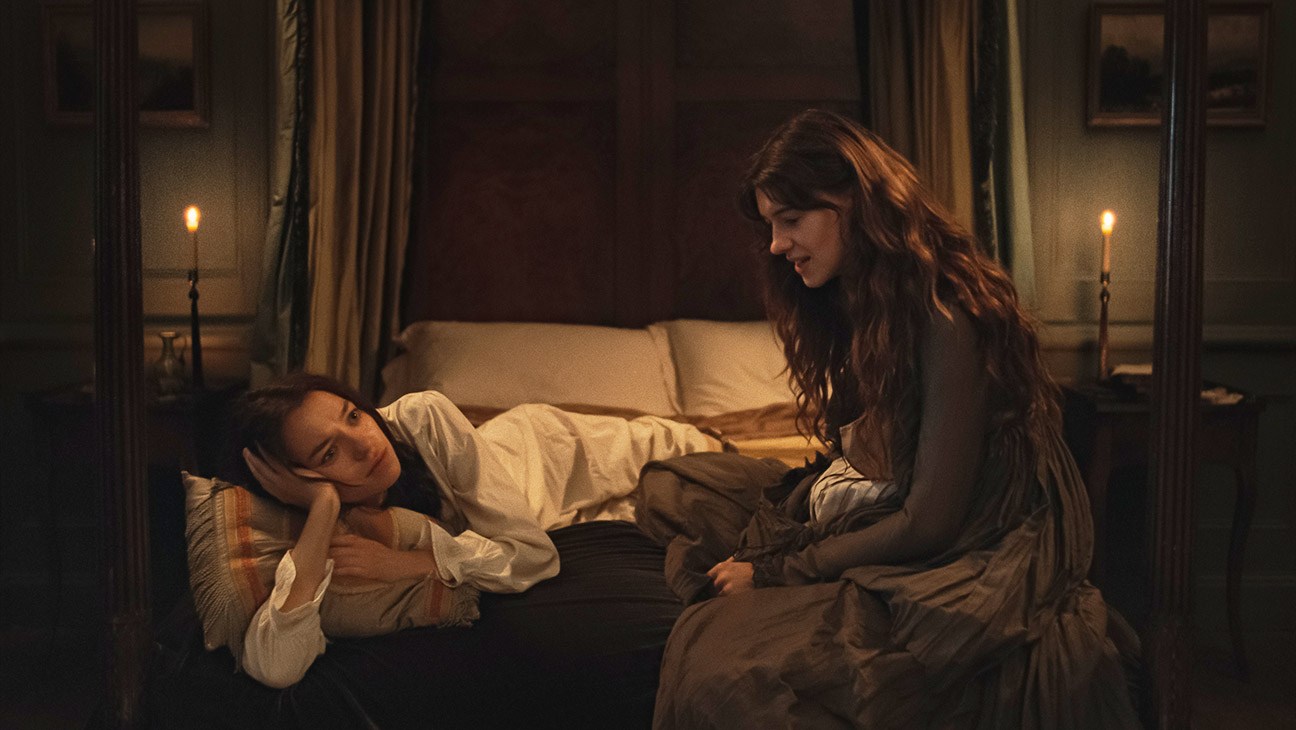
Pity any director who undertakes to remake a beloved literary property previously seen on screen in what is widely regarded as an unimprovable adaptation. That’s the daunting task faced by Georgia Oakley, who landed on the map with her assured 2022 debut feature, the politically personal queer character study Blue Jean. But the director’s take on Sense and Sensibility seldom steps out from the long shadow of Ang Lee’s enchanting 1995 retelling of the Jane Austen classic, scripted by Emma Thompson with endless amounts of verve, wit, emotional perspicacity and exquisite romantic yearning. No disrespect to Oakley’s cast, all of whom are more than capable actors, but in almost every familiar beat of the story I found myself thinking back fondly to the actors who filled those roles for Lee — chief among them Thompson, Kate Winslet, Hugh Grant, Alan Rickman, Gemma Jones and the priceless Elizabeth Spriggs. I get it that this is intended as a fresh spin on Austen’s 1811 Regency romance, aimed at a new generation of movie lovers who have no great attachment to earlier versions. But for those of us who adore the 1995 film, unfavorable comparisons seem inevitable. Sense and Sensibility The Bottom Line Glum and glummer. Release date: Friday, Oct. 16Cast: Daisy Edgar Jones, Esmé Creed-Miles, Caitríona Balfe, Bodhi Rae Breathnach, Frank Dillane, Herbert Nordrum, George MacKay, Fiona Shaw, Stacy Martin, Tom Brooke, Turlough Convery, Chloe Pirrie, Eliot Sumner, Bethany Slater, Ceara CoveneyDirector: Georgia OakleyScreenwriter: Diana Reid, based on the novel by Jane Austen Rated PG, 2 hours 11 minutes One subtle shift in first-time screenwriter Diana Reid’s adaptation is the firmer centering of the quarrelsome but inextricably bonded older Dashwood sisters, Elinor (Daisy Edgar-Jones) and Marianne (Esmé Creed-Miles). Of course this was always the case in Austen’s novel, right down to the way the title reflects the two sisters’ contrasting characters, with Elinor’s rationality and restraint representing “sense” and Marianne’s unguarded passion and unbridled emotionality signaling “sensibility.” Theirs is the paramount love story here, which works well in some ways but less so in others, somehow diminishing the stakes of their respective longing for Edward Ferrars (George MacKay) and Willoughby (Frank Dillane). Part of the brilliance of Thompson’s screenplay for the 1995 adaptation is that it foregrounded the sisters while also making the world they inhabited and its characters equally vivid. Here, there’s too little relief from the sisters’ downbeat moods to make us care about them. Oakley and Reid lean so heavily into Elinor and Marianne’s crushing disappointments and the forces holding them back in a period of vast gender inequity, that their sorrows shove the characters’ more captivating qualities to the side. Sense and Sensibility is a book with its fair share of melancholy — starting when Elinor, Marianne, their younger sister Margaret (Bodhi Rae Breathnach) and their mother (Caitríona Balfe) are forced after Mr. Dashwood’s death to vacate their Sussex home, Norland Park, due to stringent primogeniture laws. But I can’t recall another adaptation, either for film or television, that made the story so overwhelmingly morose and its protagonists such a joyless pair. Casting John (Tom Brooke), the eldest Dashwood offspring, who inherits the estate, as a spineless weasel yields little tension because it’s obvious from the minute we meet his avaricious wife Fanny (Stacy Martin) that she will talk him down on any annual stipend he proposes allocating to his stepmother and half-sisters, in compliance with his late father’s wishes. Austen’s mean-spirited vipers — Caroline Bingley and Lady Catherine de Bourgh in Pride and Prejudice and Mrs. Elton in Emma, as well as Fanny — are as memorable as her heroines. Martin plays Fanny with the right brittle calculation, but she’s a standard-issue rich bitch. I missed the outrageous malice of the character in Lee’s version, hilariously evil in Queen of Mean Harriet Walter’s delicious turn. Humor is often a casualty here, even in the book’s most dependable source, wealthy widow Mrs. Jennings, the mother-in-law of a distant cousin of the Dashwoods, who offers them a cottage on his estate in Devonshire. Sublime English character actress Spriggs made this raucous, gossipy matchmaker a spark plug who brought fresh fizz to Lee’s film every time she appeared, as did a marvelous Imelda Staunton as her complete twit of a daughter, Charlotte. Fiona Shaw’s work here as Mrs. J is colorless by comparison, loud and abrasive and so unable to read the room that we never get much sense of the kindness and generosity beneath the character’s overbearing manner. She just seems to require an audience. Other characters blend into the wallpaper, among them Mrs. Dashwood, wasting the considerable talents of Balfe (so wrenching as the unhappy mother in Andrew Haigh’s upcoming A Long Winter); and Lucy Steele (Ceara Coveney), whose confidences are a form of torture for Elinor though here she’s barely around long enough to make an impression. That leaves the men, who fare well enough. Playing Edward as the courtly and compassionate polar-opposite of his awful sister Fanny, MacKay brings a gentle diffidence that syncs beautifully with Edgar-Jones’ delicate reserve. Their climactic scenes near the end, once all the obstacles have been removed, are lovely — and not just because Austen’s prose in their outcome is so indestructible. Dillane, superb in Harris Dickinson’s Urchin, has presence but is somewhat shortchanged by the script’s one-dimensional grasp of Willoughby, the dashing romantic hero revealed to be an opportunistic cad who breaks Marianne’s heart. And as the self-abnegating Colonel Brandon, Norwegian actor Herbert Nordrum (one point of the triangle in The Worst Person in the World) is touching as he takes several steps back when he sees that Marianne’s affections lie elsewhere, then steps forward with heroic devotion when her health is in grave danger. Nordrum didn’t quite rip out my heart the way Rickman did 31 years ago, but his watchful intensity gives him one of the most moving character arcs. The performance likely to have the most fervent admirers in Creed-Miles’ as Marianne, the reckless romantic who lets her heart lead her, with devastating results. Oakley and costume designer Grace Snell break from the traditional pristine elegance in period films set in this era, making Marianne a free-spirited child of nature whose dresses and hair look consistently bedraggled, starting when she is first seen lying in long grass in the opening scene. The director certainly gets a lot of raw feeling out of the actress, but should the character really seem almost feral? The emphasis on naturalism perhaps removes some of the emotional barriers for young contemporary audiences, but it also gives the movie a low-energy feel and a drab look, with flat light and a dreary color palette. Historical sticklers will roll their eyes at all the free-flowing tresses in place of tidy updos, though the element that made me groan the most was the ball scenes. Does every post-Bridgerton period piece now have to mix traditional dance with expressively stylized modern touches? That kind of flourish has become as much a cliché as the buttoned-up starchiness of old-school costume dramas, especially when it’s as inorganic as it is here. The women just appear to have gotten lost on their way to quadrille practice and stumbled into a Pina Bausch class. Still, I suppose we should at least be grateful that Oakley for the most part held back from the gimmicky Emerald Fennell approach.
‘Sense and Sensibility’ Review: Daisy Edgar-Jones and George MacKay Are Standouts in a Jane Austen Redo That’s Fine if Not Strictly Necessary
Full Article
Original Source
Read the full article at Hollywoodreporter →KhanList aggregates and links to publicly available news content. We do not host full articles from third-party sources. Always verify important information with original sources.