
A much publicised RTÉ Investigates hour-long special on alleged wrongdoing in the Garda claimed the climate for whistleblowers – who seek to raise alleged wrongdoing and bad practice – is worse now than when Sgt Maurice McCabe blew the whistle, leading to years of controversy over his treatment.RTÉ interviewed four current or former members of An Garda Síochána who alleged they were targeted or very poorly treated for lodging protected disclosures or seeking thorough investigations into them. Much of the content centred on complaints and protected disclosures by Det Supt Brian O’Reilly and Garda Luke Rochford, a former armourer.They raised concerns about the haphazard and dangerous manner firearms, ammunition and other lethal weapons were stored in a shipping container in Garda Headquarters, alongside explosive powder and fireworks. They also focused on alleged shortcomings with leather holsters on issue to more than 1,500 gardaí. It was claimed the holsters were not fit for purpose and contributed to one garda being shot and injured in an accidental discharge and another being disarmed by an attacker and shot dead with his own gun.READ MOREHowever, while those were very serious allegations, they are not new. The same allegations have been made in the Dáil, and also reported in the media, long before now.[ Garda whistleblowers are being ‘penalised and even purged’, Dáil toldOpens in new window ]One completely new revelation to emerge from the RTÉ Investigates programme relates to two of the interviewees, Donal Corcoran and Rose Sweeney. They had key roles in managing and investigating protected disclosures made by other members of the Garda. Corcoran, who led the Protected Disclosures Unit (PDU) in Garda Headquarters, said he became frustrated by his work his work being blocked, and by ultimately losing his role when he was moved sideways after the unit was reconfigured and there was no place for him in it.He decided to turn whistleblower and lodged protected disclosures of his own; an extraordinary turn of events. He said he was “broken” by his treatment at the hands of Garda management, and believed other gardaí were left in the same condition.Rose Sweeney, a civilian worker in the Garda. Photograph: RTÉ Sweeney is a civilian worker in the Garda and had a leading role in the youth diversion scheme for juvenile offenders. Alongside that role, she was also one of a number of protected disclosure managers, effectively organising for allegations made in disclosures to be investigated.In general terms, she said there was a culture of “delay, delay, delay, defer it” when protected disclosures were made by Garda members. Both she and Corcoran are on stress-related sick leave from their jobs.The central allegation made by Corcoran and Sweeney was effectively that the Garda culture has had little or no interest in investigating allegations in protected disclosures in a bid to improve the force. Instead, they said, delay and deflection was the order of the day. Corcoran alleged there was “strategic inertia”, much of which was designed to protected the reputations of people in the Garda force, at the expense of the public good.Though Sweeney’s and Corcoran’s allegations are very serious, the matters raised by Rochford and O’Reilly were much more specific. And though those allegations are not new, additional detail has now emerged.Garda Luke Rochford speaks to RTÉ Investigates. Photograph: RTÉ Luke Rochford Luke Rochford joined the Garda force as an armourer in 2018, having first served in the Defence Forces for three years. He said the management of firearms and ammunition that he found on joining the Garda was “haphazard, chaotic” compared to what he was used to in the Army.Rochford said the shipping container was effectively a potential very large “pipe bomb” while he also aired concerns about procurement practices in the firearms section. In May 2019, he said he was called into a meeting in Garda Headquarters with two other armourers, all still in their two-year probation period.He said they were reminded that, under their contracts, they employment could be termination any time by the Garda commissioner if he felt they were “unfit” for service. He said he felt singled out by this, adding it amounted to having his “job threatened” over, he says, the issues he had been raising.In 2019 was arrested by a team of armed gardaí who moved in on him as he was playing five-a-side football with friends. He contacted the Garda Síochána Ombudsman Commission after being released and made a protected disclosure. A year later, in mid-2020, he resigned. As he was leaving he was asked by the Protected Disclosures Unit if he wanted to make a protected disclosure formally to An Garda Síochána, which he did, raising 21 issues. Rochford is suing the Garda for what he claims is his malicious prosecution. Five years after first being charged, his trial has not yet taken place, though such delays are not unusual in the Irish criminal justice system.He faces 15 charges related to the alleged illegal possession of almost 4,000 rounds of ammunition. Rochford faces another two charges of possessing stolen property, namely six Steyr Aug 30-round rifle magazines and three Heckler and Koch 20-round rifle magazines. The Steyr is the standard issue Defence Forces rifle.He is further accused of possessing a 12-gauge Remington 870 pump action shotgun and a Bremmer “AR-15 style” semi-automatic rifle at Garda Headquarters. A further charge relates to possessing a shotgun with a barrel of less than 61cms.Det Supt Brian O’Reilly on RTÉ Investigates. Photograph: RTÉ Brian O’ReillyBrian O’Reilly joined the Garda more than 32 years ago, becoming detective superintendent, and acting detective chief superintendent, in charge of the Garda National Technical Bureau, from 2016. He previously worked the area of Garda intelligence, dealing with State security, and was a “point of contact for the likes of MI5, CIA” and other international security services.He said that in June 2020, it was brought to his attention that a leather gun holster, on issue to more than 1,500 members of the Garda, was alleged to be defective.On June 11th, Det Garda Eddie Connell was finishing his protection duty shift outside the residence of the Israeli ambassador in Dublin when his firearm discharged, causing him serious injury.On June 17th, Det Garda Colm Horkan, was attacked in Castlerea, Co Roscommon, where a man, Stephen Silver, discharged 11 shots at him, killing him. Silver, has since been convicted of murder, and has appealed on mental health grounds. He told gardaí he jumped on to Horkan’s back and was able to take Horkan’s gun out of his holster and use it on him.In the immediate aftermath of Horkan’s murder, O’Reilly was made aware by a colleague that there were problems with the holsters. The leather, it was claimed, was too soft and gathered under the trigger guard of guns, leading to the risk of unintentional discharge.Videos – recorded a month before Horkan’s murder – depicted the holsters being tested and found to be loose after losing their form with age.O’Reilly got approval in July 2020 to issue a warning to all superintendents about the holsters. That September he put a warning on the Garda’s intranet about the holsters for all members of the force to see.[ Garda whistleblower Maurice McCabe : ‘There’s more accountability now’Opens in new window ]He said that in 2021, the then Garda commissioner, Drew Harris, requested that a second testing process be carried out on the holster and a report drawn up. O’Reilly claimed Harris wanted Garda armourers to carry out the tests but he said he “questioned that instruction – I thought it was wrong” because, he said, armourers are not trained to carry out such testing.However, the armourers eventually did the tests and were unable to replicate an accidental discharge from the holster, meaning there were now two reports on the holster worn by Connell, the officer involved in the Israeli ambassador’s residence incident, which contradicted each other.O’Reilly said that in March, 2023, he met members of the PDU and made protected disclosures about the holsters, the firearms stores and other issues. The following month, he took stress-related leave and has not worked since.He believes the organisation “turned on me”. O’Reilly said he also reached out to the Horkan family and apologised for that fact Det Garda Horkan was “potentially” dead because of the equipment he was issued with.Former Garda commissioner Drew Harris. Photograph: Alan Betson/The Irish Times In July, 2023, now on sick leave four months, O’Reilly was informed that he was being investigated for an alleged breach of discipline – allegedly failing to follow Harris’s instruction to have Connell’s holster tested by Garda armourers.O’Reilly denies that allegation and claims he was undermined and suffered “penalisation” for speaking up. He has taken legal action in the courts over what he says was his unfair treatment and is appealing a ruling already made by the courts against him.Garda responseAs many of the specific allegations are contained in protected disclosures, and Rochford is charged with 15 alleged offences and is awaiting trial, Garda Headquarters has been unable to comment. It is, for example, precluded under law from even confirming a protected disclosure has been made, meaning any comment on the nature of such a disclosure is also not permitted by law.It said it could not address some other matters as they were before the civil courts and the Workplace Relations Commission.It said the PDU was reconfigured last year, with new staff, in a bid to make it stronger, with permanent and more senior staff added. [ Gardaí spending their time peering at NCT discs is one symptom of a wider problemOpens in new window ]“An Garda Síochána has previously addressed many of the issues you have raised in public at Oireachtas Committees, media briefings, and in response to media queries,” it stated regarding the matters raised by RTÉ.While Drew Harris was criticised at times during the programme, Garda Headquarters pointed out he had established the Garda Anti-Corruption Unit. When anonymous tip-offs were received about how roads policing was conducted, a lengthy process culminating in the commissioning of the Crowe Report, was conducted and a report published, it added.“All allegations made under protected disclosures to An Garda Síochána are treated seriously and are examined for any potential discipline and/or criminal matters that may arise,” the force said.RTÉ Investigates: The Gardaí - Full Disclosure is streaming now on RTÉ Player
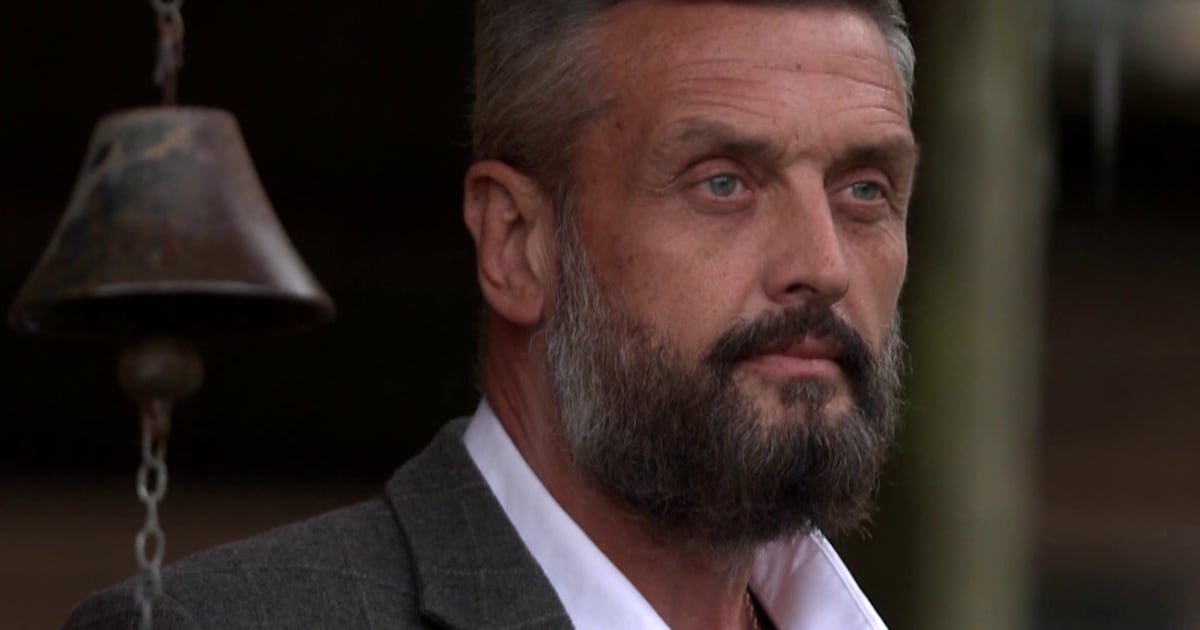
Senior member of Garda whistleblower unit ‘broken’ by management’s treatment of him
Full Article
Original Source
Read the full article at Irishtimes →KhanList aggregates and links to publicly available news content. We do not host full articles from third-party sources. Always verify important information with original sources.