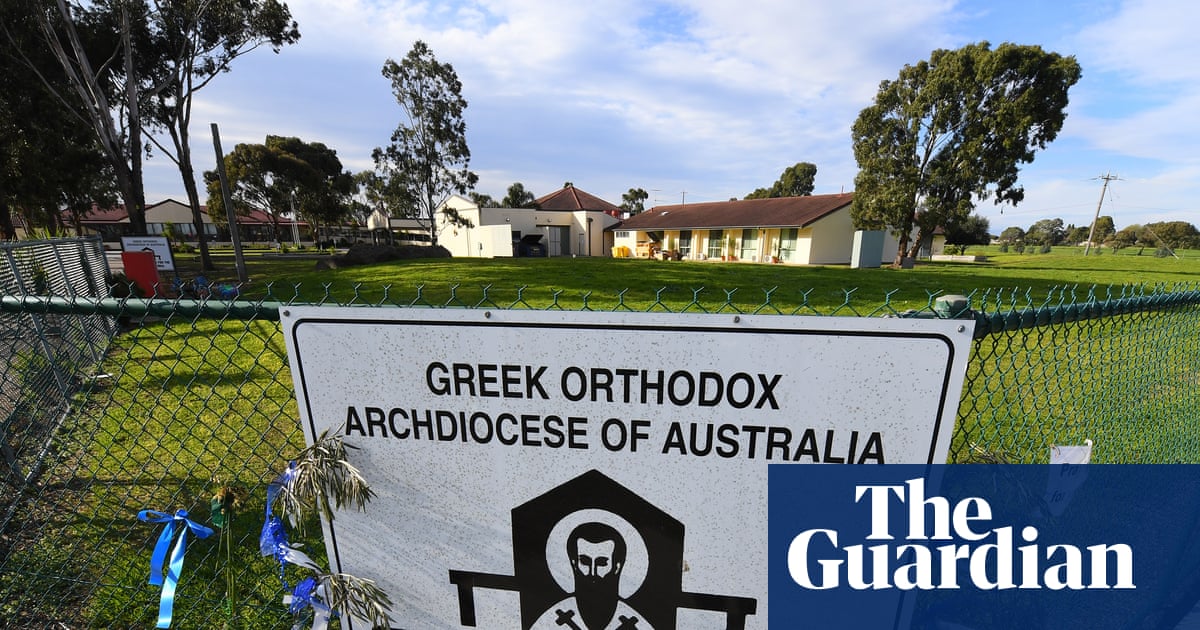
Quiet sobs could be heard in Melbourne’s coroner’s court, as several families attended to finally hear from the pair who were the most senior managers when, throughout July and August 2020, almost a quarter of the 188 residents at St Basil’s aged care home died from Covid-19 or neglect.Following multiple failed legal bids to avoid giving evidence after 50 residents died in the Victorian aged care home they managed, Konstantin Kontis and Vicky Kos were compelled to testify at a coronial inquest resuming on the sixth anniversary of the tragedy.During his evidence on Friday, Kontis said that the board of St Basil’s, operating under the auspice of the Greek Orthodox Archdiocese of Australia, never signed off on the facility’s Covid-19 management policy and that he believed, as chair, he had the delegated authority to approve it without them.Counsel assisting the coroner, Naomi Hodgson, told the court the policy contained no strong guidance on close contacts of Covid cases, and that the main guidance on symptoms was to follow the directives of the state and federal governments.The policy document was not updated as new directives came in from the government, the court heard. Instead this information was printed and put into a yellow folder for staff to keep up-to-date with.Kontis accepted under questioning that there was no delegation of authority that allowed him to approve “such a significant document” without input from the board.Sign up for the Breaking News Australia emailKontis was also questioned about why he did not convene board meetings as the outbreak grew, especially once testing of 116 residents and 95 staff on 15 July 2020 – as organised by the federal department of health – revealed 28 positive cases.“My communication then had switched to the archbishop direct,” Kontis said.“I don’t want to put tickets on myself, but he had full confidence that I would handle the matter in the most appropriate way.”Hodgson put it to Kontis that regardless of whether an approved aged care provider was a not-for-profit, for-profit, or religiously run, the leadership had obligations under the aged care and corporate laws to inform the board.She suggested Kontis was wrong in some of his understanding of these obligations, which he accepted.Kontis said a board meeting was held in April 2020 before the outbreak at the home and after Covid was spreading through aged care elsewhere. Discussions would have occurred then, he said, about what to do if a significant portion of the workforce became infected.The court heard that no minutes from that meeting had been found in about 10,000 pages of briefing evidence provided to the coroner. It prompted the inquest – due to close its questioning of witnesses on Friday – to be delayed to allow St Basil’s representatives to conduct a search.Kontis’ evidence is due to resume on 16 November.Medical waste is removed from St Basil's on 27 July 2020. Photograph: William West/AFP/Getty ImagesThe yellow folderEarlier in the week, the court heard that no cohort plan for separating Covid positive residents from uninfected ones could be found in documents provided to the court.Kos, who was director of nursing and facility manager at the time, said this plan was placed in the yellow folder. Some documents from that folder had gone missing, she said.She gave evidence that many documents from the state and federal government were being added to this folder, and that staff were expected to keep up-to-date with it when starting shifts. Information was also shared during handovers, she said.Following this evidence, a search on Monday night of electronic and hard-file repositories of documents, including those previously seized by Victoria police, did not reveal such a cohort plan, the court heard on Tuesday from St Basil’s barrister, Conor O’Bryan.O’Bryan said because some files had been lost it could not be proven that a cohort plan never existed.‘I didn’t attend’During his evidence, Kontis was pressed on why he did not attend key meetings, organised by senior management of the home and attended by health officials, once it became clear the outbreak was significant and the entire workforce needed to be stood down.Kontis said he disagreed with a directive from the chief health officer at the time, Prof Brett Sutton, to furlough the entire workforce and replace them with agency staff to prevent further spread. Kontis said he did not trust the staff would be competent and Covid-free.“You’ve just received the news that your entire staff is going to be stood down,” Hodgson said. “Why didn’t you attend [meetings] as the only person on the board with vision of what was happening here?”Kontis responded: “I can’t answer that. I didn’t attend.” He said he was informed about what happened at meetings immediately afterwards by attenders.Kontis said there were also some meetings he did not believe he was invited to.Hodgson said that St Basil’s, as an approved aged care provider, had a duty under law to implement policies and procedures to manage risk and ensure care for consumers.Spiros Vasilakis’ mother died at St Basil’s during the outbreak and he has attended the inquest every day. ‘It still hurts for all of us families here,’ he says. Photograph: Christopher Hopkins/The GuardianAsked why he did not convene a meeting of the risk and audit committee before or throughout the outbreak, Kontis said, “I couldn’t get anybody to attend a meeting because of Covid.”skip past newsletter promotionafter newsletter promotionHodgson responded this was “an improbable answer in circumstances where you’ve already told me you can get people on the phone”.The court previously heard that agency staff brought in to take over struggled to find the information they needed to run the facility, from passwords and logins for computers, to notes about the clinical care of residents.Kontis said this information could be found in folders. “We had folders in the kitchen, folders with the cleaners, folders with the maintenance people,” he said.Hodgson put it to Kontis that, as an approved aged care provider and chairman, he had responsibility for the agency staff and to assist them to fulfil their duties.“Well, that’s your interpretation,” Kontis said.Hodgson replied: “I’d suggest to you … that it’s not my interpretation, it was your responsibility as an approved provider.”“That’s that’s your assertion,” Kontis said.Signs in ‘simple language’Kos had earlier told the court that English was a second language for 95% of the original St Basil’s staff, and the majority did not have laptops or computers. Asked how critical and sometimes complicated Covid information was then communicated, she said signs in “simple language” were placed around the facility and information was shared during shift handovers.Kos disagreed under cross-examination that the process of adding documents constantly to folders and expecting staff with English as a second language to keep across these during shifts was a complex task for them.She agreed that having a clear Covid plan in place would make it less likely that people would die.The inquest had previously heard from staff and family members in 2021 that infected residents were mingling with those who had not tested positive to the virus, and that infection control procedures throughout the home were poor.Kos told the court that on 9 July 2020, when the first case in a staff member was identified, she began to follow a Covid-19 aged care checklist issued by the federal government about what to do in the first 24 hours.Kos told the court she did not complete the step that said to alert the commonwealth department of health at a dedicated aged care email address within 30 minutes.She said she spoke with the state public health hotline as the document required, and because she was told to wait to hear about next steps, she did not proceed to the next step on the checklist, which was to email the commonwealth.The checklist said the commonwealth could connect aged care homes with resources to manage the outbreak including testing, additional PPE and a surge workforce, the court heard.Delays in the commonwealth learning of the case meant staff and residents were not mass-tested until days later. The inquest previously heard this was a root cause of the outbreak.Kontis said he did not believe it was his role to email the commonwealth as he trusted facility staff to do so and to follow procedures in place.‘I don’t remember’Throughout the five days, Kontis had to be reminded several times not to interject during questioning, and to listen before responding. With years having passed since the tragedy, Kos’ response to many questions throughout the week was, “I don’t remember”.Both Kontis and Kos refused to testify, only doing so after a certificate was granted by the coroner, Liberty Sanger – meaning their evidence can not be used against them in criminal or civil litigation.Spiros Vasilakis, whose mother, Maria, died at the home during the outbreak, attended each day.“It still hurts for all of us families here,” Vasilakis said.“It hurts to hear anyone say that because it’s been six years, they can’t remember. I can tell you that families remember, detail by detail, what occurred. I haven’t forgotten anything.”The inquest continues.
Senior managers at St Basil’s aged care, where 50 died from Covid, can’t remember it all. Grieving loved ones can’t forget
Full Article
Original Source
Read the full article at Theguardian →KhanList aggregates and links to publicly available news content. We do not host full articles from third-party sources. Always verify important information with original sources.