
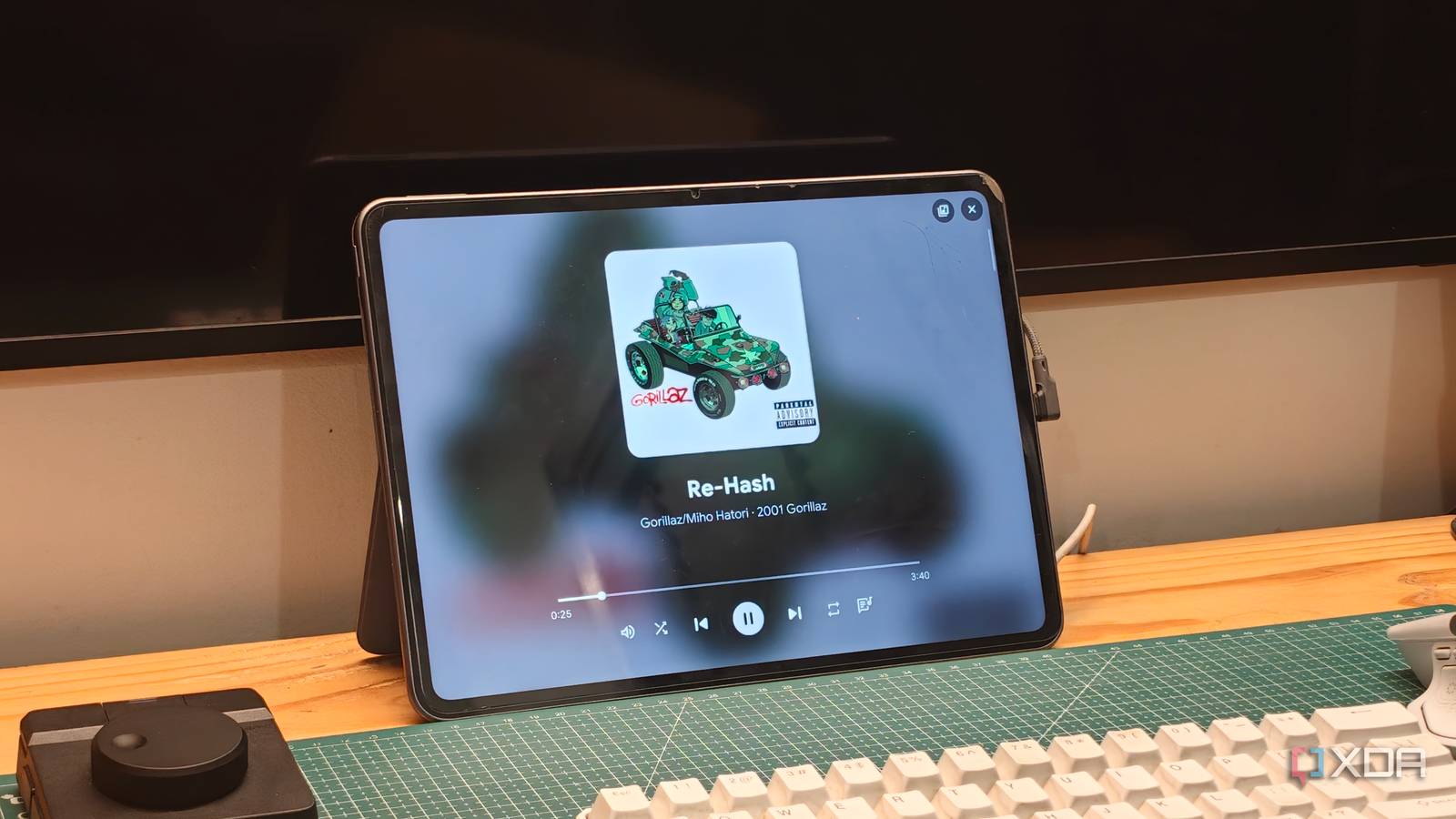
Published Nov 9, 2026, 2:00 PM EST Dhruv Bhutani has been writing about consumer technology since 2008, offering deep insights into the personal technology landscape through features and opinion pieces. He writes for XDA-Developers, where he focuses on topics like productivity, networking, self-hosting, and more. Over the years, his work has also appeared in leading publications such as Android Police, Android Authority, CNET, PCMag, and more. Outside of his professional work, Dhruv is an avid fan of horror media spanning films and literature, enjoys fitness activities, collects vinyl records, and plays the guitar. I've been using Raspberry Pis as music streamers for years. They work great as solo streaming devices, but if you're trying to build a whole-home audio system, no unified standard enables a lag-free music-listening experience. Over the last few years, I've invested in WiiM products to build said system but have always been itching to return to an open-source alternative. That's where Sendspin comes in. I recently discovered the open-source protocol that lets compatible devices play music in sync across a network. So, to give it a shot, I decided to build a project turning my Home Assistant wall tablets into music playback targets, with Music Assistant handling playback and distribution. Here's how it turned out. Why I chose Sendspin for my DIY multi-room audio setup An open-source alternative to proprietary multi-room audio systems Search the internet, and you'll find plenty of ways to deploy Sendspin. Most people tend to build ESP32 projects around Sendspin, turning it into an input source for speakers. I wanted to do something different. As I mentioned earlier, I have wall-mounted Android tablets that serve as Home Assistant dashboards around my home. The system works incredibly well. These tablets also have built-in speakers that are good enough for ambient music playback and podcast listening. So I figured that these would make for the perfect project for a Sendspin-based multi-room audio system. But before we get into how I pulled this off, a bit of a dive into what Sendspin is is essential. At its essence, Sendspin is an open protocol designed to handle synchronized audio playback across devices. Because the protocol is open source, it isn't beholden to any manufacturer, and it provides a common language for hardware and software to speak. Think of it like Sonos, but open-source. If you buy a Sonos product, you need to buy more Sonos hardware to expand that ecosystem. With Sendspin, there is no such limitation, other than the fact that you won't find Sendspin-based hardware from popular manufacturers just yet. The system requires two components: a server that handles playback, audio streams, and connected devices, and clients that receive and play the audio. In this case, Music Assistant works as the Sendspin server. The beauty of Sendspin is that a client doesn't have to be a smart speaker. It could very well be another computer or app running on an existing device. Which brings us to the next part of the equation: actually building this project. And that's the part that was surprisingly easy. Turn any Android tablet into a multi-room audio endpoint Sendspin makes synchronized playback surprisingly reliable I wanted the simplest possible route towards building out these dashboards as Sendspin clients. So, I installed an open-source app called Kiosk Satellite. Designed as a comprehensive all-in-one solution for all your Home Assistant dashboard needs, the app can display a Home Assistant dashboard and also doubles as a Sendspin client. All you have to do is enable the feature in the settings. Add an IP address for your Music Assistant server or leave it blank. A few additional settings are available if you want to get into the weeds with the configuration, but for most users, enabling the setting is enough. That's all it takes to register your Android tablet or phone as an available Sendspin player. Pop back into Music Assistant, select the target device, and start playing music. For me, the beauty of using Kiosk Satellite is that it doesn't turn the tablet into a single-purpose music player. The tablet still doubles up as a Home Assistant control dashboard. But when I start playing music, the app brings up a floating Now Playing widget with album artwork, playback controls, and track information. There's also a dedicated full-screen view that displays the current track, queue, and lyrics when available, which is something I used while throwing a party just this weekend, with each tablet connected to a set of Bluetooth speakers. As good as all that is, the real beauty of the system is in how well it handles multi-room synced playback. I've used Sonos, WiiM, Google Cast, and Alexa-based multi-room systems, and I'd rank them in basically the same order in terms of seamlessness, speed, and consistency. Sendspin ranks up there as one of the best I've tried. Just drop into Music Assistant, select your targets, and start playing music. Playback is practically instantaneous across targets, and over six to seven hours, I didn't come across a single desync or drop-off. Swapping between grouped playback and individual players is just as fast. Sendspin supports bit-perfect audio all the way up to FLAC files, so as long as your network can handle it, the sky is the limit on audio quality. It goes without saying that if you're using synced FLAC audio, it would be a good idea to use some wired speakers with your client device instead of Bluetooth. A multi-room audio system with no platform lock-in What I love about this setup is that it lets me turn almost any spare device into a multi-room music streamer. I know that you're expected to use bespoke hardware or build a setup around an ESP32 and a DAC, but this is the kind of setup you can easily deploy even with a spare Android phone plugged into speakers and a DAC. Sendspin provides the protocol, Kiosk Satellite makes setup ridiculously simple, and Music Assistant serves as the backbone for managing all my music sources and media. Doesn't get easier than that, and it does all of this without any platform lock-in. Sendspin Sendspin is an open-source protocol for building synchronized whole-home audio systems without any vendor lock-in.
Sendspin and an old Android tablet replaced my Sonos multi-room setup
Full Article
Original Source
Read the full article at Xda-developers →KhanList aggregates and links to publicly available news content. We do not host full articles from third-party sources. Always verify important information with original sources.