
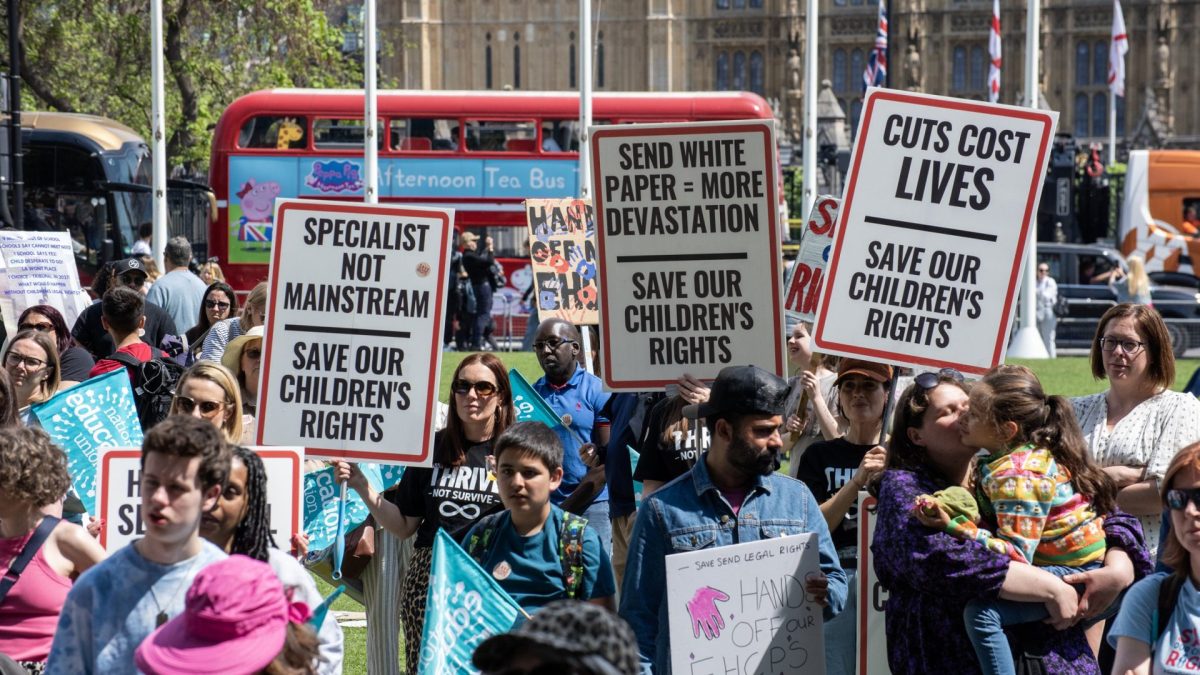
The plan to overhaul special educational needs and disabilities (SEND) faces delays caused by the change in Prime Minister, The i Paper understands. The Government’s response to a major consultation on reforming the SEND system and new laws outlining the changes were expected to be published in November, according to those familiar with the discussions. Insiders now fear the timeline could slip beyond autumn and potentially into the new year, raising concerns over a tightening schedule to get the legislation through Parliament and ready for implementation by September 2029. Shorts A Government source said there was “no world” where officials would be able to stick to the current autumn time frame following the upheaval of Andy Burnham appointing a new education secretary. After Sir Keir Starmer stepped down in July, the new Prime Minister appointed Lucy Powell to take over Bridget Phillipson’s role as education secretary as part of his wider Cabinet reshuffle. Another source with knowledge of the SEND discussions said there is a “fifty-fifty chance” the legislation could slip into next year, raising fears that there may not be enough time to get it through Parliament before the next general election, which is due by 2029 at the latest. They said they are pushing for the reforms to be introduced this side of Christmas to ensure the changes to improve support and make the system more sustainable are not delayed. Another insider said the changes must be introduced by 2029 as planned so that the necessary savings are made. Why the reforms? The reforms are being introduced to curb the spiralling costs of educating children with special education needs. Pupils with SEND can apply for an education, health and care plan (EHCP), which legally entitles them to extra support such as a one-to-one teaching assistant or a taxi to help transport them to and from school. The cost is met by local authorities, which are racking up huge debts as a result. The number of EHCPs surged to 638,700 as of January last year, which is 10.8 per cent higher than the year before and 80 per cent higher than in 2018-19. In March, the Office for Budget Responsibility estimated that local authority SEND deficits in England – the amount of extra money it spends on SEND pupils – would hit £14bn by 2028-29. Although councils will be reimbursed for 90 per cent of their overspend accumulated up to 2025-26, a further £9bn is projected to build up over the next two years. Under the reform plans more pupils will be taught in mainstream schools with a greater focus on early intervention and special schools reserved for those with the most complex needs. The reforms are expected to tighten the criteria for which children are eligible for an EHCP, with reassessment taking place at key transition phases – meaning the end of primary, secondary or post-16 – in 2029-30. This cohort will be assessed from September 2029 and will move onto the new system the following year. Those who are judged to no longer need an EHCP will move onto a new individual support plan (ISP) from the 2030-31 academic year. Under the SEND reform proposals outlined in March, schools have a “statutory duty” to provide children with an ISP, but the specific support is not legally enforceable. The provision listed in an ISP will be detailed and reviewed annually, but any parental concerns must go via the school complaints system rather than a SEND tribunal. The reform proposals were announced in February and have been subject to a 12-week consultation which officially closed in on 18 May. Ministers have been assessing the responses over the summer, with the response to follow soon. Legislation ‘expected in the next few months’ It is understood that the Department for Education (DfE) has put in a bid for the SEND reform bill to be tabled before the end of the year. However, it is down to the Parliamentary Business and Legislation (PBL) Committee – which manages the government’s legislative programme – to decide whether that will happen. A Government source said the legislation is currently expected “in the next few months”, although no exact date has been set and it could move into the new year. However, officials have insisted that even if the publication of the SEND reform plan was pushed back, it would not necessarily affect implementation, as the parliamentary process could be expedited to ensure the measures are passed before the next election. It is understood officials are acutely aware of the limited time available for getting the legislation through Parliament and are working to avoid any slippage. While the Government did not confirm publicly when the draft legislation would be published, it was widely expected to be this autumn to give enough time to get the legislation through Parliament. The Local Government Association estimated that the Education for All Bill, officially announced in the King’s Speech in May, would be “introduced to Parliament in the autumn of this year”, according to a Children, Young People and Families Committee meeting in June. More pressure on Department for Education A Government source said there was “no world where they would keep to the current timetable” of the consultation response and draft legislation published in November. Although “tweaks” were expected to be made to the proposals, the principles are likely to remain unchanged, the source added. The delay has instead been put down to the change in education secretary, which one senior Whitehall source said inevitably “slow things down” when big changes are being made. Another source pointed out that major new school reforms to vocational qualifications and technical pathways have been introduced since Burnham took control, suggesting officials may be under greater pressure. Speaking at Labour’s annual conference, the Prime Minister promised to “rebuild a system of comprehensive education in this country with parity between academic and technical” with “good quality pathways for all from 14” and “the right support for our young people when they need it”. Powell promised to “tackle the SEND crisis” with early intervention and more investment, “reforming the system so it’s refocused on inclusion and improving outcomes for children”. A DfE spokesman said: “We are on track to deliver our once-in-a-generation SEND reforms, and are completely committed to the implementation timelines set out in the Schools White Paper. “Backed by £4bn investment, we are already taking action to transform the system – backing schools to improve inclusion, widening access to specialist support and rolling out training for every teacher. “We’re carefully reviewing the responses to our consultation and will announce next steps soon.”
SEND reforms face new delays, insiders fear
Full Article
Original Source
Read the full article at Inews →KhanList aggregates and links to publicly available news content. We do not host full articles from third-party sources. Always verify important information with original sources.