
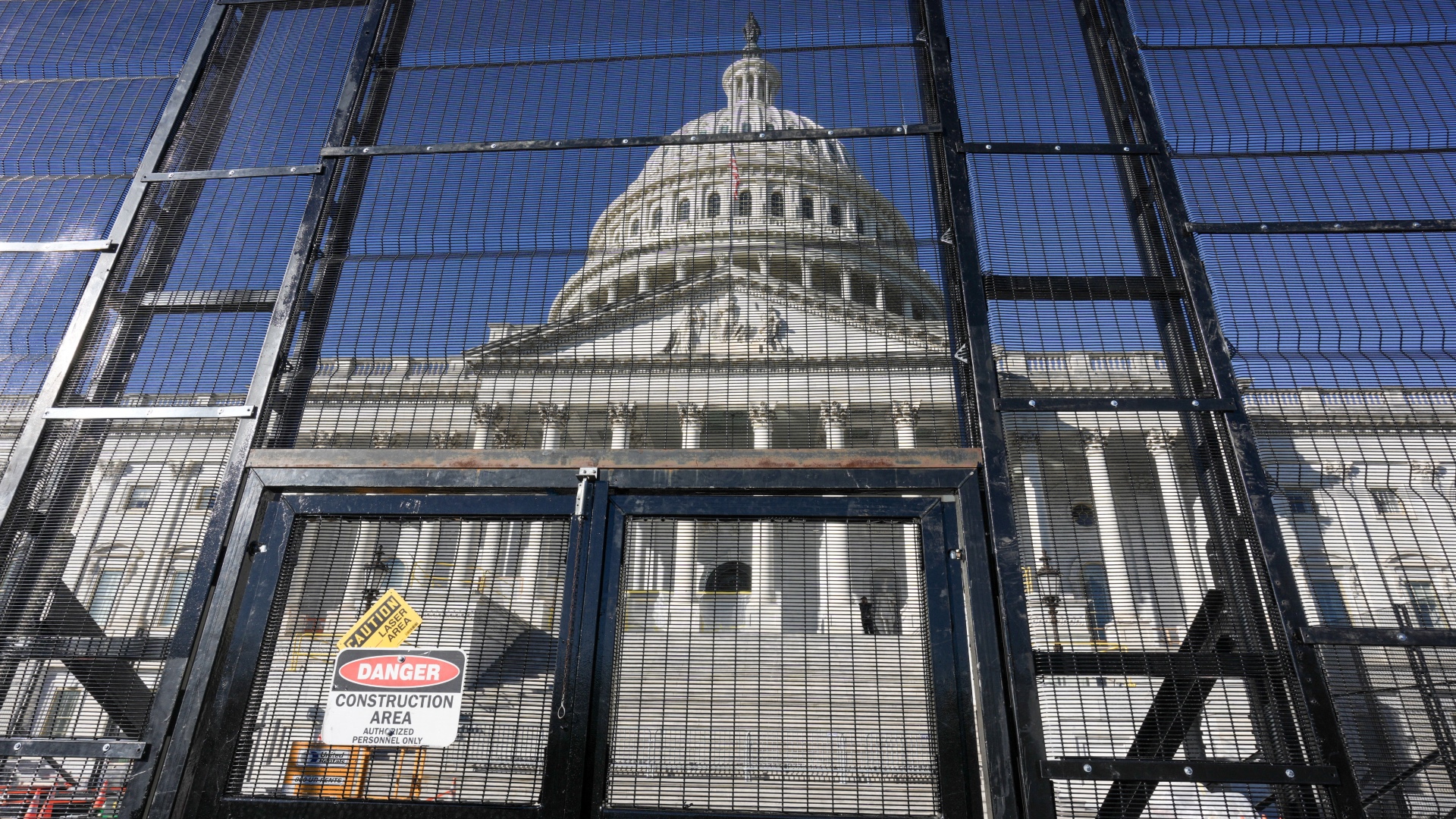
This is the 15th time lawmakers have tried to pass a largely symbolic resolution A temporary security fence is erected outside the US Capitol building in Washington, DC, on 19 November 2026 (Reuters/Cedeno) Published date: 19 November 2026 21:53 GMT | Last update: 10 sec ago For the 15th time this year, the US Senate has tried to curb President Donald Trump's warmaking authority in Iran. It succeeded twice, once in May and once in June, but failed on Thursday by a vote of 51-48. Fifty Republicans and Democratic Senator John Fetterman voted against the resolution, while only 43 Democrats were present to vote in favour. They were joined by two Independents, and three Republicans in Rand Paul, Lisa Murkowski, and Susan Collins. Republican Senator Thom Tillis, who previously voted alongside Democrats, suggested the repeat votes were becoming fruitless, telling reporters on Thursday that there should be "more weight on solving the fundamental problem" instead. Tillis decided not to run in this month's midterm elections after a spate of Trump-led attacks on him last year. He will now be replaced by Democrat Roy Cooper, the senator-elect, in North Carolina. The election results were a decisive rebuke of the Trump administration's domestic and foreign policy, as Vice President JD Vance himself acknowledged the very next day. New MEE newsletter: Jerusalem Dispatch Sign up to get the latest insights and analysis on Israel-Palestine, alongside Turkey Unpacked and other MEE newsletters Trump has previously just ignored the two successful resolutions stipulating that only Congress has the authority to declare - and thereby fund - the US at war. The move effectively rendered the Senate's efforts moot. After the 23 June vote, which was adopted 50-48, the White House responded that "there are no present hostilities from which to remove US Armed Forces", because "the hostilities that began on February 28, 2026, have terminated with the ceasefire ordered by the President on April 7, 2026". The ceasefire agreed in April, however, has barely held, with the US carrying out sporadic bombing campaigns, the Strait of Hormuz and Bab al-Mandab largely choked off, and open conflict igniting between the Houthis in Yemen and Saudi Arabia. This is likely lawmakers' final attempt this year to invoke the 1973 War Powers Act before the 120th Congress is sworn in on 3 January, bringing with it an overwhelming Democratic majority in the House and a 56-44 Democratic edge in the Senate. Trump is expected to face multiple investigations next year on how he has conducted the war on Iran, which began in a joint operation with Israel on 28 February. Declaring war The US Constitution's "Declare War Clause", which Democrats and some Republicans accuse Trump of violating, maintains that only Congress has the power to declare war. However, this has largely become a formality, given the US regularly carries out military operations - many of which include extrajudicial killings - in multiple sovereign countries at once. US elections 2026: Can a Democrat-controlled Senate thwart Trump's agenda? Read More » The 2001 Authorisation for the Use of Military Force, which lawmakers approved soon after the 11 September 2001 attacks, opened the door to far-reaching military operations that may never see boots on the ground. The executive branch - meaning the White House - has also historically had broad authority over foreign policy. "There are some things about the Constitution [that] are not clear [but] this point is crystal, crystal clear," Chris Edelson, a constitutional scholar at the University of Massachusetts at Amherst, previously told Middle East Eye. "The framers of the Constitution debated war power. They gave Congress the power to declare war," he said. "The one exception was if the United States is attacked, the president could act to defend the country... and of course that's not what happened here." The 1973 statute notably does make room for the president to take 60 days of military action before either formally ending hostilities, seeking authorisation from Congress, or asking for an extension for another 30 days - though Edelson argued that it is too "ambiguously worded" to be a law that supersedes the Constitution itself. Middle East Eye delivers independent and unrivalled coverage and analysis of the Middle East, North Africa and beyond. To learn more about republishing this content and the associated fees, please fill out this form. More about MEE can be found here.
Senate vote to curb Trump war on Iran fails again
Full Article
Original Source
Read the full article at Middleeasteye →KhanList aggregates and links to publicly available news content. We do not host full articles from third-party sources. Always verify important information with original sources.