
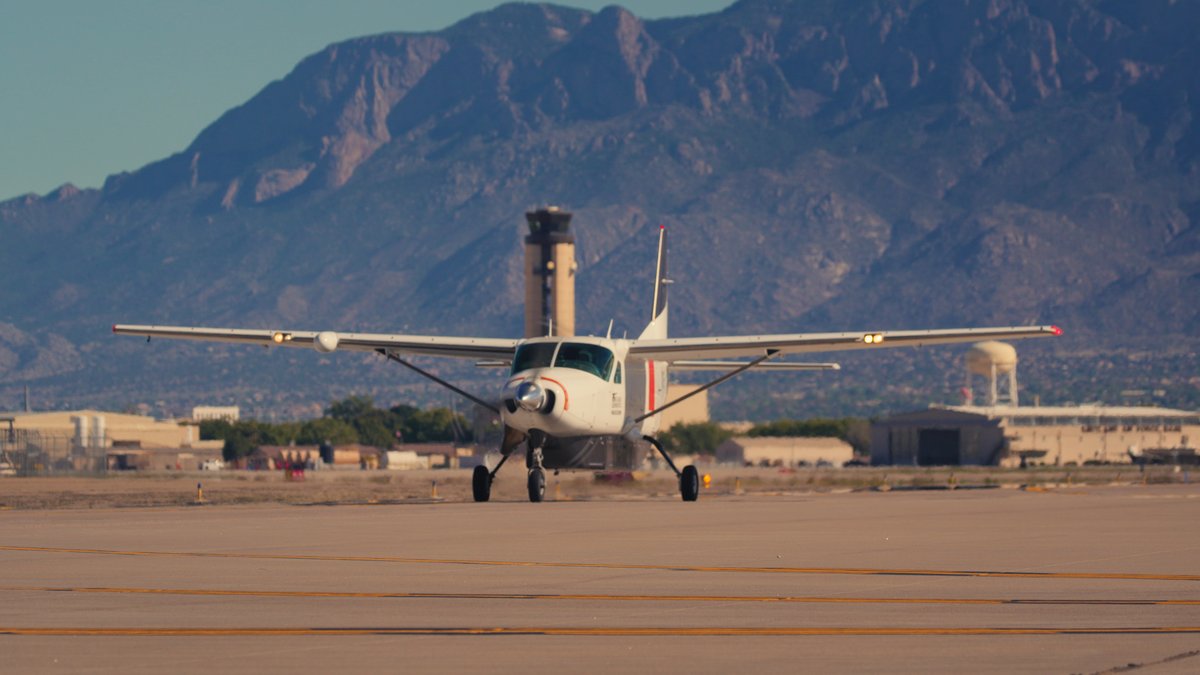
Back in August I took my first Waymo. Whizzing up and down the hills of San Francisco, I was at once mesmerized by the steering wheel turning on its own and a bit scared of the occasional jerk and sudden stop. But even as robotaxis lurch into the mainstream, some technologists are trying to empty a loftier seat: the pilot’s.In some ways, flying a plane is easier than driving a car, at least as far as automation is concerned. Unlike on roads, there are no surprise closures, no fallen trees and no running kids in the sky. In fact, autopilots already do much of the flying. On the other hand, the solutions have to be more delicate. As Robert Rose, chief executive officer of Reliable Robotics, points out, planes don’t have the easy out of “if something happens, slam on the brakes.”In mid-October Reliable’s software taxied, took off and landed a Cessna Grand Caravan, a single-engine turboprop plane, at Albuquerque’s main airport while a pilot supervised from company headquarters in California, more than 700 miles away. (A safety pilot rode along as a backup.) Days later, the company announced new funding that brought its valuation to more than $1 billion. The flights were part of a new Federal Aviation Administration program to figure out how autonomous aircraft can fit into the nation’s airspace.On supporting science journalismIf you're enjoying this article, consider supporting our award-winning journalism by subscribing. By purchasing a subscription you are helping to ensure the future of impactful stories about the discoveries and ideas shaping our world today.Reliable’s eventual goal is a fleet of cargo planes with no pilots aboard during takeoff, flight or landing, and it isn’t alone. In September Joby Aviation flew its own self-piloting Caravan coast-to-coast without its safety pilot touching the controls. Boston-based Merlin is putting another autonomous Caravan through certification with regulators in New Zealand and the U.S. Reliable has been working toward certification, a deliberately slow process, for years and expects to start earning the FAA’s okay for some of its systems by the end of 2027, according to TechCrunch.Certification hinges on testing that shows that a critical failure happens only in an extremely tiny fraction of cases—less than one time in a billion flight hours. According to Rose, today’s autopilots clear that bar only because a human pilot is there to take over when needed, so his pitch is to make the autopilot even more, well, reliable.Ella Atkins, a professor of aerospace engineering at Virginia Tech, doubts that reliability alone keeps people in the cockpit. “If you look at what pilots actually do, they follow checklists,” she says. “It’s very rare that someone goes completely off-script and saves the day.” She points to two other holdups flying without a pilot aboard: People may not feel comfortable, and it’s harder to assign blame when something goes wrong. “Every company is less liable for costs after a crash if they can point to a pilot and say it was pilot error,” Atkins says.Plenty of aircraft fly themselves today. “We’ve been flying unmanned air vehicles, or drones, of reasonably large size. We’ve been flying those for a while,” says R. John Hansman, a professor of aeronautics at the Massachusetts Institute of Technology. Anything plane-sized needs to be far more dependable, he says, because a crash could be much more catastrophic: “A small quadcopter drone doesn’t have to have the level of redundancy that a large vehicle that could hurt people on the ground or carry people needs.”Self-driving car companies stress their use of artificial intelligence to detect and perceive the world around them, but Rose wants no part of it, at least not the neural network kind. “You lose the explainability or traceability for why various functions exist,” he says. “Frankly, there’s no way to get it certified.”Instead Reliable Robotics uses the fountains of data that spring from aviation’s heavy regulation. The FAA publishes precise, regularly updated runway locations, and planes already broadcast their positions through the Automatic Dependent Surveillance-Broadcast, or ADS-B, system. Reliable’s software runs those and various other measurements through specialized algorithmic filters to pin down exactly where its own plane is and adapt accordingly. Atkins cautions against completely rejecting modern technologies in design, though she notes that the “nearly century-old technology gap” plagues the entire aviation industry.The company plans to roll out its automation in steps. First up is approval just for automated takeoff, landing and taxiing, considered some of the most difficult parts of flying planes today. According to research by Boeing, about 70 percent of fatal accidents involving commercial jets happen during takeoff and landing. These stages are also the parts where human pilots currently have the most control. “Our normal navigation systems take you automatically to about 200 feet above the ground, and then typically the pilots see the runway and they land,” Rose says.To get around this, Reliable designed its navigation system to handle takeoff and landing, too. Some previous computer-assisted landing systems have used radarlike radio beams to help track the plane through landing. The result is a semiautomated system that Rose says makes it “arguably easier to hand land the plane than configure all the automation.” He claims his system requires no extra infrastructure at the runway or airport.After that, Reliable aims to take the safety pilot out of the cockpit altogether, a step that’s still years off. Even then, Hansman says, “there will always be some level of human supervision.”But if the test flights in Albuquerque keep going well, airline passengers could someday soon look out airport windows to see roboplanes taking to the skies, with no one looking back.
Self-flying cargo planes are coming. Can they be safe with no one aboard?
Full Article
Original Source
Read the full article at Scientificamerican →KhanList aggregates and links to publicly available news content. We do not host full articles from third-party sources. Always verify important information with original sources.