
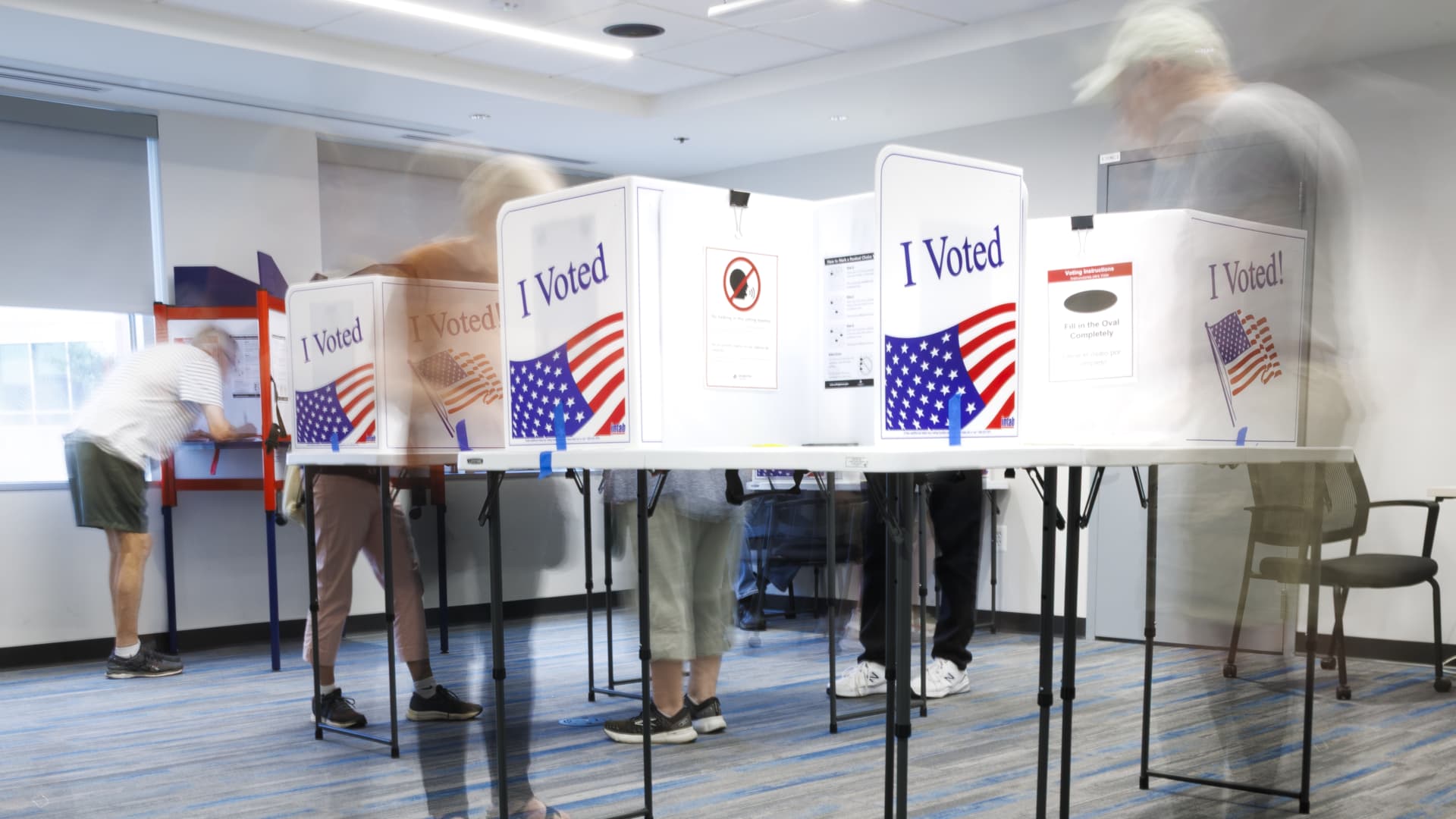
Voters cast their ballots inside the Arlington County Courthouse in Arlington, Virginia, Sept. 18, 2026.Tom Brenner | Getty ImagesThe most competitive races for control of the House of Representatives in the 2026 midterm election may be toss-ups on the political map. But in the most fiercely contested districts, one candidate often holds a massive financial edge.In 11 of the 19 incumbent-versus-challenger matchups rated as "toss ups" by The Cook Political Report with Amy Walter, a clear financial divide emerged: One campaign had at least twice as much money available as the other, according to Federal Election Commission data compiled by OpenSecrets, a nonprofit, nonpartisan organization that tracks money in politics. In every one of those races, the incumbent held that commanding lead.The latest uniform quarterly reports covered activity through June 30, though some candidates have since filed additional reports tied to their states' primary calendars. CNBC used figures from the most recent FEC reporting period available for each candidate as of Sept. 18.The pattern cuts across party lines, but it matters especially for Republicans because the GOP is defending most of the seats at the center of the House battlefield. The Cook Report currently rates 21 House races as toss-ups, including 16 Republican-held seats and five Democratic-held seats.In Michigan's 7th District, Republican Rep. Tom Barrett had about $2.9 million on hand compared with roughly $383,000 for Democratic challenger William Lawrence — a more than 7-to-1 advantage. Republican Rep. Gabe Evans had about $3.9 million available in Colorado's 8th District compared with roughly $601,000 for Democratic challenger Manny Rutinel. And in California's 22nd District, Republican Rep. David Valadao held about $3.4 million, nearly six times the roughly $572,000 held by Democratic challenger Randy Villegas. Still, the challenger advantages were generally much smaller. Among the 21 races CNBC analyzed, six challengers led incumbents in cash, but none had twice as much money as the sitting member. By contrast, 11 incumbents held at least a 2-to-1 advantage.Cash on hand offers a different view than top-line fundraising because it shows what campaigns still have available after spending as Election Day approaches. It also captures only part of the money flowing into these contests. Super PACs and other groups can independently spend to support or oppose candidates without those dollars flowing through the candidates' campaign accounts, under federal campaign finance rules.The next quarterly reports, covering activity through Sept. 30, are due Oct. 15.
See which incumbents have the biggest cash advantage in the tightest U.S. House races
Full Article
Original Source
Read the full article at Cnbc →KhanList aggregates and links to publicly available news content. We do not host full articles from third-party sources. Always verify important information with original sources.