
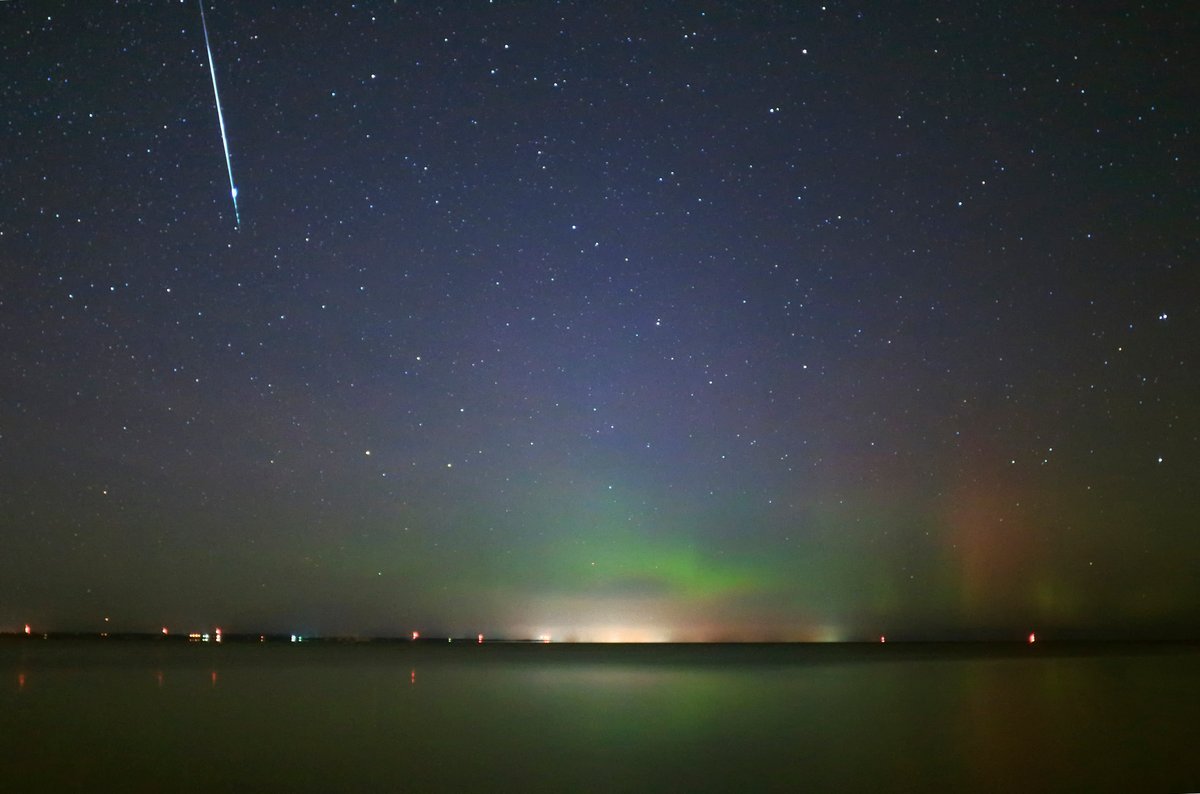
September 23, 20262 min read Add Us On GoogleAdd SciAmLasting from mid-September until mid-December, the Taurid meteor showers are among the longest of the yearA Taurid fireball and aurora over Lake Simcoe in Ontario on November 9, 2015. Orchidpoet/Getty ImagesJoin Our Community of Science Lovers!Annual meteor showers are always high points of the year, but in fall, we are treated to a two-for-one deal that runs for months. Called the Taurids, these showers dazzle the night sky throughout the season and bring an elevated chance of extrabright meteors—fireballs—to help chase the darkening days away.The first leg of this epic meteor show is the Southern Taurid shower, which began on September 20 and is expected to last through November 20. Peak fireball activity is predicted to occur around the night of November 4 to 5—just after Halloween.Meteors, also known as shooting stars, are the visible remnants of bits of debris falling from an asteroid or comet. These pieces burn up in the Earth’s atmosphere, creating a brilliant streak of light. The source of dust and debris that makes up the Southern Taurids is Comet 2P/Encke, a relatively small comet that measures about 2.98 miles (4.8 kilometers) wide, according to NASA.On supporting science journalismIf you're enjoying this article, consider supporting our award-winning journalism by subscribing. By purchasing a subscription you are helping to ensure the future of impactful stories about the discoveries and ideas shaping our world today.This year just 22 percent of the moon will be lit on November 4 to 5, providing “generally favorable” viewing conditions for the Southern Taurids’ peak, according to the American Meteor Society (AMS).The Southern Taurids’ sister shower, the Northern Taurids, will begin on October 20, overlap with the Southern Taurids for a few weeks and peak on the night of November 11 to 12, according to the AMS.You can catch the Taurids without any fancy equipment. Go outside and find a safe location with minimal light pollution and a clear view of the sky. Give your eyes about 30 minutes to adjust to the darkness and look up. The showers are named after the constellation Taurus, but the shooting stars can show up near other constellations, too.“The best time to look for Taurids is after midnight, when Taurus is high in the sky,” according to NASA, “and when the sky is dark and clear, with no moonlight to mask the fainter meteors.”Subscribe to Support Independent JournalismGreat science journalism requires human expertise, time, effort and creativity. And it costs money. That’s why I and the journalists here at Scientific American hope you’ll join our community.When you subscribe, you are supporting staff and freelance journalists who are passionate about telling science stories that are true, important and compelling. Our editors and reporters are often experts in their fields, which means they understand the nuances of big discoveries and can untangle the breakthroughs from the hype. With a subscription, you are also supporting rigorous fact-checking to ensure the words we publish are precise and accurate. And you’re supporting original illustrations, graphics and photos that bring you closer to an advanced laboratory, an ice sheet in Antarctica or a space mission in orbit. You’re helping us craft other types of high-quality journalism as well: Our newsletters are carefully written, edited and curated by staffers you have or will come to know and love. Our Science Quickly podcast is based on original reporting, collaboration with editors and scientists and exacting production.Subscriptions keep this engine running so we can continue to deliver thoughtful, rigorous and independent science journalism to you. In an era of viral misinformation, this work is crucial. If you value what we do, I hope you’ll consider joining us as a subscriber
See the Taurids light up the fall sky with brilliant shooting stars
Full Article
Original Source
Read the full article at Scientificamerican →KhanList aggregates and links to publicly available news content. We do not host full articles from third-party sources. Always verify important information with original sources.