
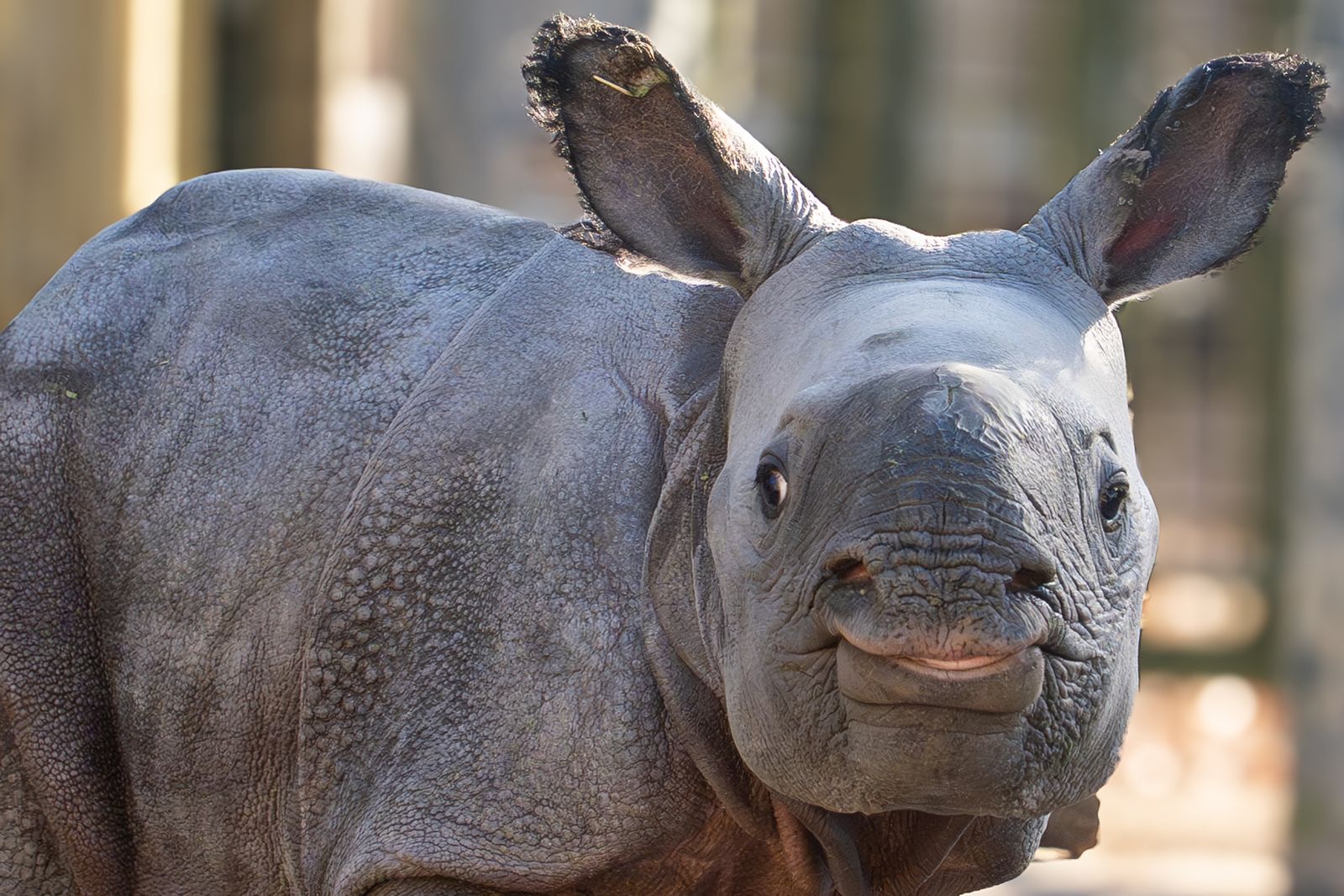
The calf, born October 11, is in good health and exploring a secluded paddock with its mother, out of view of the public November 19, 2026 4:18 p.m. A greater one-horned rhino was born in October at Chester Zoo. Chester Zoo A zoo in England is welcoming an enormous new baby: a greater one-horned rhino. Video footage captured the moment of the calf’s birth at Chester Zoo on October 11, and since then, animal care teams have delighted in watching the baby grow. “The new calf is gorgeous, big and active,” Emma Evison, team manager for rhinos at Chester Zoo, tells Smithsonian magazine. “Every step of the process so far has been brilliant … and it’s a pleasure to see the calf becoming more confident and curious.” It will be a few years before the calf gets its namesake horn, but otherwise, newborn greater one-horned rhinos “come out as almost perfect miniatures of their parents,” Evison says. Their skin folds into plates in a way that resembles a coat of armor, and learning how to inhabit their bulky bodies takes some time. “For the first few days, young rhinos have to work out how their legs are supposed to operate,” she adds. “There’s a bit of wobbliness.” The baby is healthy, though its sex and weight haven’t yet been announced. Greater one-horned rhino calves are typically around 99 pounds, per a statement from the zoo, and by the time it’s an adult, the animal will be about six feet tall at the shoulder. The new calf and its mother, Asha Chester Zoo Zoo staff describe the baby rhino as active and curious. Chester Zoo Greater one-horned rhinos have a gestation period of 15 or 16 months and give birth to a single calf. Chester Zoo The birth marks the fourth calf born to parents Asha and Beni at Chester Zoo. But after siring the calf, Beni died earlier this year from a sudden illness. “It’s lovely to know that his legacy lives on through this calf,” Tom Garland, assistant manager of the rhino team at Chester Zoo, says in the statement. And Asha “has been a brilliant mum to all her youngsters,” he adds. This most recent pregnancy lasted 15 months. Quick fact: A single horn The greater one-horned rhino’s scientific name is a nod to the animal’s single keratinous protrusion: Rhinoceros unicornis. Tracking a rhinoceros pregnancy isn’t an easy task. With such thick skin, rhinos are tough targets for ultrasound machines. But caretakers were able to follow Asha’s reproductive cycle by measuring fertility- and pregnancy-related hormones—like estrogen and progesterone—in her dung. This technique also showed them when Asha was ready to breed, allowing them to safely introduce her to Beni. Rhinos are typically solitary animals outside the mating season, so knowing when they can come together is helpful for zoo scientists hoping to increase their population. A CCTV camera captured the moment of the calf's birth and its first shaky steps. Chester Zoo Greater one-horned rhinos once lived throughout the northern region of the Indian subcontinent. But at the start of the 20th century, after widespread habitat loss and relentless hunting driven in part by demand for their horns, only about 200 were left in the wild. Thanks to decades of conservation efforts and strict protections, the rhinos have come back from the edge of extinction, with some 4,000 of them now living in the wetlands, forests and grasslands of northern India and Nepal. The species remains vulnerable to extinction, however, and the animals still face risks. Between January 2021 and December 2024, poachers killed nine greater one-horned rhinos in India, and another four were killed in Nepal, Spoorthy Raman reported for Mongabay last year. Many of the wild rhinos are concentrated in only a few national parks, a distribution that “makes them vulnerable to illness and environmental changes,” Mark Brayshaw, the Chester Zoo’s head of mammals, says in the statement. Though the rhinos have more conservation guardrails than they once did, he notes, “they still need people to love and protect them.” The greater one-horned rhino calf at Chester Zoo Chester Zoo Chester Zoo belongs to a breeding project across Europe that’s working to conserve the rhino species. And this calf is a key part of that effort, since it belongs to a genetically valuable lineage. “Asha is an important rhino, because her genetic line is not over-represented in this population,” Evison says. Even though her species has seen recent success in the wild, “you don’t know what might happen down the line, so it’s important to have that insurance population of healthy individuals in human care.” “Every birth is important for the future of this species,” Garland says in the statement, “and it’s wonderful to see another healthy arrival.” You Might Also Like Get the latest stories in your inbox every weekday. More about: Animals Baby Animals Conservation England Good News Mammals Nature Zoology
See the Rare Baby Rhinoceros Born at England's Chester Zoo, an Adorable Boost for Its Vulnerable Species
Full Article
Original Source
Read the full article at Smithsonianmag →KhanList aggregates and links to publicly available news content. We do not host full articles from third-party sources. Always verify important information with original sources.