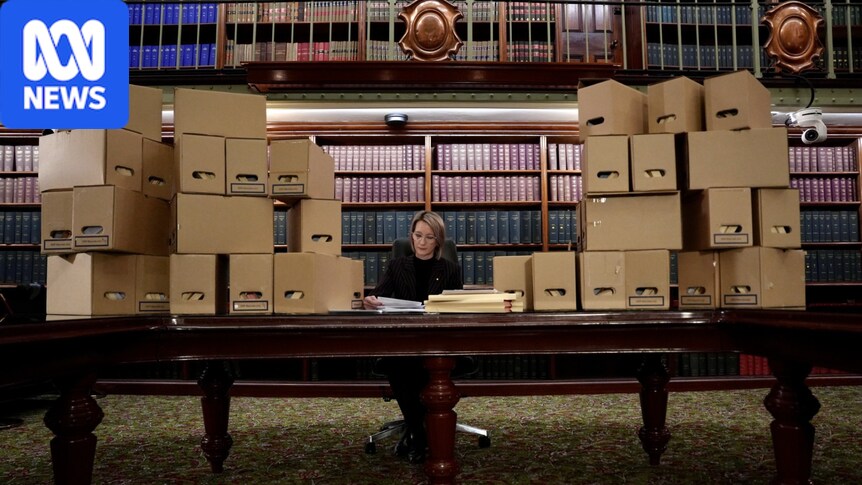
Tunnel workers carving out some of the nation's multi-billion-dollar infrastructure projects were repeatedly exposed to levels of silica dust far beyond the workplace standard, according to previously secret reports and data sets.The exposure level breaches are detailed in air sampling records from Brisbane's Cross River Rail, the largest study of NSW tunnel projects exposure levels, and leaked WorkSafe notices from Melbourne.Occupational hygienist Kate Cole, who analysed 375 air sampling results released under Right to Information laws from Brisbane's $19 billion Cross River Rail project, found workers were exposed to silica dust above the standard at least 55 times. One breach peaked at 11 times the limit, Ms Cole found.Occupational hygienist Kate Cole is considered a leading expert in workplace silica dust exposure. (ABC News: Berge Breiland)Silica dust is invisible to the human eye and inhaling the fine particles can cause the incurable disease silicosis, lung cancer, kidney disease and chronic obstructive pulmonary disease and is linked to pulmonary fibrosis and autoimmune disorders.In addition to engineering controls to suppress dust, underground workers usually wear masks to prevent them from inhaling the dust, but to be effective the PPE must be fit-tested and worn correctly, and workers must be clean-shaven.Ms Cole first sought the Cross River Rail's air monitoring reports under Right to Information in August 2023, from the Queensland Office of Industrial Relations.But the government department, the joint contractors CPB, BAM, Ghella, UGL and the government-appointed Cross River Rail Delivery Authority opposed their release, arguing it was not in the public interest.They also argued releasing the data could fuel union aggression and harassment at the project.Despite the information commissioner ruling to release the data, the tunnel contractors appealed the decision at the Queensland Civil and Administrative Tribunal, seeking Ms Cole to pay costs if successful.At that point, Ms Cole decided to engage lawyers to fight for the documents' release."I just thought, you know what, game on, if they want to keep this information secret, it must be for a reason," Ms Cole said.Maurice Blackburn's principal dust disease lawyer Jonathan Walsh, who represented Ms Cole in the battle, said the case was "a shameless and ultimately flawed attempt by the contractors to suppress what is very damaging information".The tribunal ultimately ruled in Ms Cole's favour, so three years after first applying Ms Cole received the documents — which contained more than 1,600 pages of data from the project's 375 air monitoring results across six sites in 2020 and 2021.Contractors are required under law to conduct air monitoring throughout the project, but the regulation does not mandate specific requirements about its scope or detail.Workplace regulators are also required to monitor compliance, and can compel projects to provide the information. The Cross River Rail contractors provided the air sampling reports to the regulator voluntarily.Ms Cole has spent years fighting to access documents containing air monitoring test results. (ABC News: Berge Breiland )The data released to Ms Cole by the Office of Industrial Relations did not include any data for the Cross River Rail beyond March 2021."There's 15 months' worth of silica dust data from the Cross River Rail, and it just stops in March of 2021 … when tunnel boring machine tunnelling was just starting," Ms Cole said."We don't have any explanation as to why they stopped, but to be honest, in Australia we talk a lot about the pub test and to me that just does not pass the pub test".Her analysis of the data she did receive found that along with the significant breaches, the monitoring reports offered an incomplete picture of exposure to workers.She said 44 per cent of the reports showed monitoring either took place when consultants were unable to access the tunnel or shaft, outside periods of high-dust activities, or when routine work was suspended or reduced.Ms Cole said the reports also showed the ventilation was not always adequate, and the effectiveness of ventilation was mainly assessed visually by a consultant rather than measured."How many workers will contract silicosis and lung cancer? Only time will tell," she said.Authorities say safety taken 'extremely seriously'Queensland's Office of Industrial Relations did not respond to a request for comment.The contractors for the Cross River Rail did not directly respond to the ABC's questions about exposure breaches but said the health and safety of its workers was the joint venture's "highest priority" including protection from silica dust."On the Cross River Rail (CRR) project, air quality monitoring in accordance with regulatory obligations are undertaken by an independent occupational hygienist during all excavation and tunnel activities and monitored by Workplace Health and Safety Queensland," a spokesperson said.The contractors for the Cross River Rail did not directly respond to the ABC's questions about exposure breaches. (Supplied: Cross River Rail)The Cross River Rail Delivery Authority, set up to manage the project, said monitoring was compliant with state and national air quality requirements."The Delivery Authority takes safety extremely seriously and expects contractors to maintain the highest safety standards," a spokesperson said.Tunnel worker faces 'gutting' silicosis diagnosisUnder pressure to meet construction deadlines, tunnellers work in difficult and high-risk conditions underground, often for gruelling 12-hour shifts on a 7-day stretch either during the day or overnight, earning up to about $300,000 a year.It was a career Liam Carew loved."There's a brotherhood down there, you're like a family, and it's hard work and everyone's got each other's backs," he said.Now at just 46 years of age, after 20 years underground building tunnels in Brisbane and NSW, he's been diagnosed with silicosis and progressive massive fibrosis and has engaged Maurice Blackburn to represent him."It's pretty gutting, you know, just because of my age," he said.Liam Carew is 46 and has been diagnosed with silicosis and progressive massive fibrosis after 20 years in tunnelling. (ABC News: Mark Leonardi)"I didn't think I would ever get that, and I was always pretty careful underground wearing masks."So this goes to show, whatever you wear down there, you can't eliminate it."His career began building Brisbane's Clem 7 and Airport Link tunnels, before he moved to work on a Byron Bay tunnel, Sydney's Metro tunnel sites and Brisbane's Cross River Rail.Being "brutally honest" he said the Cross River Rail "wasn't the worst tunnel" he's worked on, but "the dust is always there, no matter what tunneling you're doing".Mr Carew says he took precautions such as wearing a mask while working underground. (ABC News: Mark Leonardi)After his diagnosis, he can no longer work underground, but Mr Carew said he was still working above ground as an excavator operator.Mr Carew said his symptoms so far had reduced his ability to play touch football, rugby and go for a run like he used to."Now, I struggle to breathe, even walking, walking any longer than a kilometre," he said.His doctors have told him the conditions will get progressively worse."My kids, you know, I worry about them and want to be around for them long-term," he said."That's my biggest concern, being around for them and their kids as well".Mr Carew can no longer work underground, but is still working above ground as an excavator operator. (ABC News: Mark Leonardi)Ms Cole said the personal cost to people like Mr Carew fuelled her fight to bring critical air quality data into the public domain."To be honest, it's really sad," she said."As a scientist, we spend so much time looking at the risk and understanding the risk, but at the other side, as a human, you know that the outcome of that risk is a person."It's really, really challenging to work in this industry and to do this work because these are people just like you and me, and they just go to work and they shouldn't have to deal with the risk of this disease."Calls for national silica dust standards to be tightenedMs Cole, who is considered a leading expert in workplace silica dust exposure, has conducted the largest analysis of exposure data in NSW tunnels to date, published today in the peer-reviewed journal, the Annals of Work Exposures and Health.She found, on average, underground workers from the 12 projects were exposed to silica dust above the workplace standard.Ms Cole said Sydney's sandstone can naturally contain more than 90 per cent crystalline silica, which is higher than the concentrations in Melbourne and Brisbane.After multiple failed Freedom of Information requests, the NSW Parliament compelled the government to release the data needed for Kate Cole's research. (Facebook: Parliament of NSW)Getting access to those figures was also difficult for Ms Cole, involving multiple failed Freedom of Information requests, before the NSW parliament compelled the government to release the data.At the time pressure was also mounting from the Australian Workers Union, which was calling for transparency and accountability amid concerns about a wave of workers being diagnosed with silicosis.Ms Cole then rifled through 44 boxes containing more than 104,000 pages, to study about 3,000 individual exposure figures from eight years of construction on 12 tunnels in NSW."The highest exposures were to roadhead operators without cabins, [which were] on average around 70 to 80 times the exposure standard at the time," she said."This data should be freely available … people shouldn't have to go to this level like I have to get access to really important information."Following concerns, the NSW government established an expert taskforce to address silica-related health risks for workers in tunnelling projects and develop a new code of practice for the industry.NSW's acting minister for Work Health and Safety Daniel Mookhey said the government takes exposure to silica dust "very seriously", focusing on prevention through health surveillance, compliance and enforcement, and providing access to services for workers."We have demonstrated our commitment to workplace safety by establishing Safework NSW as a standalone regulator and investing an additional $127.7 million over four years to strengthen compliance and enforcement," he said.“Employers of workers in high-risk crystalline silica processing must now register workers on the mandatory Silica Worker’s Register within 28 days of starting high-risk tasks."Australia's workplace exposure standard was halved to 0.05 mg/m³ in 2020, but the standard is adjusted to lower levels for workers underground for longer shifts over several days.Work health and safety ministers around the country are yet to determine whether to lower the standard again at the end of the year despite growing calls to do so."The challenge is that the exposure standard at the moment is still too high, it still puts tunnel workers at risk of silicosis and lung cancer," Ms Cole said.Breaches flagged on Melbourne Metro Tunnel projectLeaked WorkSafe Victoria notices issued to the Metro Tunnel project contractors Lendlease, John Holland and Bouygues Construction in Melbourne show similar examples of alarming exposure to the deadly dust.In January 2021, WorkSafe reported the project had commissioned air monitoring sampling in September 2020 which showed six employees had been exposed to silica dust above the workplace standard, including two breaches which were 10 times the benchmark.But the breaches were not shared with supervisors or employees for at least four months, the notice stated.Leaked WorkSafe Victoria notices issued to three Metro Tunnel project contractors show similar examples of alarming exposure to the deadly dust. (Supplied: WorkSafe)The two employees who had been exposed to 10 times the standard were found to be wearing masks, but were not clean shaven, rendering them less effective, WorkSafe found.WorkSafe was told four of the six employees were undergoing health monitoring after the exposure, but it couldn't be verified if the other two further employees, who were subcontractors, were also getting follow-up care.A Victorian government spokesperson responded on behalf of the project contractors, telling the ABC the "strongest protections" were in place."WorkSafe investigated the matter and no further action was taken," the spokesperson said.Calls for cultural change across industryMaurice Blackburn lawyer Jonathan Walsh and his team represent over 50 tunnellers, including Mr Carew, who have developed dust-related lung diseases.He said many of his clients reported that across projects the priority was production, and workers felt intense pressure to ensure they continued as expected.Maurice Blackburn principal lawyer Jonathan Walsh represents dozens of workers with lung disease. (ABC News: Mark Leonardi)He said clients regularly told him that when workplace regulators attended sites to conduct sampling, they were sent to certain sections of the tunnel site where production for that day had ceased."Meanwhile, you know, a few kilometres away on a different part of the project, everything is going hell for leather," Mr Walsh said.Mr Carew said cultural change was needed in the industry so workers felt empowered to speak up."You speak up, and then I guess, you know, you're considered a troublemaker," he said."I think what needs to change is the contractors actually spending money on systems that are actually going to work effectively and actually mitigate the dust."I won't be working underground again, I'm the voice for the guys still working underground."
Secret reports reveal silica dust breaches on major tunnel projects
Full Article
Original Source
Read the full article at Abc →KhanList aggregates and links to publicly available news content. We do not host full articles from third-party sources. Always verify important information with original sources.