
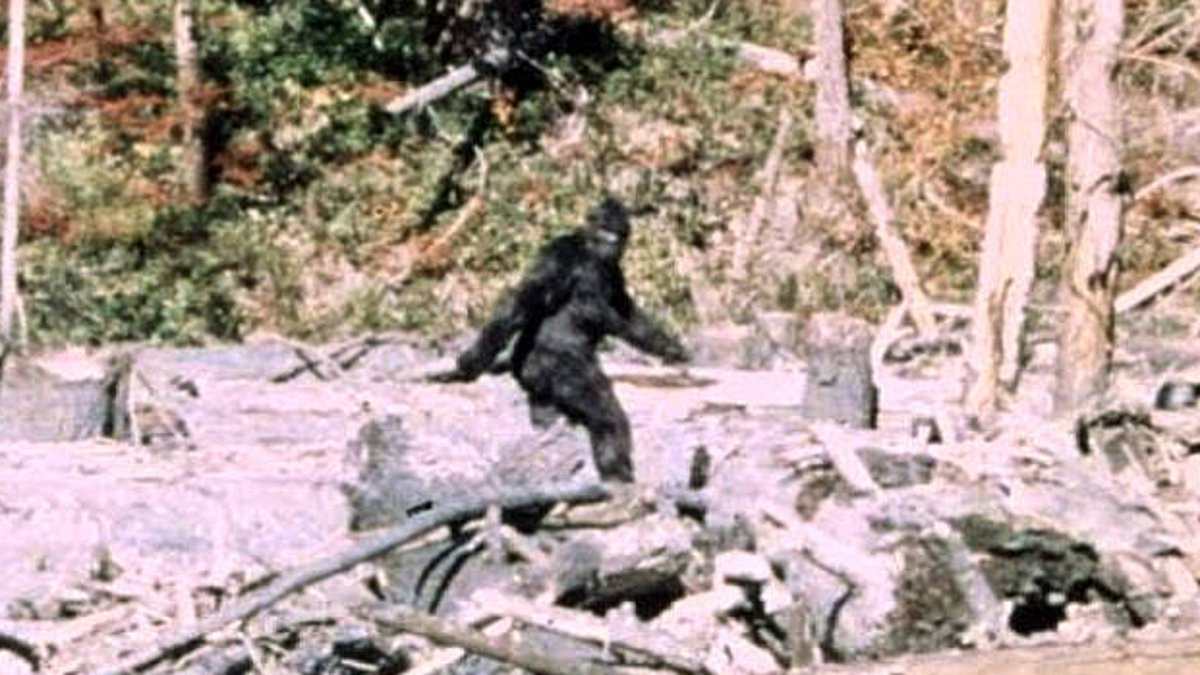
A trove of once-classified files released by the US government has revealed startling accounts of encounters with Bigfoot and other mysterious beasts. The US Forest Service quietly unsealed three reports on October 15, which came to light on Friday, discussing the legendary large, hairy, ape-like creature said to live in North America.The newly released records detail alleged encounters with the tall, hairy, two-legged creature in Montana and Washington state dating back to the 1940s. Separately, staff at Stanislaus National Forest near California’s Yosemite hosted an October 8 forum titled 'Bigfoot in Your Backyard,' the Washington Post reported.A 1982 report details an investigation by a Forest Service patrolman in Washington state who reported seeing a large, unidentified creature. Footprints were discovered, but were not ultimately identified as belonging to a Sasquatch.Another file contains a newspaper article about Bigfoot, while a third recounts a 1941 encounter at Petty Creek, Montana, involving a 'creature that walked on its hind legs' and left tracks in the woods.A third document contains a personal history of Montana’s Petty Creek area in which Leo T Kinney recounts a hunting party’s discovery of mysterious tracks after an elk carcass disappeared.Kinney said he and three companions arrived to collect the animal but found only its entrails and large footprints in the snow, without seeing whatever had left them. The US Forest Service quietly unsealed three reports Friday discussing the legendary large, hairy, ape-like creature said to live in North America. Above is Bigfoot 'evidence' that came in 1967, when Bob Gimlin and Roger Patterson filmed a now-iconic clip of a large, furry figure at California's Bluff Creek One file contains a newspaper article about Bigfoot, while a third recounts a 1941 encounter at Petty Creek, Montana, involving a 'creature that walked on its hind legs' and left tracks in the woodsStories of large, hairy humanoid beings and 'wild men' have existed in Indigenous cultures across North America for centuries.However, scientists and government officials have long dismissed Bigfoot's existence.The files, first reported on by The Washington Post, provide never-before-seen accounts and witness statements about the mythical creature.The first document is a 1982 examination of tracks found in the Mill Creek watershed of Umatilla National Forest, which stretches from Oregon to Washington, including impressions measuring approximately 15 inches long and up to seven inches wide.Wildlife biologist Rodney L Johnson joined a group investigating the discovery on June 17 and recorded his findings in a memorandum the following day.Tracks had been identified at three locations, but investigators only examined two, photographing the impressions and making plaster casts of the clearest examples.One site contained six tracks along a muddy trail, and another held approximately 18 prints near an elk wallow, with disturbed vegetation extending beyond them. ‘If the tracks were faked, someone went to a great deal of trouble and detail. The "print" marks on the foot would have to be very hard to duplicate,’ Johnson wrote. A trail of 35-45 clear, pristine footprints in Washington in 1996, shared by Jeff Meldrum, Bigfoot expert and author of Sasquatch: Legend Meets Science‘They appear very natural. I would almost suspect a cast made of an actual foot would have had to be used to make the 'fake' feet. If this were the case, though, the other creases in the foot would have shown.’However, Johnson identified eight inconsistencies, including an unchanging four-foot stride across different slopes and tracks that appeared to begin and end abruptly. Investigators in boots also sank deeper into the mud than the supposed creature.US Border Patrol tracking expert Joel Hardin called the tracks ‘a very clever attempt to perpetrate a hoax,’ suggesting someone had used a plaster- or rubber-coated artificial foot.He believed involving the Forest Service could lend the discovery public credibility and recommended closing the case.Johnson concluded that the tracks at two sites along Low Creek had been made by something other than a two-legged creature weighing more than 300 pounds. The newspaper article, dated January 13, 2003, was about hundreds of giant, human-like footprints discovered near 87-year-old Jim Rohweder’s sawmill in MontanaTheir four-foot spacing remained unchanged across different slopes, investigators’ boots sank deeper into the mud, and the tracks began and ended abruptly rather than forming a continuous trail.He also noted unusually clear toe markings without expected creases or toe-pad impressions, no signs of slipping on steep, wet ground, and forest debris that appeared to have been brushed aside before the prints were made.Several impressions suggested an artificial foot had been rocked from side to side. Nevertheless, Johnson acknowledged that the markings looked natural and would have required considerable effort to fake.The newspaper article, dated January 13, 2003, was about hundreds of giant, human-like footprints discovered near 87-year-old Jim Rohweder’s sawmill in Montana.Eight-year-old Austin Petersen found the tracks while visiting Rohweder with his father. Rohweder initially thought they were bear tracks, but closer inspection revealed toe-like markings that residents believed looked human.The impressions reportedly measured 16½ inches long and 8½ inches wide, with an average stride of five feet.Rohweder’s wife, Gladys, also recalled seeing a strange, hairy, two-legged creature when the couple first moved to the property approximately 30 years earlier.In the final report, Kenny wrote that he and his companions followed the tracks for roughly half a mile before discovering that something appeared to have carried the elk across a three-foot-diameter log, leaving marks where its antlers scraped the snow.The men abandoned their pursuit, deciding they were ‘not particularly anxious to catch up to whatever it was.’The following year, hunter WW Schmitz reportedly encountered similar tracks, a strong odor and a grunting noise before leaving the area.
Secret Bigfoot files released by government reveal terrifying encounters with mysterious creatures
Full Article
Original Source
Read the full article at Dailymail →KhanList aggregates and links to publicly available news content. We do not host full articles from third-party sources. Always verify important information with original sources.