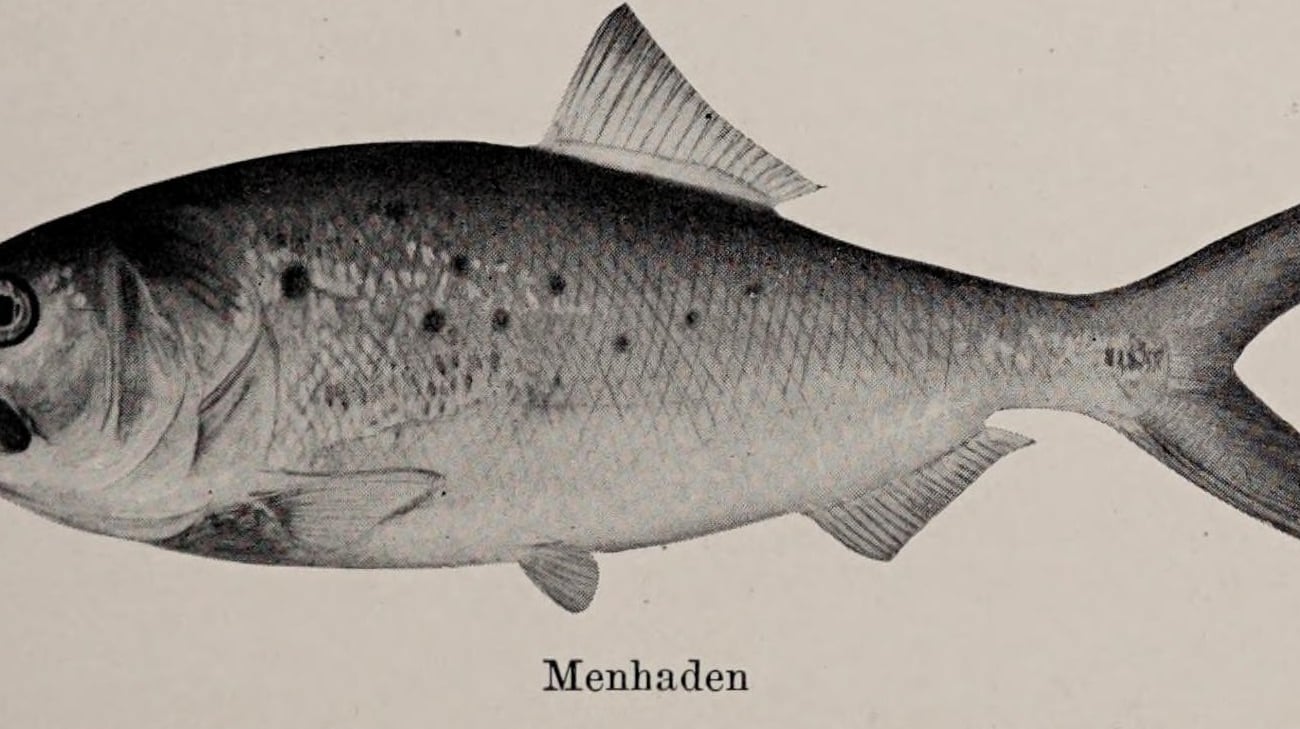
The federal appeals panel refused to revive a False Claims Act suit against a Canadian fishing conglomerate accused of illegally harvesting wild menhaden fish at a Virginia fishery in U.S. waters.MANHATTAN (CN) — A Second Circuit panel ruled Wednesday that wild fish do not constitute “property” for purposes of a False Claims Act complaint, affirming a lower court’s dismissal of a $2 billion case brought by a pair of private U.S. citizens who accused a Canadian seafood conglomerate of illegally harvesting from U.S. waters many millions of dollars’ worth of fish to which it was not entitled.“Here, the interest that the government retains in wild fish and game is exercised through its regulatory power, and not by virtue of the government’s ownership of them, and that interest (though broad and important) does not transform the regulatory power into a property right,” U.S. Circuit Judge Joseph F. Bianco wrote in the panel’s 32-page ruling, affirming the dismissal of the False Claims Act claims in the Southern District of New York.Under the False Claims Act, individuals can sue on behalf of the government in a qui tam action. If the case is won, the individual shares any money recovered.The two U.S. citizens — relators W. Benson Chiles and Chris Manthey — initially filed the qui tam case under seal in July 2021 on behalf of the U.S. government, accusing the Saint John, New Brunswick-headquartered Cooke Seafood of defrauding the United States through violations of the American Fisheries Act.They argued Cooke circumvented regulations of the American Fisheries Act by setting up a sham company in the name of Seth Dunlop, the inexperienced nephew of the foreign company’s CEO, to create an illusion of compliance with the requirement that any vessel that fishes commercially in U.S. waters must be owned and controlled by U.S. citizens.Dunlop was merely a “figurehead,” they argued, because in reality, Cooke and its Virginia-based subsidiary Omega Protein retained de facto control over the fishing vessels.The underlying complaint focused on Omega Protein, which processes menhaden, a small forage fish colloquially known as pogies and bunker. Menhaden are used mainly in pharmaceuticals and fish-oil supplements, as well as in fishmeal, fertilizer, animal feed and other commercial products not intended for direct human consumption.On appeal, the relators reprised their argument that the Canadian fishing companies committed fraud to get valuable natural resources, a “form of national wealth” as recognized by Congress, worth millions of dollars.They also argued U.S. District Judge Jesse M. Furman dismissed their complaint without considering the Submerged Lands Act, which prescribes that states have “title to and ownership of” all the “fish, shrimp, clams, oysters, crabs, lobsters, sponges, kelp and other marine animal and plant life” in state waters.Rebutting the appeal, the fishing companies urged the Second Circuit to affirm the lower court’s dismissal, pointing to the Supreme Court’s prior holding in 1977 that state ownership of wildlife was “pure fantasy.”The Second Circuit also cited the Supreme Court’s language pertaining to the lack of property rights conferred by the United States government’s broad regulatory authority over wild fish.“Accordingly, because the federal and state governments do not have a property interest in wild fish, the district court correctly concluded that the amended complaint failed to state a claim under Sections 3729(a)(1)(A), (B) and (C) of the False Claims Act,” Bianco wrote in the opinion.Bianco had previewed the panel’s likely ruling during oral arguments in September 2025, where he noted it “sounds like a regulatory matter.”U.S. Circuit Judges Richard Wesley, a George W. Bush appointee, and Beth Robinson, a Joe Biden appointee, joined Donald Trump-appointed Bianco on the panel.The Second Circuit panel also affirmed that the lower court correctly held the relators had failed to state a reverse false claim.Subscribe to our free newslettersOur weekly newsletter Closing Arguments offers the latest about ongoing trials, major litigation and rulings in courthouses around the U.S. and the world, while the monthly Under the Lights dishes the legal dirt from Hollywood, sports, Big Tech and the arts.Additional Reads
Second Circuit holds wild fish are not ‘property’ under False Claims Act
Full Article
Original Source
Read the full article at Courthousenews →KhanList aggregates and links to publicly available news content. We do not host full articles from third-party sources. Always verify important information with original sources.