
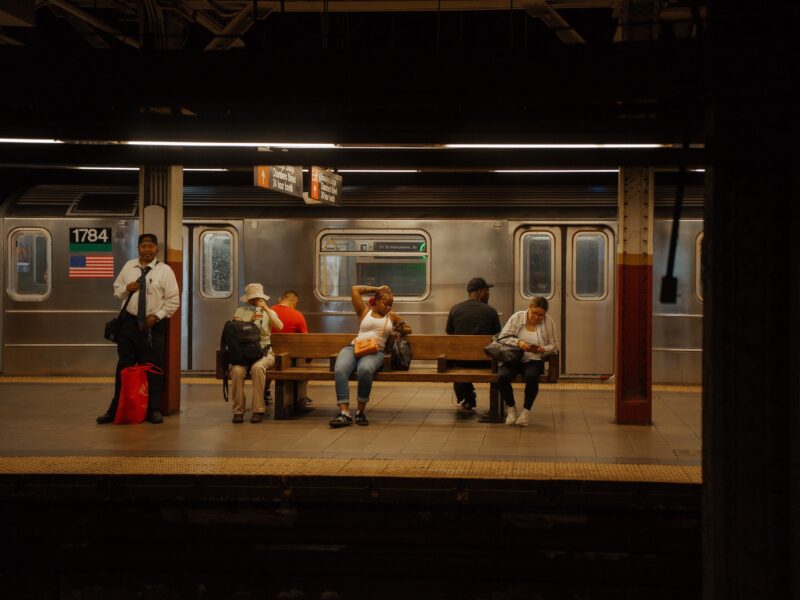
Student tourist Luisa Janssen Harger Da Silva won the massive sum after a Brooklyn subway severed her left arm and left leg in 2016.MANHATTAN (CN) — An attorney caught heat from the Second Circuit on Friday after he admitted to using artificial intelligence to craft an error-ridden brief on behalf of his client in an $82 million personal injury case.The lawyer, Elliot Shields of Roth & Roth LLP, represents Luisa Janssen Harger Da Silva, a former student tourist from Brazil who lost an arm and a leg after fainting onto a Brooklyn subway track and being struck by a train in 2016. The MTA is appealing her jury award, but Friday’s arguments turned to letters Shields sent the court acknowledging several quotation and citation errors in his brief.“It was not clear to me from reading your letters, but it sounded like some of these errors that occurred in briefing were the result of the use of AI,” said U.S. Circuit Judge Maria Araújo Kahn. “You don’t actually note that in your letters, so I’m asking you whether in fact that was the case.”Shields assured the Second Circuit panel that he takes the mistakes “incredibly seriously,” but acknowledged that they indeed likely “arose from the use of AI.” In one of his letters to the court, he called the errors “professionally embarrassing and humiliating.”Kahn, a Joe Biden appointee, was gracious but firm when admonishing him.“AI can be a wonderful resource,” she said. “But there’s an attorney in the state that I primarily work out of in Connecticut that was recently suspended for precisely this type of issue … the use of AI has its perils.”U.S. District Judge Rachel Kovner of the Eastern District of New York, who joined the appellate panel Friday, noted that the brief contained “any number of quotes that are not in the cases they’re attributed to.”The issue has plagued the legal field amid a meteoric rise of AI use in the workplace. Earlier this summer, an attorney in Washington was sanctioned after using ChatGPT and Claude to prepare filings with dozens of false citations. Last year, a Georgia lawyer was chastised for citing AI-created “hallucinations” in comedian Katt Williams’ assault case.In 2023, a New York lawyer was also left bamboozled after his ChatGPT-crafted brief cited non-existent cases.“It just never occurred to me that it would be making up cases,” the lawyer, Steven Schwartz, said during a sanctions hearing on the issue.In Friday’s instance, however, Shields said the issue wasn’t made-up cases, but rather accidentally citing paraphrases as direct quotes.“We were rushing and we were sloppy,” he told the court. “I think that I transposed notes and put them in quotations.”The Second Circuit gave Shields a week to file a corrected brief arguing his client is entitled to the $82 million award because the MTA failed to take precautions that could have prevented her fall onto the tracks.Da Silva claimed the MTA had more than a decade of data showing exposed tracks posed a danger to riders but failed to install safety measures such as sliding screen doors, despite their use by other major transit systems worldwide.On Friday, MTA attorney Max Crema called New York’s lack of platform screen doors a “trade-off” given the agency’s “limited public resources.”“The MTA has studied them in great detail, including by convening a special platform screen door task force,” he said. “Ultimately, the MTA, like every other mass transit system in the United States, chose an incremental course, further consideration and pilot project planning.”This was a study-based decision the MTA made, not a negligent oversight, Crema claimed, giving the MTA qualified immunity.Kovner, a Donald Trump appointee, asked whether that would still be the case if the studies were “plainly inadequate.”“This is meant to be broad immunity for planners,” Crema replied. “The question is whether a planner considered the issue … No other heavy rail system in the United States has adopted [platform screen doors].”Joining Kahn and Kovner on Friday’s appellate panel was U.S. Circuit Judge Reena Raggi, a George W. Bush appointee. The trio didn’t immediately issue a ruling following the arguments.Da Silva’s verdict is considered a potential landmark that establishes liability for a transit agency’s failure to secure platform edges. Her $82 million award included $70 million for pain and suffering.Subscribe to our free newslettersOur weekly newsletter Closing Arguments offers the latest about ongoing trials, major litigation and rulings in courthouses around the U.S. and the world, while the monthly Under the Lights dishes the legal dirt from Hollywood, sports, Big Tech and the arts.Additional Reads
Second Circuit cautions lawyer against AI use in $82 million NYC subway injury case
Full Article
Original Source
Read the full article at Courthousenews →KhanList aggregates and links to publicly available news content. We do not host full articles from third-party sources. Always verify important information with original sources.