
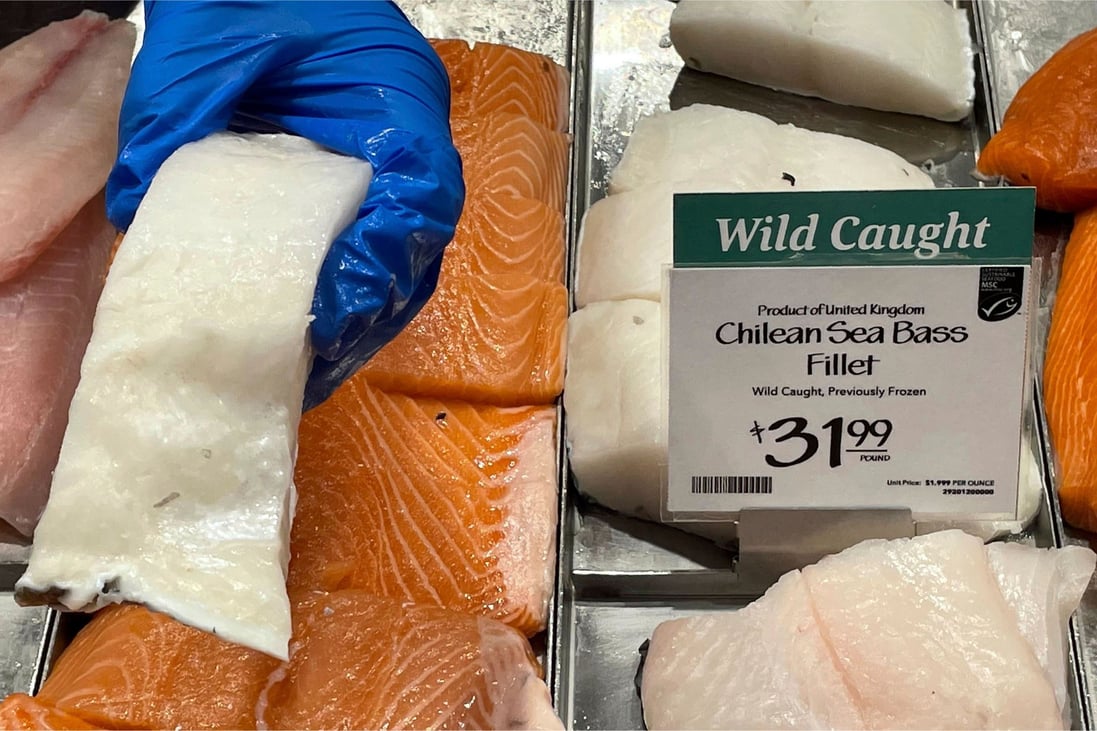
The four-year restriction on Chilean sea bass imports stems from an international dispute over fishing practices in the pristine waters near Antarctica.MIAMI (CN) — A Texas-based seafood company on Friday asked the 11th Circuit to allow imports of Chilean sea bass from the South Atlantic Ocean.That comes after federal regulators blocked two shipments of the popular fish over a conservation dispute involving Russia, the U.K. and two dozen other countries.Southern Cross Seafoods sued the U.S. government in 2022 after the National Marine Fisheries Service denied its application to import Chilean sea bass through Florida. Also known as Patagonian toothfish, the species lives in waters near Antarctica.Harvesting of the fish is managed by the 26-member Convention on the Conservation of Antarctic Marine Living Resources. Created by an international treaty in 1980, the organization convenes every year to establish catch limits for a variety of species, including the prized — and pricey — Chilean sea bass.The body works by consensus — but Russia upended that framework in 2021 when it rejected proposed catch limits, essentially closing the area to fishing for most member countries.The U.K. then decided to implement its own rules, allowing limited fishing near the small island of South Georgia, a British territory in the South Atlantic. A U.K.-licensed fishing company sold the Chilean sea bass to Southern Cross Seafoods, prompting the government ban and subsequent lawsuit.Last year, a Miami federal judge ruled in favor of the government.“CCAMLR was created to protect Antarctic marine life,” wrote U.S. District Judge David Leibowitz, a Joe Biden appointee. The company quickly appealed his decision.Representing Southern Cross Seafoods on Friday, attorney Raoul Cantero told a three-judge panel the lack of consensus between the member countries means no limits or prohibitions were put in place.Without a clear mandate, the government’s import ban is arbitrary and illegal, he argued.“The issue in this case is a purely legal question,” Cantero said. “You may be missing Chilean sea bass, and this is why.”“I had some last night,” U.S. Circuit Judge Charles Wilson interrupted, chuckling.“This will be the first time — and I’m not exaggerating — the first time in the history of the convention that fishing has been prohibited by implication,” Cantero continued.Without a consensus agreement among CCAMLR countries, the judges questioned and debated what the organization’s default position would be.“Am I grossly oversimplifying this case in asking what’s the default rule?” asked U.S. Circuit Judge Kevin Newsome, a Donald Trump appointee.“The default rule is everything is permitted," answered Cantero, an attorney with the Miami-based firm White & Case. But U.S. Circuit Judge Robin Rosenbaum pushed back, arguing the purpose of the CCAMLR is clearly conservation.“They did determine that limits were necessary; they just couldn’t agree on what that specific limit was," the Barack Obama appointee said. “You either adopt a limit or else there’s no fishing.”Wilson, a Bill Clinton appointee, seemed to side with the government as he outlined precedent around treaties in a case like this.“The Supreme Court says the government’s interpretation of an international treaty is entitled to great weight,” Wilson said. “You have to convince us not to give great weight to the government’s interpretation of the treaty."“We look to the purpose of the treaty, and here the purpose is conservation of this area from overfishing,” he continued. “That’s a plus in favor of the government.”But Newsome seemed to side with the seafood company. He asked again about default rules.“I guess the reason I’m skeptical is I don’t really know that you need evidence. It’s like, in the state of nature, people fished,” Newsome said. “If that was the state of play before the convention was in place, before catch limits were in place, then I don’t see how we can say that wasn’t the default rule.”He added: “In order to get out of that state of nature, you’ve got to enact something that prevents it — not the other way around.”Supporting the ban for the DOJ, attorney Frederick Turner argued the decision not to approve imports was based on the government’s interpretation of the treaty’s conservation measures.“There could be fishing occurring there now,” Turner said. “It doesn’t necessarily mean that it’s lawful or in compliance."“The National Marine Fishery Service is not saying to the other parties of the convention that fishing cannot occur,” he explained. “This is a decision by one member — the United States — acting through the National Marine Fishery Service.”The judges did not indicate when they might reach a decision.Subscribe to our free newslettersOur weekly newsletter Closing Arguments offers the latest about ongoing trials, major litigation and rulings in courthouses around the U.S. and the world, while the monthly Under the Lights dishes the legal dirt from Hollywood, sports, Big Tech and the arts.Additional Reads
Seafood company floats reversal of Chilean sea bass ban
Full Article
Original Source
Read the full article at Courthousenews →KhanList aggregates and links to publicly available news content. We do not host full articles from third-party sources. Always verify important information with original sources.