
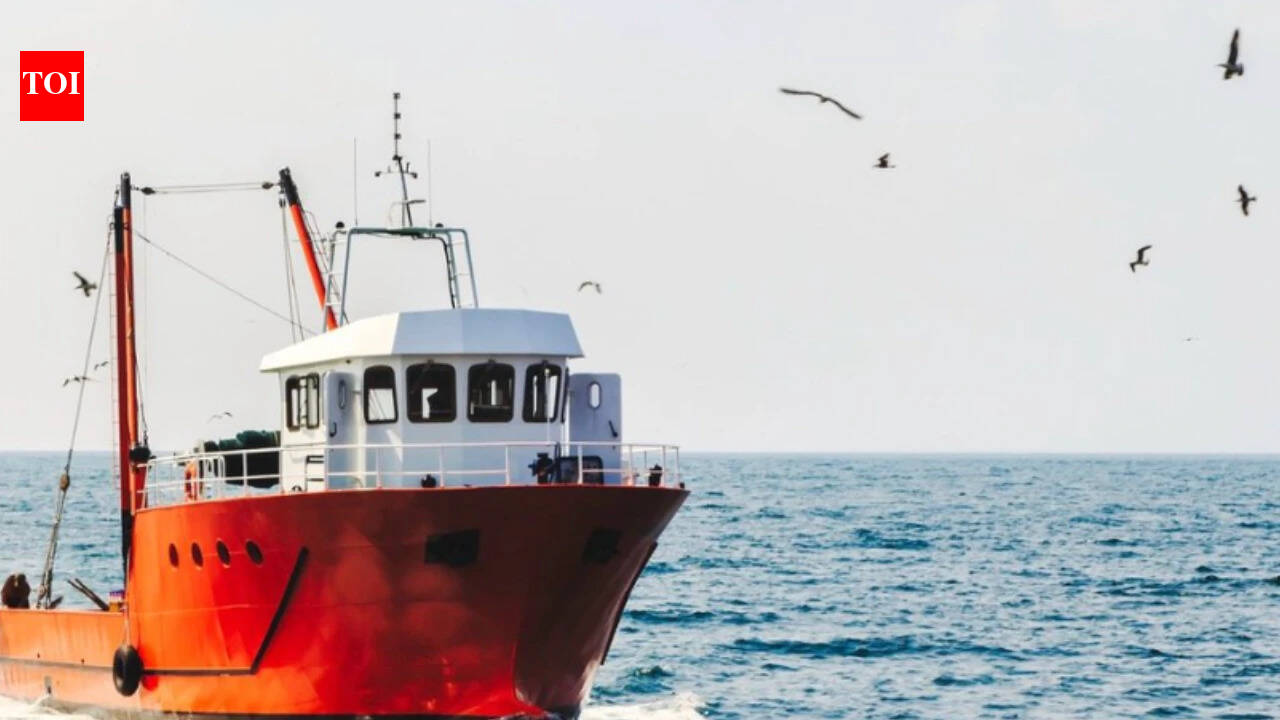
(Image credit: X/ University of Oxford)What if birds could tell us what we are missing at sea? In a rather interesting development, seabirds may have been unwittingly keeping tabs on the ocean's traffic! Researchers have now found that these birds can help scientists record sounds across the ocean, including those made by vessels that may otherwise go unnoticed by conventional tracking systems.According to a report by the University of Oxford, published on November 26, 2026, researchers fitted seabirds with miniature audio recorders and GPS trackers to understand how often they encounter vessels while travelling across the ocean. The findings of the study suggest that these birds may be interacting with considerably more vessels than official tracking records indicate, with around 57% of vessel sounds recorded by northern gannets potentially coming from boats that were not visible on public tracking systems.Listening to what the tracking systems cannot seeThe research focused on three seabird species: northern gannets, Balearic shearwaters and Westland petrels. These birds spend much of their time at sea, where they can encounter fishing vessels, sometimes even approaching them in search of food. However, these encounters can also put them at risk of being accidentally caught in fishing equipment.To better understand the interactions between seabirds and vessels, researchers attached tiny audio-recording devices and GPS trackers to the birds. As the seabirds travelled across the ocean over several days, this equipment captured the sounds around them, including the distinctive low-frequency hum produced by vessel engines.Scientists then developed a computer-based method to identify these sounds within the recordings.Following this, they began comparing what the birds had heard with information available through conventional vessel-tracking systems, including the Automatic Identification System (AIS), which records and broadcasts the positions of vessels, and Vessel Monitoring Systems (VMS), which are also used to monitor vessel movements.The results of this comparison revealed something striking to the researchers. While the birds were picking up sounds from nearby vessels, a significant number of these detections could not be matched to vessel signals available in the tracking records.Researchers then estimated how far the birds were from the nearest tracked vessel when each sound was recorded, helping them assess whether a vessel already visible on the system could reasonably have been responsible for the noise.The estimates suggested that approximately 57% of vessel sounds recorded by northern gannets and 20% of those recorded by Balearic shearwaters may have originated from vessels that were not being tracked.Why are some vessels missing?Not every vessel is required to transmit its location, while others may disappear from tracking records because of technical problems or deliberately switching off their tracking systems. However, the researchers could not establish why any particular vessel was missing from the records, so the findings do not identify individual boats or establish that they were engaging in illegal fishing.What they do highlight, however, is a limitation in relying entirely on vessel-tracking information to understand the extent of fishing activity at sea. If researchers only consider boats that appear on these systems, they could be overlooking a considerable number of encounters between seabirds and vessels.One of the most prominent concerns for these seabirds is bycatch, which occurs when animals are unintentionally caught in fishing equipment. Seabirds can become entangled in fishing lines and nets, sometimes resulting in injuries or death. This is also a significant conservation concern for the critically endangered Balearic shearwater.When fishing boats become a dinner bellProfessor Stephen Votier of Heriot-Watt University, a co-author of the study, explained that some seabirds, including gannets, are attracted to fishing vessels because of the food opportunities they offer. Discarded fish and bait can make boats a potential source of food. For these birds, a fishing vessel can sometimes be more of a dinner bell than a warning signal.However, this very attraction can also bring birds dangerously close to fishing gear, increasing their chances of accidental capture.Can listening help protect seabirds?The researchers believe that this audio-based approach could eventually help conservationists identify areas, fisheries and ports where measures to reduce bycatch may be particularly necessary. By understanding where seabirds encounter vessels, scientists could develop a clearer picture of the places where wildlife faces greater exposure to fishing activity.There are also possibilities for improving the technology itself. At present, the method can identify the presence of vessels through their sounds, but it cannot reliably distinguish between different types of boats. Future research could investigate whether variations in engine sounds might help differentiate smaller fishing boats from larger trawlers.In sum, the researchers do not propose using these recordings to identify or monitor individual fishing vessels in real time. Rather, the objective behind the study was to better understand how seabirds interact with human activities across the vast expanse of the ocean.Turns out that listening in more closely does indeed open up intriguing new possibilities, now even for marine wildlife.
Seabird recordings suggest 57% of boat sounds came from vessels absent from data
Full Article
Original Source
Read the full article at Timesofindia →KhanList aggregates and links to publicly available news content. We do not host full articles from third-party sources. Always verify important information with original sources.