
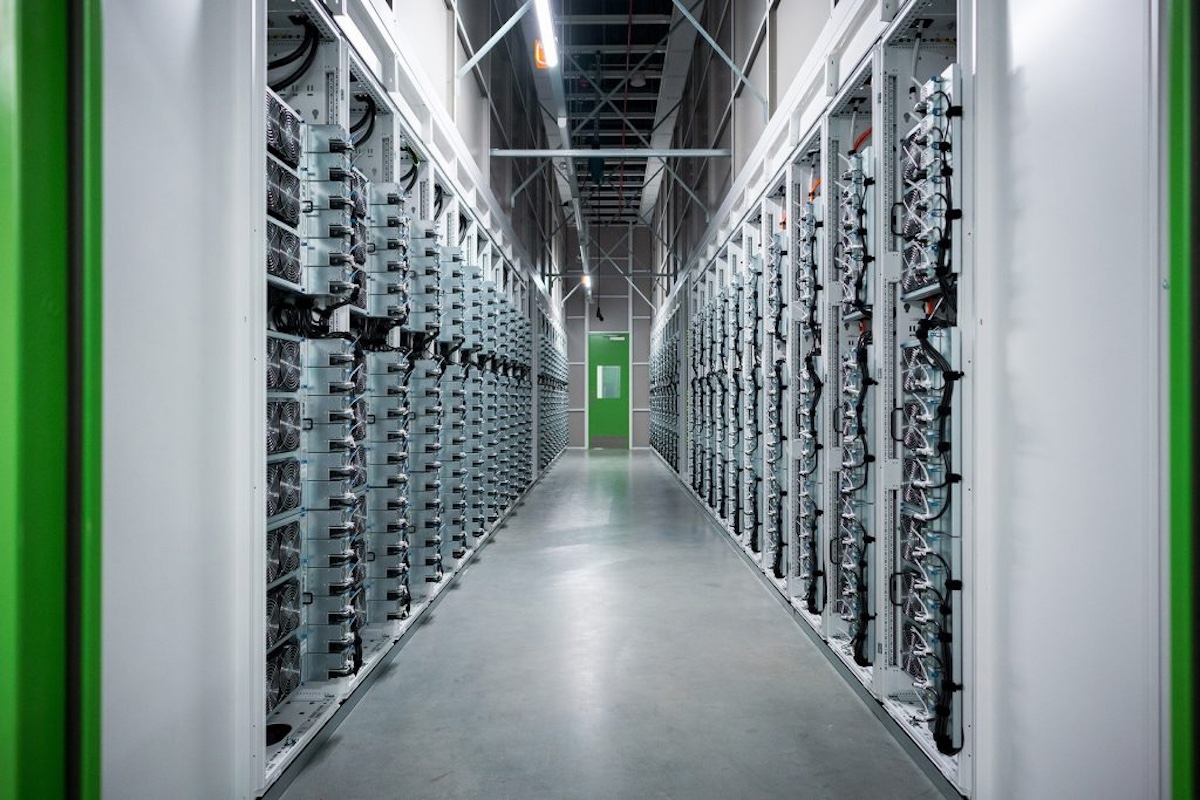
In Manila on November 16, Chinese and ASEAN leaders confirmed that the China-ASEAN Free Trade Area (CAFTA) 3.0 upgrade protocol will formally enter into force at the start of next month. Moving far beyond tariff reductions, the pact institutionalizes cross-border alignment across digital trade, e-payments, smart customs single windows, supply-chain connectivity and artificial intelligence standards. Yet on the same day in Washington, the US Commerce Department’s Bureau of Industry and Security (BIS) issued its interim final rule, Addressing Remote Access to Advanced Semiconductors. Taking effect upon its Federal Register publication on November 19, the rule places Singapore, Malaysia, Thailand and Indonesia, alongside Brazil, under strict new licensing requirements for advanced AI chips, triggering a hard 90-day compliance countdown for regional data centers providing remote compute access to Chinese-headquartered firms. For two years, global tech-policy debates have run on parallel tracks: Washington export-control analysts prioritize closing chip diversion loopholes, while emerging-market researchers debate whether building national AI systems on Chinese open-weight foundations locks the Global South into Beijing’s governance orbit. Few have modeled what happens when such forces intersect on the ground in Southeast Asia this winter. As CAFTA 3.0’s institutional integration collides with Washington’s extraterritorial cloud policing, ASEAN enterprises face a structural split-stack trap that exposes costly blind spots across the region. Washington blind spot In Washington, analysts at the Center for Strategic and International Studies and Center for a New American Security view the BIS rule as an overdue patch to the rescinded Biden-era AI diffusion framework. By replacing tiered global quotas with targeted destination controls and a 12m aggregate processing cap across digitally linked data centers serving clients in Macau or Country Group D:5 destinations (including China and Hong Kong), BIS aims to stop developers from renting frontier Nvidia clusters in Johor or Singapore to bypass chip bans. Crucially, the rule exempts US-headquartered end users, privileging American hyperscalers in Southeast Asia while subjecting local operators to strict licensing and customer-screening hurdles. Meanwhile, Washington’s compliance-centric model has a glaring geoeconomic blind spot: it treats Southeast Asian data centers as isolated server farms rather than nodes embedded in a US$1trillion regional trade bloc. Legally, Washington’s export-control perimeter is narrower than broad trade decoupling. “The rule doesn’t say you can’t serve the US and China overall; it’s what you can do with the high-end US chips,” said Steven Okun, chief executive of Singapore-based consultancy APAC Advisors. He noted that BIS licensing targets frontier AI models rather than routine warehousing or general logistics. However, viewing the collision merely as a matter of checking two separate compliance boxes can mask a deeper institutional divide. Washington and Beijing simply do not govern technology the same way. The US regulatory model relies on legalistic perimeter policing: discrete rules, end-user checklists and auditable walls around specific hardware. On the other hand, China’s governance model under CAFTA 3.0 operates through embedded infrastructural integration: shared technical standards, interoperable payment and customs plumbing and continuous cross-border data corridors. When a Southeast Asian bank, logistics platform or enterprise plugs into CAFTA 3.0’s digital ecosystem while trying to run generative AI workloads on BIS-restricted compute, two incompatible governance philosophies collide within the same corporate architecture. More importantly, Washington’s narrow exception for commercial recommender systems leaves general-purpose generative AI squarely inside the licensing net. By shifting legal liability onto overseas operators to verify end-user workloads within 90 days or face export blacklisting, BIS has turned US cloud infrastructure in ASEAN into a compliance hazard, accelerating commercial defection toward self-hosted Chinese open-weight models such as Alibaba’s Qwen, DeepSeek and Moonshot’s Kimi K3. Singapore-Malaysia squeeze These regulatory headwinds are hitting just as Southeast Asia’s physical data-center buildout runs into acute resource and political limits. In Malaysia’s Johor state, where operational data center load surged to roughly a quarter of the state’s electricity, authorities halted approvals for water-intensive Tier 1 and Tier 2 designs amid drought pressures and grid strain. Across the Causeway, an asymmetric value-chain hierarchy has taken shape: regional corporate headquarters and legal orchestration cluster in Singapore, while Johor absorbs the water- and power-intensive physical buildout. Overlaying that infrastructure split is a sharp regulatory and investment bind. “There is a mismatch: on one hand they want investments into Johor, especially AI data centers, and on the other hand they obviously do not want to create issues with Washington,” said James Chin, professor of Asian studies at the University of Tasmania. He noted that while Prime Minister Anwar Ibrahim’s government seeks to keep both Beijing and Washington onside to protect foreign investment, Putrajaya has already launched probes after receiving a US list of firms suspected of gray-market chip transfers. A Wall Street Journal investigation published on November 21 highlighted that enforcement challenge, detailing how networks linked to Singapore-based Megaspeed routed hundreds of millions of dollars of Nvidia hardware into Malaysia to serve Chinese clients. Yet policing physical chip shipments only addresses half of the enforcement puzzle. Even when hardware stays in Malaysia, cross-border data links let Chinese developers run models remotely. “It is not simply a matter of exporting the chips, because in reality the chips can be based anywhere. It is a question of access to the computing power of the chips,” Chin said. For operators that financed massive Malaysian server halls assuming they would serve cross-border Chinese demand, severing that remote compute access strikes directly at the revenue math underpinning their buildouts. Open-weight cyber trap Nor can Southeast Asian policymakers assume that pivoting toward CAFTA 3.0’s digital ecosystem and Chinese open-weight models offers a frictionless escape. While open-weight models solve immediate cost and data-residency headaches, emerging cybersecurity research points to a severe operational blind spot for regional chief technology officers. A June study by Booz Allen Hamilton across more than 2,800 trials found that three of four leading Chinese open-weight models generated significantly higher rates of obfuscated security vulnerabilities when prompted with US defense personas. Without binding pre-release safety standards in Washington or Beijing, regional banks and public agencies deploying unvetted models on local servers risk trading US regulatory exposure for hard-to-insure software-supply-chain vulnerabilities.. As CAFTA 3.0 enters into force on December 1, the Indo-Pacific AI landscape is shifting from a race to build raw compute capacity toward a fierce contest over regulatory and legal jurisdiction. Three trajectories are set to shape 2027. First, Washington’s pending Remote Access Security Act, which passed the House in January and awaits Senate deliberation, signals Congress’s intent to close remaining cloud-access loopholes, further hardening the bifurcated cloud perimeter. While cash-rich US hyperscalers can absorb compliance costs and lock in priority grid capacity, debt-leveraged neoclouds will bear the brunt of stranded capacity. Second, as speculative expansion stalls against ASEAN grid limits and BIS audits, regulated enterprise workloads will increasingly concentrate in audited institutional clearinghouses. Jurisdictions such as Hong Kong’s Hetao cross-border data pilots and Singapore’s governance sandboxes and trusted semiconductor frameworks are positioning themselves to legally ring-fence compliant data flows through hardware-enforced confidential computing and auditable access logs. Third, middle powers such as Japan, South Korea and ASEAN states need to match their upstream hardware and energy investments with shared software verification. Without joint regional testing standards to audit open-weight models before they enter banks and telecom networks, Southeast Asia risks becoming a fractured digital middle ground built on Japanese materials, powered by rationed local grids, policed by US export lawyers and running unvetted open-weight code. Albert Cleisthenes Wong is a geopolitical and policy analyst covering technology policy and digital infrastructure.
SE Asia’s AI collision: when CAFTA 3.0 hits US cloud clock
Full Article
Original Source
Read the full article at Asiatimes →KhanList aggregates and links to publicly available news content. We do not host full articles from third-party sources. Always verify important information with original sources.