
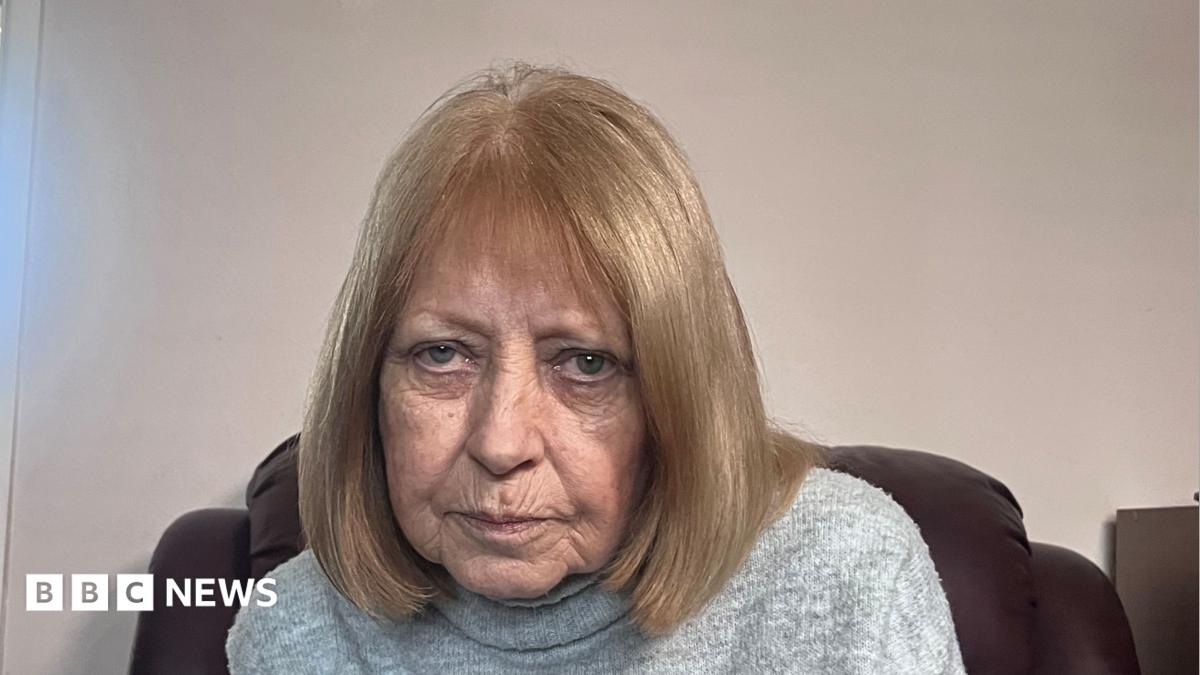
"To the day I die, I will regret putting a cigarette in my mouth".These are the words of Joan McConville, who was first diagnosed with lung cancer in 2023.The former teacher believes her cancer may have been caught earlier if screening had been available in Northern Ireland.Despite growing evidence that early detection can significantly reduce death rates, Northern Ireland has yet to fund a targeted lung cancer screening programme.Although the Department of Health previously committed to introducing screening by April 2027, it has now confirmed there was "no definitive timeline" for its full implementation because of funding.Smoking is the biggest risk factor for lung cancer, external, although genetic and environmental factors can also contribute.McConville, from Banbridge, started smoking at 19 while studying in Belfast and said she became addicted to nicotine."It's not that my generation didn't know the dangers of cancer. We did," she said."We started smoking because it was trendy. And I enjoyed it."The mother-of-three tried "really hard" to stop smoking, particularly during her pregnancies, but "never succeeded completely".She also struggled to quit after her diagnosis, despite being referred to a smoking cessation clinic.The 71-year-old said she "was not remotely surprised" by her diagnosis, having smoked for almost 50 years and having a family history of cancer.After several months of coughing - one of the symptoms of lung cancer, external - she was admitted to Craigavon Area Hospital (CAH) following a "dreadful coughing fit".A scan to check for a clot revealed a 3cm (1in) lesion in her right lung. While surgery successfully removed the cancer, it returned earlier this year.McConville initially had scans every six months but said more than a year had passed when she developed pain in the upper right side of her chest.Initially dismissing it as an injury from gardening or housework, she said the "tiny little niggle" became increasingly severe along with "dreadful" nausea.The symptoms eventually made it difficult to go into town, walk or visit her grandchildren.Following another visit to CAH, further scans showed the cancer had returned and spread to her lymph nodes and ribs.Surgery was no longer an option, but radiotherapy and chemotherapy were recommended.McConville believes regular screening could have led to earlier treatment and surgery, potentially improving her outcome."If my cancer had developed between the ages of 50 and 70, which it did, then there's every possibility that it would have been found earlier," she said."I was a smoker. I probably would still have got cancer. If I could have had screening and it could have made a difference to me, that would make me angry."She said many people underestimate the risks, believing lung cancer happens to others.She said screening would have brought that message home."If it was pointed out at a very early stage to smokers like me, 'Look that tiny little dot is cancer. Stop smoking now and we'll hopefully be able to remove it and then that's it gone'," she added.Respiratory consultant Wendy Anderson leads Northern Ireland's lung cancer network.She said while survival rates had been "increasing year on year, they're still not good"."When I first started working as a consultant, less than one in 10 of our patients would have survived five years and now we're probably around one in four," she said.Lung cancer is often diagnosed at a late stage where there are fewer treatment options available, meaning lower survival rates.Anderson said screening could increase the proportion of people eligible for curative treatment from about 30% to 80%.She estimated it could mean an additional 100 people a year surviving lung cancer or avoiding it altogether.Screening could also tackle health inequalities by improving outcomes for people from more deprived communities, she added.The respiratory consultant said reducing smoking rates remained the most important way to prevent lung cancer.She added that stopping smoking not only reduced the chance of getting lung cancer, but also other respiratory diseases as well as heart attacks and strokes.In December 2024, the former health minister Mike Nesbitt published a three-year health and social care plan, external to stabilise, reform and deliver services in Northern Ireland.It said that "by April 2027, subject to additional funding, we will have a new targeted lung screening programme".But now the Department of Health has said there is "no definitive timeline" for full implementation of the programme, as this will depend on future health funding.It has funded a Public Health Agency (PHA) project team to assess what resources and funding are needed to deliver screening.Planning will begin in December 2026 and is expected to take around a year.
'Screening may have picked up my lung cancer earlier'
Full Article
Original Source
Read the full article at Bbc →KhanList aggregates and links to publicly available news content. We do not host full articles from third-party sources. Always verify important information with original sources.