
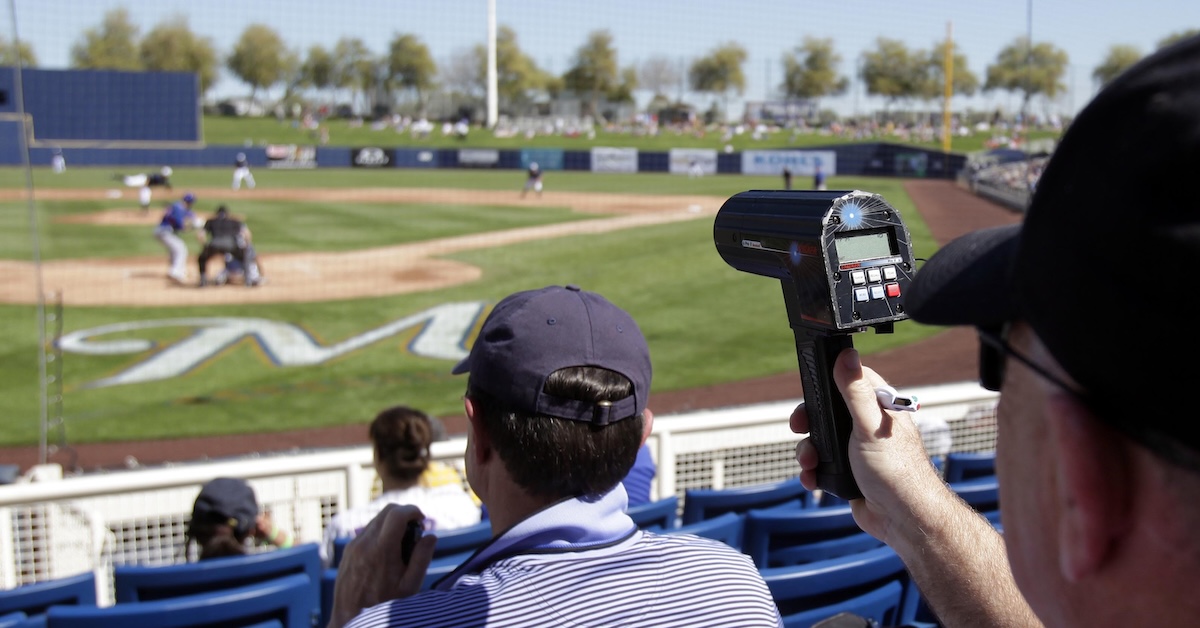
Rick Scuteri-USA TODAY Sports While I was on vacation last month, the Miami Marlins axed their pro scouting department. They’re just the latest team to do so: Per recent reporting from Yahoo Sports’ Jake Mintz, four teams have no pro scouts and another five have four or fewer on staff, though the Nats are hiring, and as Jake notes, exact roles and titles can vary team to team. I should be up front about my perspective: I worked as a pro scout for the Pittsburgh Pirates for four years. It was a great experience and I saw firsthand how scouts can add value to a front office, even one with strong analytical chops. While it’s gutting any time friends or former colleagues lose their jobs, I’m both frustrated and baffled when orgs choose to cut, or severely curtail, their entire department. For mediocre middle reliever money, clubs can have a team of expert player evaluators provide information that statistical and acquisition models can’t produce, and challenge some of the conclusions they can. In an era where teams increasingly rely on (similar) data to build their models and evaluate talent, scouting should be more important, not less. Given the state of the pro scouting landscape, that’s clearly not an intuitive conclusion. In part, that’s because the scouting profession doesn’t look the same as it did 20 years ago: Statcast, TrackMan, and other tools have reshaped the role and, in some places, taken a bit of the guesswork out of the job. Some scouts still primarily evaluate in the park but many others primarily scout on video, much like Eric and I do here at FanGraphs. As with the radar gun a generation ago, in my view, these tools are both helpful for scouts and not nearly sufficient to replace them. While modern scouts must be more data literate than their forebears, sharp eyes and sound information-gathering skills remain the most critical tools of the trade. Holistic evaluation is the best way to analyze players, and scouts who can blend analytical fluency with strong visual evaluations are worth their weight in gold. Even in a world with robust data, it’s immensely valuable to have scouts who can project which players will under- or over-perform their statistical projections. To help bolster that conviction, let’s look at some of the specific ways scouts help big league clubs. Project, Project, Project It sounds simple, but good scouts add value because they think about five years from now, not today. Anyone can look at Conor Essenburg’s page and see how hard he hit the ball last year. The game is to project how hard, and how often, he’ll hit it in 2031. Here, stats and visual looks work well together. Quantitative evaluations are part of the solution, but so are scouts, as their experience gives them a keen sense of which young ballplayers have developmental runway ahead, and which ones don’t. Focusing too much on the here and now can get scouts in trouble because there’s very little value in sending someone on the road to report the weather: Nobody cares how well Ethan Salas performed while any one scout was watching him, and a report overly biased by that alone can do more harm than good. Box scores can tell you whether he went 0-for-15 or 9-for-15 over a series, but neither outcome has much bearing on how the guy will hit in his mid-20s. It’s better to focus on everything else: How he moves, how he’s built, what his swing looks like, what his approach is, how he plays. These offer clues that can help a scout chart a course from how a guy looks today to how he’ll play tomorrow. And of course, it’s useful to have someone on staff who can watch someone like Salas last March and say “This guy looks totally fine,” as a counterweight to some of the mediocre numbers he posted in 2024 and 2025. Get DopeYou Aren't a FanGraphs MemberIt looks like you aren't yet a FanGraphs Member (or aren't logged in). We aren't mad, just disappointed. We get it. You want to read this article. But before we let you get back to it, we'd like to point out a few of the good reasons why you should become a Member. 1. Ad Free viewing! We won't bug you with this ad, or any other. 2. Unlimited articles! Non-Members only get to read 10 free articles a month. Members never get cut off. 3. Dark mode and Classic mode! 4. Custom player page dashboards! Choose the player cards you want, in the order you want them. 5. One-click data exports! Export our projections and leaderboards for your personal projects. 6. Remove the photos on the home page! (Honestly, this doesn't sound so great to us, but some people wanted it, and we like to give our Members what they want.) 7. Even more Steamer projections! We have handedness, percentile, and context neutral projections available for Members only. 8. Get FanGraphs Walk-Off, a customized year end review! Find out exactly how you used FanGraphs this year, and how that compares to other Members. Don't be a victim of FOMO. 9. A weekly mailbag column, exclusively for Members. 10. Help support FanGraphs and our entire staff! Our Members provide us with critical resources to improve the site and deliver new features! We hope you'll consider a Membership today, for yourself or as a gift! And we realize this has been an awfully long sales pitch, so we've also removed all the other ads in this article. We didn't want to overdo it. In case you didn't read all that, here's the short version. Membership includes:✓Ad-free browsing✓Unlimited FanGraphs & RotoGraphs articles✓Historical & platoon projections✓Leaderboard & player-page stat heatmaps✓One-click data exports✓Customizable player-page dashboards✓Dark & Classic site modes✓Weekly Members-only mailbag✓FanGraphs Walk-Off, your year in review✓Optional homepage photo removal✓Gift articles to non-members Information gathering is a big part of the job. Baseball is a gossip-heavy industry, and nowhere is that more true than among the people who work on or at the fields. In my time with the Pirates, I learned that a toolsy catcher I was watching only cared to work on his hitting, that a struggling big-dollar amateur signing was a yes-man getting pulled in a million directions, that a bopper on the field doubled as a thief in the locker room, that a popular trade target with good stuff didn’t trust anyone and wasn’t coachable, and heard more whispers about drug and alcohol use than I can recount. There’s a ton of information to gather about trade and acquisition targets, and if you’re not at the field, you’re missing opportunities to learn. Relationships are essential in baseball, and while there’s no bad place to initiate or bolster connections with people from other teams, it’s to hard to beat the value of sitting in the same park for five days. Focus on What the Numbers Can’t See: Before the Game This covers more ground than you might think. During batting practice, scouts can get a sense for how a player moves and manipulates his barrel, and may even see him hit a ball harder than he’s done in games. This can be particularly handy early in the season, as they might learn about a guy’s offseason power spike before Statcast does. Often, I found infield work even more useful. You may only see the third baseman get a handful of groundballs in games over the course of a week, in which case you may not come away with much of a sense for his hands or his first step. Watch him take an infield three times, though, and you’ll probably have a decent idea. More than just the tools or their components, pre-game work can give scouts a sense of a player’s aptitude or work ethic. Ben Williamson doesn’t jump off the page as an athlete, but in High-A, he did some of the best on-field game prep I’ve encountered. Everyone takes grounders before the game and most aren’t going through the motions, but Williamson pushed a little harder, challenged himself a little more, took greater care to field balls from different angles and make throws from various contortions; it was almost mesmerizing to watch him work. That preparation helped him quickly acclimate to Everett’s tricky and unusually bouncy turf surface, and demonstrated the player’s commitment to self improvement. A team with a top-notch scouting group like the Rays saw all of this, so when they were considering acquiring Williamson and expanding his role to include shortstop, they could do so with the confidence that their group had seen and documented his game prep and aptitude. Maybe the Rays, who undoubtedly also saw Williamson’s sterling metrics and game tape, would have taken him regardless, but it could only have helped to bolster their conviction that they were acquiring a high-effort guy who’d proven he could learn something before. Focus on What the Numbers Can’t See: During the Game We may yet arrive at a point where the machines can measure, value, and project every single thing that happens on a baseball field better than humans alone. Happily, from my perspective at least, we’ve yet to reach that dystopia. Instincts are an obvious place to start. Does it seem like Infielder A is consistently in the right place to get a clean hop, while Infielder B is constantly fighting bad hops? Is Outfielder X getting fooled by every carom off the wall? Can Pitcher Y course correct when he loses his mechanics, or does he get stuck in a rut when things go wrong? These are all cases of instincts in action, and they’re difficult to spot if you’re not in the park. A player with a lot of talent may survive the lower levels with poor instincts, but it’s tough to play in the big leagues if you don’t have some feel for the game. Good instincts are a round up or round down trait across the scouting report, and it’s something that tends to be pretty sticky throughout a player’s career. There’s also value in watching how players go about their business, and how they react to various things as they happen on the field. It’s an inexact science to say the least, but you can sometimes learn quite a bit about guys by watching them work. Scouts should be asking things like: How does Player X respond to failure? Does he find a way to channel it positively, or does it become consuming? Do his coaches and teammates seem to get along with him, or is he more aloof? This can look different from player to player, and figuring out how to interpret on-field behavior is more art than science. Contextualization is tricky — with the Pirates, we talked at length internally about how players from different cultures can play differently, as just one example — and these observations should often prompt more questions than answers. As with anything else, you can do this badly: You don’t want to stereotype or over-index on one bad day. But if I saw something unusual on the field, I’d try to learn more about it from others on or around the team. For obvious reasons, veteran scouts with working relationships or friendships with folks on the ground have a big edge here. Most importantly, you can still learn a lot about even the most fundamental and measurable parts of a player’s game by watching him. Remember, we’re focusing on five years from now, and there are plenty of minor leaguers with good numbers who won’t be able to crack big league pitching. Again, scouts should come armed with questions: Sure, this guy has big numbers, but is he doing his damage against org guys, or is he competitive against the best pitchers and pitches he sees? Will that guy’s swing work against 98 the same way it’s working against 93? Neither the stats nor the scouts know for sure, but it’s best to work at the problem from multiple angles. Some of these things can be done by watching video – I watched a ton of video while I was a scout and thought it was a great tool — but the view in the park is often better. This is especially true when evaluating defense, where metrics are less reliable, and where video quality and angles don’t always suffice. Former players and coaches in particular seem to value being in the park. The familiar site lines open up the world for them, and are an additional benefit for a demographic that often (though not always) excels at the information gathering aspects of the job. The value of these looks becomes especially apparent when it’s time to make a deal. Having multiple scout looks and a detailed analytical profile on a player can help decision-makers break down a target from multiple angles. There are a lot of players out there, and a lot of players with similar numbers, or at least similarly compelling data. A scout’s perspective can help color in the lines, and help clubs analyze potential acquisitions from a broader perspective than their numbers alone. Understand the TrackMan… In my first year as a scout, I had the pleasure of watching a series with a veteran scout. He had decades of experience in the game: Playing, coaching, managing, you name it, he’d done it. Over the first couple days of our time together, I enjoyed hearing his stories about the ’80s and ’90s, and my initial impression of him was that he was an old school guy through and through. One game that week, a reliever flipped a mediocre slider into the zone. The scout glanced at his TrackMan and said, “Did you know that that spin rate is in the 30th percentile for a big league right-hander?” I just about fell out of my chair; he was the last guy I’d have expected to talk about a pitcher’s spin rate, much less in that kind of detail. But it was also a great lesson for me: If the grizzled scout on retirement’s doorstep was still learning, I’d better be on my game, too. As a scout in 2026, there’s no excuse for not knowing how to read a TrackMan. Even those who don’t especially care how much horizontal break or extension a pitcher is generating on his fastball should at least know what those things mean. You’ll eventually wind up in a conversation with someone who does, and good luck convincing them of anything if you’re hostile to their vernacular. Scouts need not be statisticians; basic fluency, an open mind, and a desire to learn go a long way. … But Also Understand the Trackman’s Limitations Good scouts provide a sanity check. It’s all fine and good if a pitcher throws 100 or can spin the bejeezus out of a slider. But “Does it work?” and “Is it going to?” are timeless questions that all scouts should be asking. Think back 10 years or so, when some teams or evaluators were grading a fastball simply by its velocity. Velo is obviously an important trait, but the “Does it work?” test helped sharp evaluators round down on Brandon League’s heater and up on Kyle Hendricks’. The same is more or less true with every in-vogue metric, pitch, or concept we’ve had since. It wasn’t so long ago that high spin rate fastballs were a valuable commodity. In time, it wasn’t just the spin but also the vertical break that generated interest from teams. Scouts or evaluators who sold out to those traits may have, in turn, overvalued guys who could spin it with good velocity and vertical break, but lacked the other traits to fully leverage those characteristics. I suspect the same has happened or is happening with extension or release point. This is not to dismiss the importance of any of the above characteristics — far from it. Frankly, knowing that a pitcher with a linear delivery generates elite extension should bolster a scout’s confidence that he can continue missing bats as he ascends the professional ladder. But falling back on “Does it work?” and “Is it going to?” can help a scout avoid falling too hard for the flavor of the month. After all, there’s going to be a new one soon enough anyway. Scout in Conjunction With Your Org’s Competencies Here at FanGraphs, Eric and I try to evaluate players without letting their station unduly influence their topline grades or list placement. I’m sure we’re not perfect. At times, it’s hard not to round up or down on guys based on how their skills match their org. Ultimately though, we’re evaluating, not predicting, and we don’t want to be in a spot where we’re throwing a 50 on a pitcher just because he’s a Guardian or a Brewer and then need to shift gears when he’s traded at the deadline. Scouts for teams should not emulate this agnostic approach. They should have a very clear-eyed idea of the strengths and weaknesses in their club’s player development apparatus and sell out to what the org does well. It sounds intuitive, but there are real gains to be made by getting granular. If your team is really good at helping hitters develop measurable bat speed, pay special attention to players with bat to ball skills but not much power, and project aggressively on the ones who seem most likely to blossom in the right strength program. The Blue Jays do this all the time: They’re really good at building strength, and so they go out and find lean players with other skills whom they think they can help develop power. Arjun Nimmala was the luxury version of this, but it also describes deadline acquisitions like Brett Bateman, Ty Southisene, and Ryan Sprock, and recent amateur picks like Ryan Cooney and Blaine Bullard. The opposite doesn’t apply to quite the same degree — as we’ve seen with Washington, among other teams, philosophies and competencies can change quickly — but it’s not irrelevant either. If wild pitchers tend to stay wild in your system, you’ll want to have a good reason for why this flamethrower with control issues will buck the trend before you bet big. It Can Be Really, Really Useful To Disagree With the Model and Its Inputs In the run-up to the 2025 deadline, I was part of a panel that took a deep dive into several outfield targets. One of the players under consideration had solid fielding metrics, but I’d put a 40 on the glove when I saw him earlier that month. When the discussion turned to this player’s defense, I was ready. “I know our metrics grade him well and seem to like his range in particular. But he’s a 40 runner, and both his tracking and reads off the bat are subpar. I’ve seen him get alligator arms near the wall, and overrun and subsequently drop routine fly balls.” I was prepared with a couple of video clips to show my work. That quick breakdown effectively ended any debate before it started, and helped place a player we still kind of liked in a more accurate context. It was a small but relevant example of how a purely subjective evaluation can change consensus opinion, and how a scout can add value by disagreeing with the stats on the page. But the episode also highlights challenges that organizations face integrating scouting information with statistical models. Even though I’d put a 40 on the glove very recently, the metrics that drove the player’s projections were aligned with his defensive statistics, not my (or other) scouting evaluations. Opinions on the player’s defense only changed because we happened to have a discussion about him. It’s not easy to balance statistical and visual evaluations at scale. The challenge is even greater if organizational leadership doesn’t believe that these kinds of disagreements are healthy and valuable. Executives are human, and while most humans in leadership say they want to foster debate, some of them actually don’t. These clubs are ill-equipped to handle a misalignment between scouting and statistical inputs. Decades ago, this often meant that statistical analysts were shunted to the side while Baseball Men made the Big Decisions. In today’s game, the shoe is generally on the other foot. This can go badly in a couple of ways. I’ve heard stories of scouts adjusting their pitch grades to resemble internal stuff plus models in an effort to avoid hard conversations, which doesn’t do anybody any good. It’s also not uncommon for executives to place significantly more weight on their statistical models than on scouting reports; from there it can be a quick path to deciding that it’s not worthwhile to have the scouting department around as a stick in the mud anyway. There are a few ways to handle that integration smoothly, but that’s getting away from our scope here. For now, I simply hope that this was enough to convince readers that, even in an increasingly analytical sport, there’s still a lot you can learn with your eyes and ears at a ballgame.
Scouting in the Age of Machines
Full Article
Original Source
Read the full article at Blogs →KhanList aggregates and links to publicly available news content. We do not host full articles from third-party sources. Always verify important information with original sources.