
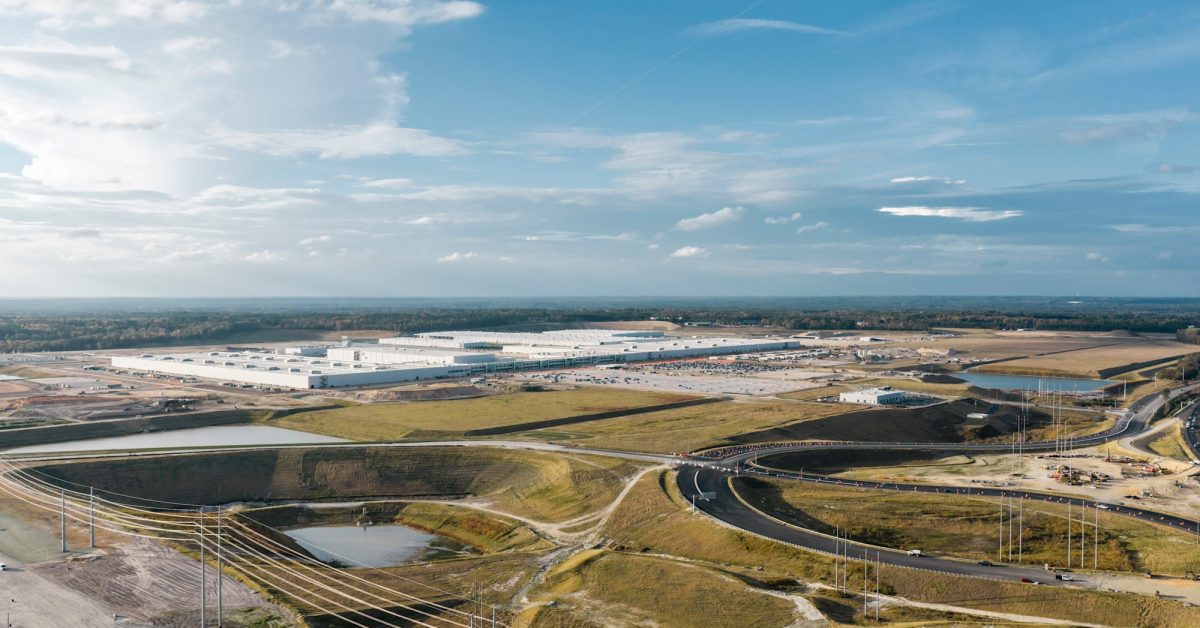
Scout Motors Production Center in Blythewood, South Carolina (Image: Scout Motors) Volkswagen’s revived Scout brand finally has vehicles coming off the line in South Carolina, but they’re validation units, not customer cars. Scout confirms the first deliveries of the Traveler SUV and Terra pickup won’t happen until 2028. That’s two years later than the 2026 production start the company was talking about before it even broke ground on its $2 billion factory. The Blythewood plant is real now According to Scout’s announcement dated November 12, construction at the Production Center north of Columbia is in its final phase and most of the manufacturing equipment is installed. The Body Shop, Paint Shop, and Assembly Shop are all being used for the first validation builds. The Body Shop is the most automated part of the plant. Scout says more than 750 robots join roughly 160 parts into each body, laying down about 5,000 weld points per vehicle, with AI-supported weld monitoring and a metrology system checking the results. At full capacity, the shop is designed to handle about 40 vehicles per hour. Bodies then go through an electrified paint shop before landing in final assembly, where they’re married to the chassis and get their wiring, glass, seats, and wheels. CEO Scott Keogh is clearly happy to have something physical to point to, saying that “what we are building in Blythewood is no longer a promise on paper.” Scout also shared photos of a Terra pickup and a Traveler parked inside the plant. Its own fine print notes that they show “concept and validation vehicles” with optional features, so don’t read too much into what’s on display: Fair enough. But Scout is also careful about what this stage is. Teams are confirming the equipment is installed and works, and checking engineering, buildability, and parts maturity. Process validation and scaling up to production speed come later. Validation builds will continue “into 2027,” followed by pre-production builds, and then customer deliveries in 2028. The company says the plant will create more than 4,000 jobs, and it’s spending another $300 million on an onsite supplier park expected to support about 1,000 supplier jobs. The timeline keeps sliding When Keogh laid out the plan in late 2023, Scout said it would start production in 2026 with deliveries shortly after. That was still the target when Scout broke ground in Blythewood in February 2024. By the Traveler and Terra unveiling in October 2024, production had moved to 2027. Keogh then said in March that he expects the first customer to get a vehicle “sometime in 2028,” and that’s now the official line in Scout’s own press materials. It might not even be the end of it. Industry forecaster AutoForecast Solutions has the Traveler starting production in September 2028 and the Terra in March 2030. Scout hasn’t confirmed those dates, but it hasn’t given more precise ones either. The product itself has also changed under the hood. Scout launched as a pure EV brand, then added the “Harvester” range-extender option at the reveal. According to Keogh, Scout has more than 160,000 reservations, and 87% of them are for the gas-generator version. Those are $100 refundable reservations, not orders. Der Spiegel reported earlier this year that integrating the range extender, which wasn’t part of the original plan, was among the technical problems pushing the timeline back. For comparison, Tesla unveiled the Cybertruck in November 2019 and delivered the first ones four years later, a delay that was widely mocked. Scout is now on a similar four-year path from reveal to customer, and that’s for the SUV it’s launching first. Electrek’s Take A working body shop with 750 robots isn’t vaporware. Scout has a real factory, a real workforce, and two vehicles that people clearly want. 160,000 reservations is a big number for a brand that hasn’t sold a single vehicle in 46 years. But validation builds are an early step, not a finish line. Scout still has to go through pre-production, prove its processes, and ramp to rate, and every one of those stages is where new automakers usually lose time. Rivian and Lucid both learned that the hard way. And the market Scout was designed for in 2022 no longer exists. The EV tax credit is gone, and most of Scout’s own reservation holders picked the gas generator. In the US, the range-extender market is still early, unlike in China, where they are already popular. But by 2028, Ford, Ram, and Jeep all plan to have range-extended trucks and SUVs on sale. Scout’s main advantage was being early with a cool, rugged, American-built electric truck. That advantage shrinks every quarter. We’re still rooting for these vehicles. The Traveler and Terra are among the best-looking designs in the segment. But a $100 reservation is easy to walk away from, and the question is how many of those 160,000 people are still waiting in 2028. If you’re planning to charge a Scout or any other EV at home, pairing it with rooftop solar can cut your fuel costs to nearly zero. With electricity rates up almost 10% last year and expected to keep climbing, going solar is one of the best ways to protect yourself against rising costs. And with lease and PPA options, you can do it with zero upfront cost and start saving immediately. If you want to find the best deal, check out EnergySage. It’s a free service with hundreds of pre-vetted installers competing for your business, so you save 20 to 30% compared to going it alone. No sales calls until you pick an installer. Get your free quotes here. FTC: We use income earning auto affiliate links. More.
Scout Motors starts validation builds at $2B SC plant, deliveries in 2028
Full Article
Original Source
Read the full article at Electrek →KhanList aggregates and links to publicly available news content. We do not host full articles from third-party sources. Always verify important information with original sources.