
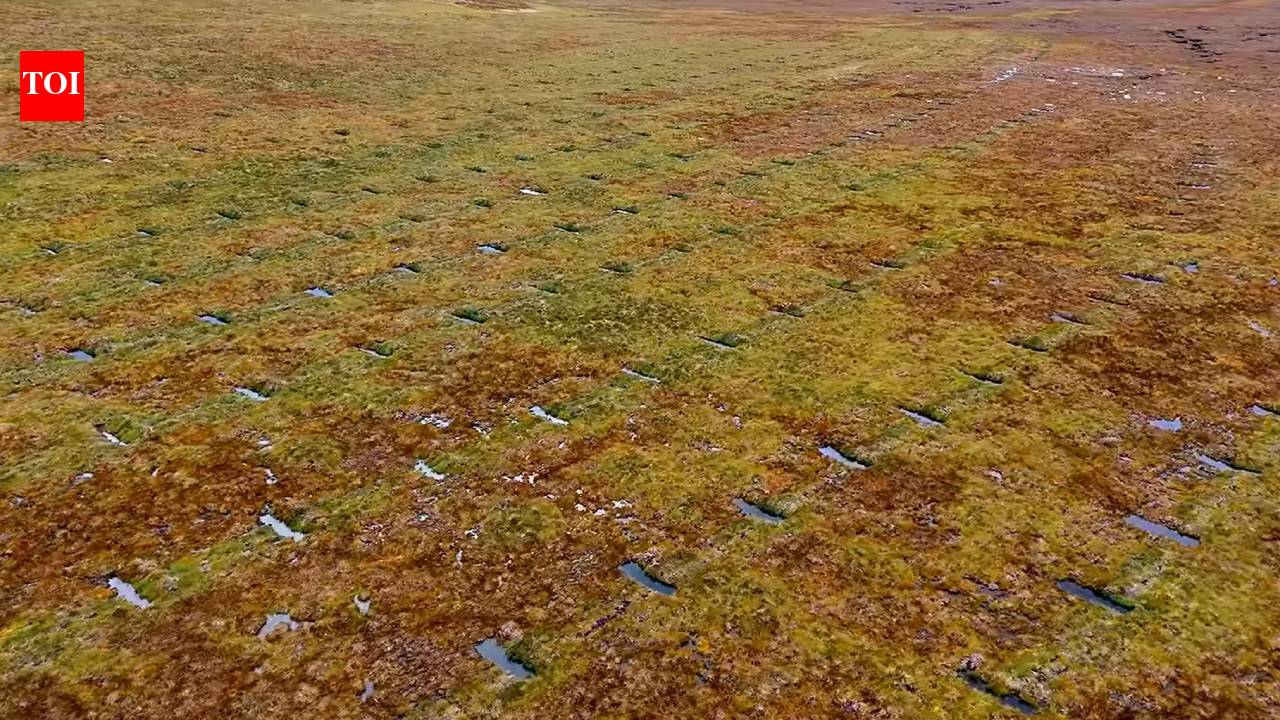
The Scottish Highlands are set for a 100-year restoration project to revive their lost natural ecosystems. (Photo: Planet Wild)The Scottish Highlands, known for their breathtaking mountains, valleys and sweeping landscapes, are set to undergo an ambitious transformation through a 100-year conservation project aimed at restoring their lost natural ecosystems. Led by the Durrell Wildlife Conservation Trust, with support from Planet Wild, the initiative aims to reverse thousands of years of human impact and bring back the region's ancient forests, wetlands and wildlife.The project, currently in its third year, focuses on restoring a sprawling 7,500-hectare estate in the Cairngorms National Park. Combining scientific research, drone mapping, wildlife monitoring and innovative conservation techniques, the initiative aims to allow nature to reclaim the landscape over the next century.How human activity transformed the Scottish HighlandsWhile the Scottish Highlands remain one of the world's most picturesque natural landscapes, much of their original biodiversity has disappeared over centuries of human intervention. Forests have been cleared, wetlands drained, rivers altered and natural predators eliminated.As Planet Wild's documentary explains, "We drained the swamps, we cleared the forest, we dammed the rivers, we killed all the predators," leaving behind a landscape that may look beautiful but has lost much of its ecological richness.According to figures highlighted in the documentary, more than 90% of Scotland's native forests have disappeared, around 80% of its peatlands are damaged, and nearly half of its natural biodiversity has been lost.However, the restoration initiative believes there is still an opportunity to reverse some of this damage. As filmmaker Cameron Nicoll observes in the documentary, "There's also huge opportunity in what the landscape here could look like in the future."Durrell Wildlife Conservation Trust's ambitious 100-year visionConservationists are restoring damaged peatlands to bring back wetlands and protect carbon stored underground for thousands of years. (Photo: Planet Wild)The Durrell Wildlife Conservation Trust is transforming a 7,500-hectare estate in the Cairngorms National Park into a large-scale conservation and research site. The property was previously used as a private hunting reserve, and the organisation now hopes to restore its natural ecosystems through a long-term, science-led approach.Douglas Carchrie, the estate manager, is among those overseeing the restoration work. Having grown up in the surrounding hills, he is now helping lead efforts to bring the landscape back to life.Explaining the philosophy behind the project, Douglas says, "We're letting nature lead. It's making the decisions. We're not making interventions where we don't have to."The team is documenting the estate's recovery by monitoring individual trees, drainage channels and wildlife activity. As part of its 45th mission, Planet Wild is supporting the initiative with drone mapping, trail cameras, bioacoustic sensors and moth light traps.These technologies will help scientists understand which species are returning and identify the most effective ways to restore the region's three key ecosystems: wetlands, forests and rivers.Why restoring Scotland's peatlands is crucialOne of the project's most important priorities is restoring Scotland's damaged peatlands. These unique ecosystems are particularly valuable because they store enormous quantities of carbon while supporting a wide range of wildlife.For decades, drainage channels were dug across Scottish wetlands to dry the land and make it suitable for farming. However, draining peatlands has damaged their ability to store carbon and support biodiversity.Peat forms when dead plants and other organic matter decompose extremely slowly in waterlogged conditions. The resulting material accumulates over thousands of years and contains large amounts of carbon.During the documentary, the team uses a peat probe to measure the depth of the underground peat layer. At one location, they discover approximately 1.6 metres of peat, representing around 1,600 years of accumulation.The importance of these ecosystems extends far beyond Scotland. Peatlands cover only around 3% of the Earth's land surface but store approximately twice as much carbon as all the world's forests combined.The documentary also highlights that emissions from drained and degraded peatlands account for around 5% of human-made carbon emissions, making their restoration particularly important in the fight against climate change.How scientists are bringing wetlands back to lifeThe initiative aims to regenerate up to 1,500 hectares of native forest in the Cairngorms National Park. (Photo: Planet Wild)To restore the damaged peatlands, conservationists are reversing the drainage process by blocking old channels and retaining water within the landscape.Explaining the technique, Cameron Nicoll compares the process to "zipping" the drainage channels back up. Using excavators, workers pull surrounding peat into existing channels and create a series of small pools. These pools prevent water from escaping, helping restore the natural water table while creating new habitats for plants and animals.Drone mapping data helps the ecology team identify the most effective locations for restoration. According to the documentary, the method allows a small team of excavators to restore up to two hectares of peatland a day.The results can become visible surprisingly quickly. Douglas explains that the changes are sometimes noticeable within days, with water levels rising and dragonflies returning within months."It can be the day after that suddenly the water table's rising, and then within months we're seeing dragonflies returning to that site. Lots more birds starting to use that site as well. It's amazing how quickly it changes," he says.Bringing back Scotland's lost native forestsRestoring the forests is another major part of the 100-year initiative. According to the documentary, the disappearance of native woodland is not the only challenge. The loss of natural predators has also contributed to an increase in deer populations, which feed on young trees and prevent forests from regenerating naturally.The restoration team is therefore working towards bringing deer populations closer to natural historical levels while reintroducing native tree species that have become increasingly rare in the landscape.One of the key strategies involves creating what are known as 'seed islands'. Instead of planting millions of trees across the estate, conservationists identify rare native species, collect their seeds and grow them in nurseries.Species such as whortle-leaved willow, juniper and dwarf birch are among those being cultivated. Small clusters of around 50 trees are then planted at carefully selected locations. These clusters act as natural seed sources, allowing trees to spread across the surrounding landscape over time.Explaining the approach, Douglas says, "So rather than us planting millions of trees, we'll plant a few, and that'll provide that seed source for a forest to shoot up."The initiative, supported by Planet Wild and Ecosia, aims to facilitate the regeneration of up to 1,500 hectares of forest. The returning woodland will also help protect the estate's river systems by providing shade and natural filtration.A conservation blueprint for future generationsBeyond restoring the Scottish Highlands, the initiative has another significant objective: making its findings accessible to the world.Planet Wild is supporting the Durrell Wildlife Conservation Trust in creating an open-access blueprint of the entire restoration project. This will allow people to monitor the estate's ecological recovery, study the conservation techniques being used and learn from the project's progress.For Douglas Carchrie, the most rewarding aspect is the opportunity to contribute to something that will benefit generations to come. Although he may not witness the completion of the 100-year project, he is already beginning to see signs of change.Reflecting on his role, he says, "I'm here at the start of a 100-year project. I'm not gonna see the benefits, although I am starting to see things change, even though I've only been on this site for a year, but it's the future generations that will see the biggest, biggest differences."The documentary also captures the larger sentiment driving the initiative: "None of the people working on this project will ever see the end result of how nature is gonna come back here, but they still do the work anyway out of a kind of sense of duty to the natural world."
Scottish Highlands launch 100-year plan to restore 7,500 hectares of habitat
Full Article
Original Source
Read the full article at Timesofindia →KhanList aggregates and links to publicly available news content. We do not host full articles from third-party sources. Always verify important information with original sources.