
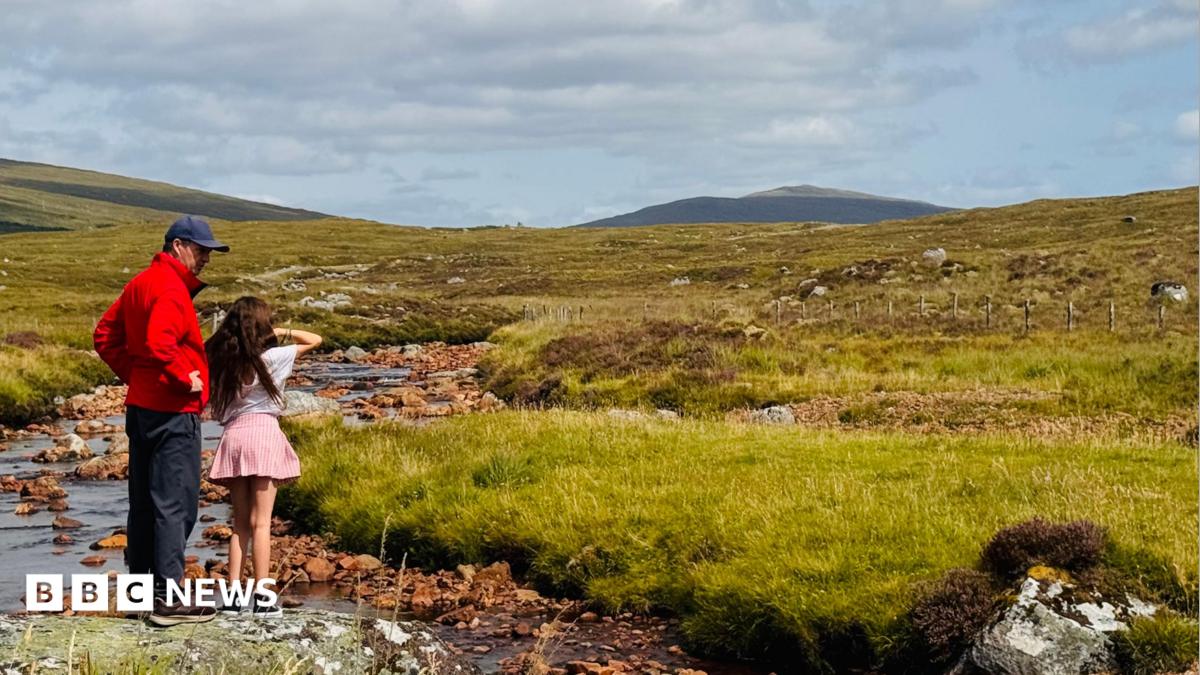
"People used to come to the Highlands and say, 'it's beautiful – shame about the weather'. Now they're coming for the weather."James MacLeod, concierge at the Glencoe House Hotel, in the Scottish Highlands, is talking about how he has noticed a big shift in visitors' perceptions."They don't seem to care about the midges or the rain anymore," he chuckles. "They're just glad it's not too hot."Climate change is redrawing Europe's summer tourism map.Wildfires, droughts and record-breaking heatwaves are making summer months increasingly uncomfortable and unpredictable across southern Europe. By contrast, Scotland and other northern European nations are finding themselves perfectly positioned to offer a "coolcation" escape.The early data backs this up. Visitor numbers to northern Europe were up 10%, external across April to June of this year, compared to the same period in 2025, according to the European Travel Commission (ETC), the body that represents Europe's national tourism bodies.The ETC said that northern Europe, which it classifies as Denmark, Finland, Iceland, Ireland, Norway, Sweden and the UK, had "outperformed all other European subregions".Meanwhile, travel agency Trip.com found that from January to April of this year searches for cooler holiday destinations this summer had increased by 74%, external from the first four months of 2025, "as travellers seek to escape the heat, shifting their attention to places that offer more comfortable climates". And Awaze, the European holiday-rental group, says searches for "escape the heat" rose three-fold in the past three months, while hunts for "coolcation" were up more than four-fold. Within the UK, holiday rental website Cottages.com said that its Scottish portfolio has been the most viewed this summer.The northward shift of holidaymakers in Europe is not unique to Scotland or the Nordics.Dutch costal city The Hague recently made headlines after a New York Times article described it as a new "coolcation" hotspot, external while "southern Europe overheats".The city combines international institutions and urban culture with 10km (six miles) of coastline, beach bars, dunes and cycle routes stretching along the shore.But success brings its own risks. Streets in Kijkduin, a popular costal district of The Hague have had to be officially closed to all but residents at times this summer, to prevent gridlock caused by a huge influx of cars with Belgian, German and Dutch numberplates.Up the coast in the town of Zandvoort residents took matters into their own hands, putting up fake diversion road signs to try to keep tourists away.Similar overcrowding woes can now be seen in the Scottish Highlands. "It's busier than the carpark at my local mall," says Nick, visiting from the US. He had passed another full layby in Glencoe valley, a particularly picturesque and popular part of the Scottish highlands that attracts large numbers of overseas tourists.Holidaymakers are grinning and posing before heading to the next beauty spot.Many of Scotland's other Instagram-famous destinations are also under strain from the volume of tourists, says Greenwood. He describes the Fairy Pools on the Isle of Skye (which are a series of natural pools and waterfalls) and Edinburgh's Royal Mile as becoming "victims of their own virality".To mitigate the impact of visitor numbers to the Scottish capital, Edinburgh last month became the first city in the UK to introduce a tourist tax., external A 5% fee will be added to the cost of hotel room in the city. It is expected to raise as much as £50 annually. "We know that the city's popularity comes at a cost through the pressure it puts on our services and on the people who live and work here all year round," said Edinburgh Council Leader Jane Meagher."This small new contribution from overnight visitors will help improve the services and public spaces we all depend on, while better managing the effects of tourism and major events."In Glencoe the National Trust for Scotland has expanded parking areas and is investing in a 5km cycle route. There's also a plan to introduce a park-and-ride system, and offer shuttle buses between the mountain ranges."There will always be people who want to stop and take a quick selfie," Bryce says. "We need to provide alternatives [to going by car]."
Scottish Highlands benefiting from 'coolcation' trend
Full Article
Original Source
Read the full article at Bbc →KhanList aggregates and links to publicly available news content. We do not host full articles from third-party sources. Always verify important information with original sources.