
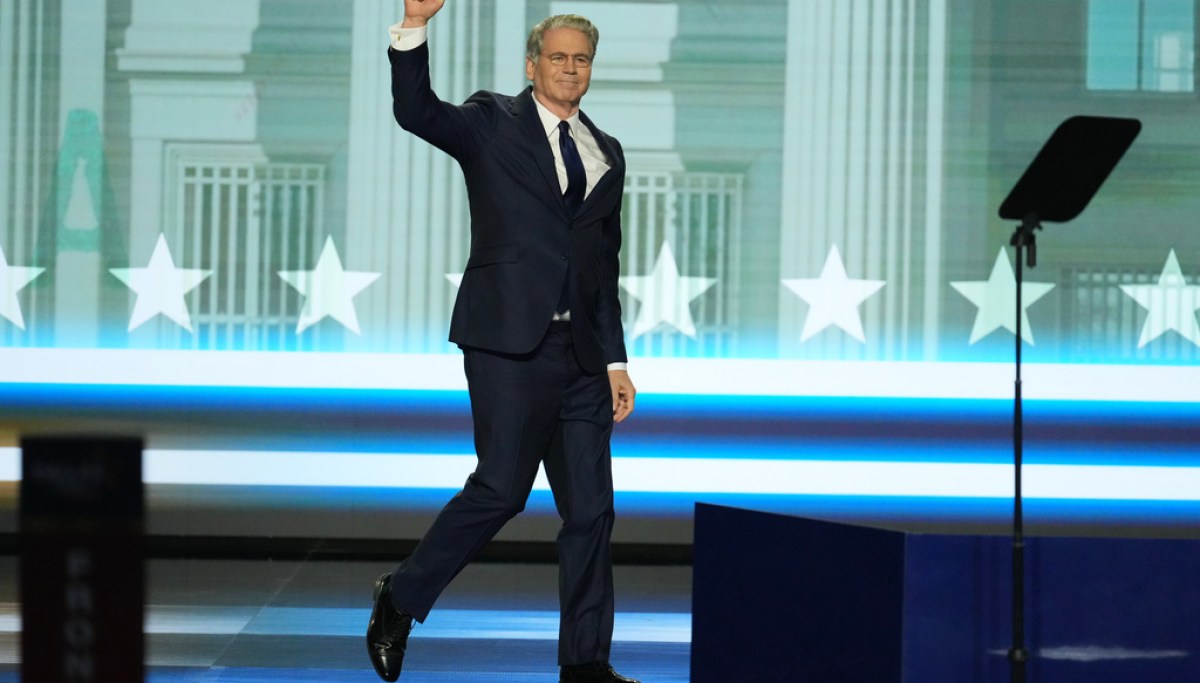
In Focus delivers deeper coverage of the political, cultural, and ideological issues shaping America. Published daily by senior writers and experts, these in-depth pieces go beyond the headlines to give readers the full picture. You can find our full list of In Focus pieces here. Rufus Miles, an American government administrator, famously said that where you stand on an issue depends on where you sit. This aphorism seems all too true of Treasury Secretary Scott Bessent. As a young man, Bessent made his reputation and fortune as one of George Soros’s traders by taking advantage of governments’ economic policy mistakes. Today, as Treasury Secretary, he is committing the same sort of economic policy mistakes that other economic policymakers have made. That is creating the trading opportunities for today’s hedge fund traders that he was once so ready to exploit.In 1992, the United Kingdom spent much money and effort to try to defend a grossly overvalued and indefensible pound sterling. Bessent helped Soros take advantage of this situation by making huge bets against the pound. This all ended on so-called Black Wednesday when the United Kingdom was forced to abandon its defense of the pound and let the currency depreciate. That day is now referred to as the day that Soros made $1 billion by breaking the Bank of England. If in 1992, the United Kingdom made the gross economic policy mistake of trying to defend an overvalued currency, today, Bessent is going along with economic policies that are making the country’s public finances even more unsustainable than those President Donald Trump inherited from Joe Biden.Treasury Secretary Scott Bessent takes the stage at the Republican convention in Dallas, Wednesday, Sept. 9, 2026. (AP Photo/Tony Gutierrez) According to the nonpartisan Congressional Budget Office, as a result of Trump’s One Big Beautiful Bill Act, the budget deficit will remain at above $2 trillion, or a staggering 6 percent of GDP. In turn, that is putting the public debt on the path to reach 107 percent of GDP by 2029 or a level higher than that reached at the end of the Second World War. A factor that is making our current budget situation all the more worrying is that it is occurring at a time of full employment, when our budget should be more in balance.Yet another economic policy mistake Bessent is making is going along with Trump’s chaotic import tariff policy. That policy has included imposing punitive import tariffs on our traditional allies like Canada and Brazil. Those policies, coupled with the freezing of Iranian and Russian dollar assets, are raising questions about the United States’ reliability as an economic partner. Recent signs of this distrust have been the French and Dutch central banks’ withdrawal of their New York gold deposits and the announcement by the Norwegian wealth fund that it plans to sell $80 billion of its U.S. Treasury bond holdings. Raising questions about our reliability as a creditor is not a good idea for a country that is highly dependent on foreigners to finance our gaping budget deficit. It is estimated that foreigners already own $8 ½ trillion or about 30 percent of all US Treasury bonds outstanding. The foreigners’ waning appetite for those bonds is now forcing Bessent to increase his reliance on the highly leveraged and more fickle hedge funds and money market funds to finance our government.As foreign appetite for our government’s bonds wanes, our government’s long-term borrowing costs are soaring. The 30-year U.S. Treasury bond yield has now increased to 5.35%, or to a 20-year high. Meanwhile, the 10-year bond yield is now rapidly approaching the psychologically important 5% level. That will soon be translated into higher mortgage rates, auto loan rates, and other key borrowing rates. In turn, that will pose a serious challenge to the economy and to today’s lofty stock market valuations.ECONOMIC POPULISM IS A DEAD END FOR THE GOPAs a young trader, Bessent would have found laughable the pitiful defense that he is now putting up to keep long-term bond yields from rising further. He is increasing reliance on short-term borrowing, thereby increasing the government’s exposure to the risk of rising interest rates. At the same time, he is proposing to buy back $6 billion in long-term bonds or a small fraction of the government’s $2 trillion annual borrowing need.As a young trader, Bessent would surely have known that the only real way to avoid a full-blown bond market crisis would be for the government to make spending cuts and take meaningful revenue-enhancing measures to bring the budget deficit down to a more sustainable level. We must hope that, as Treasury Secretary, he now has the courage to explain to Trump that such action is urgent if we are to avoid a serious economic and financial market crisis.American Enterprise Institute senior fellow Desmond Lachman was a deputy director in the International Monetary Fund’s Policy Development and Review Department and the chief emerging-market economic strategist at Salomon Smith Barney.
Scott Bessent made his fortune betting against policies like these
Full Article
Original Source
Read the full article at Washingtonexaminer →KhanList aggregates and links to publicly available news content. We do not host full articles from third-party sources. Always verify important information with original sources.