
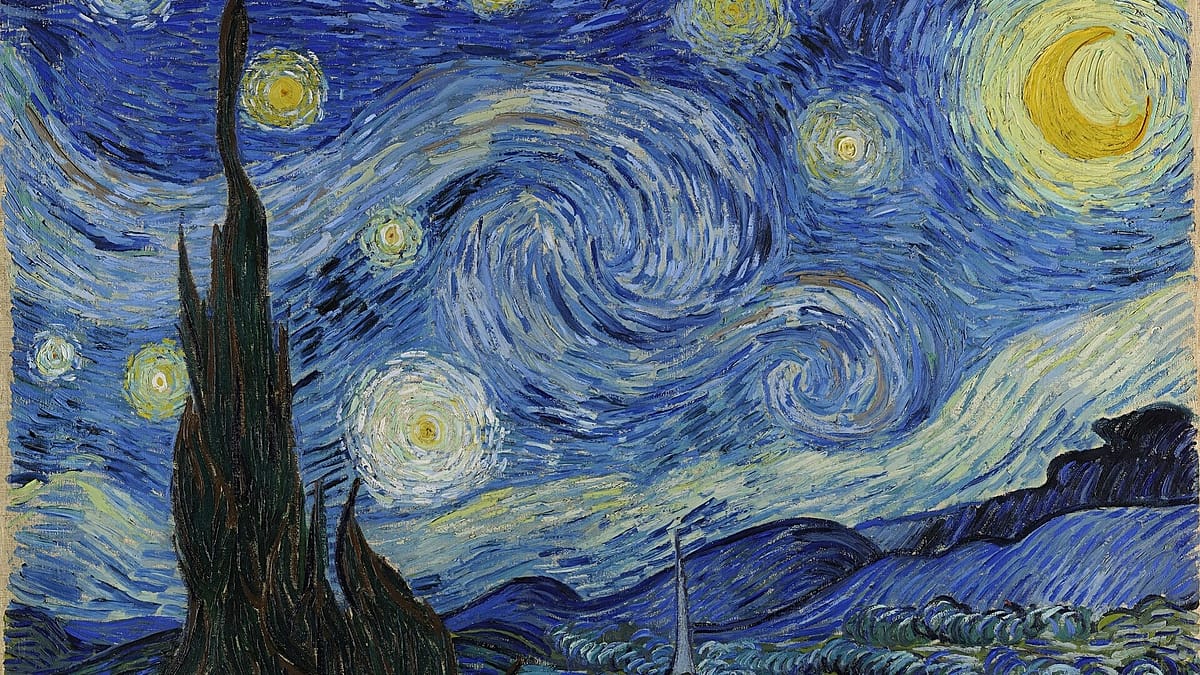
Published on 27 October 2026 - 8:07 GMT+1 More than a century after Vincent van Gogh painted one of the most recognisable night skies in art history, scientists believe they may have pinpointed the real celestial scene that inspired it - and the answer could change the accepted date of his masterpiece. ADVERTISEMENT ADVERTISEMENT Their findings indicate that rather than being a product of Van Gogh’s imagination, The Starry Night may have been inspired by what he saw as he gazed heavenward from his French asylum 137 years ago. A South Korean team recently reported that after years of forensic astronomy and research into the Dutch artist, they have matched his masterpiece to a predawn sky over France’s Saint-Remy de Provence right around 22 July 1889. That’s a month later than the long-accepted time frame for the post-impressionist painting which depicts a sky with swirling ribbons of blue, blazing stars and luminous crescent moon, with a village nestled below and cypress trees looming on one side. Art historians have long dated the painting to June 1889, soon after Van Gogh checked into the asylum. He'd cut off his left ear several months earlier during an argument with painter Paul Gauguin. A team led by Elijah Jeong-hyun Kim, the CEO of a Seoul telescope maker, is now disputing that date in a study appearing in the journal Scientific Reports. "No two skies are the same. Something always changes. I believe Vincent noticed those changes and put them into the painting," Kim said in an email. He added: "I am confident that July 22 is the better date. I will bet on this date." The latest study addresses "a real puzzle" that in mid-June 1889, the moon was not the thin crescent painted by van Gogh, said Jose Luis Aragon at the National Autonomous University of Mexico. He has studied The Starry Night as a physicist, but did not take part in the new research. "Still, I would see the July date as an intriguing hypothesis rather than a settled answer," Aragon said in an email to AP. Kim and his team discovered that around 22 July 1889, the shape of the moon before dawn appeared like the one in the painting, with the Hyades star cluster in the constellation Taurus rising in the east alongside Venus. The sky should have been clear enough for Van Gogh to see all this, based on their weather analyses. The researchers tested and verified their methods on night skies in other paintings, making for what Aragon considers "a careful and genuinely interdisciplinary study." There is another important complication: Van Gogh did not simply stand at his window and reproduce the sky exactly as he saw it. He worked on The Starry Night in a studio at the asylum, drawing on sketches and memory to construct its extraordinary landscape. That means the painting’s celestial elements may not correspond to a single night at all, and that "the sky is likely a composite of many nights as the authors themselves acknowledge," Aragon said.
Scientists uncover new clues to the actual night sky behind Van Gogh’s The Starry Night
Full Article
Original Source
Read the full article at Euronews →KhanList aggregates and links to publicly available news content. We do not host full articles from third-party sources. Always verify important information with original sources.