
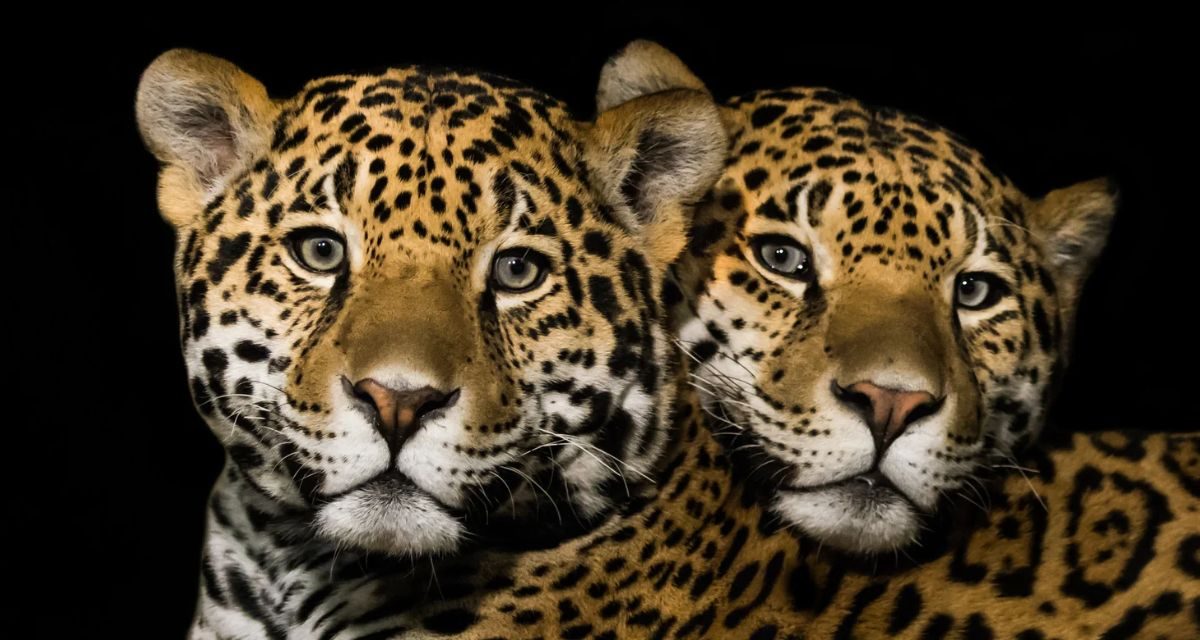
Cats have a way of messing with our expectations. Even the humble house cat is proving itself to be less aloof and antisocial than we formerly thought. And it seems their much bigger relatives have a few surprises of their own. Jaguars, for instance, have long been considered solitary animals, with males and females generally keeping their distance except during mating season and when mothers raise their cubs. But after watching jaguars for 13 years, researchers found evidence that these famously independent cats may have a more complicated social life than we realized. The researchers conducted their work in Brazil’s Pantanal, a vast tropical wetland that supports one of the world’s highest jaguar densities. This provided a rare opportunity to observe individual cats repeatedly and see how their relationships developed over time. Welcome to the Jaguar ‘coalition’ Jaguar resting on a tree. Photo credit: Canva The study found that, on occasion, male jaguars formed long-lasting partnerships, patrolling, eating, and resting together. Two of the recorded “coalitions,” as the researchers called them, lasted for more than seven years (beating out many Hollywood marriages). These coalitions are still rare, and the data don’t suggest that jaguars are as close-knit as lions or cheetahs. But it does suggest that jaguar relationships are more intertwined than scientists once believed. The 69 jaguars in the study existed in 13 distinct but connected clusters. Most interacted with only a few others, while certain individuals played key roles in keeping those groups connected. Of the 167 interactions researchers recorded, benign encounters were more common than antagonistic ones. Jaguars were more likely to be seen eating, resting, moving, hunting, or playing together than fighting or displaying aggression toward one another. So why are these solitary cats hanging out? Kinship may help explain some of this behavior. Related animals may be more tolerant of one another when cooperation benefits their shared genetic lineage. The researchers also point to a higher concentration of available food and females as factors that could make these interactions more likely. When prey is plentiful, jaguars may have less reason to compete over resources, making it easier for them to tolerate one another. Jaguars aren’t the only big cats giving scientists reason to rethink what “solitary” really means Earlier this year, wild tigers also threw scientists for a loop when drone footage showed one female tiger “babysitting” another female tiger’s cubs. Tigers have just as much of a reputation for keeping their distance as jaguars, but tigresses Goma and Jugini told a very different story. Neither study suggests that big cats have recently evolved to live in lion-style prides. Moreover, they show how long-term observation can add nuance and perhaps even overturn rudimentary ideas about animal behavior. Calling a jaguar “solitary,” for instance, can make its social world sound much simpler than it actually is, especially when researchers have the time and technology to watch what happens when these animals are left to their own devices. Jaguars may still spend much of their lives alone, and tigers certainly aren’t forming neighborhood babysitting circles. Still, both examples show that even famously solitary cats have relationships and behaviors that can be easy to miss. Just like with people, the better we understand animals, the harder it becomes to put them into neat categories.
Scientists spent 13 years watching jaguars. What they saw challenged a long-held belief.
Full Article
Original Source
Read the full article at Upworthy →KhanList aggregates and links to publicly available news content. We do not host full articles from third-party sources. Always verify important information with original sources.