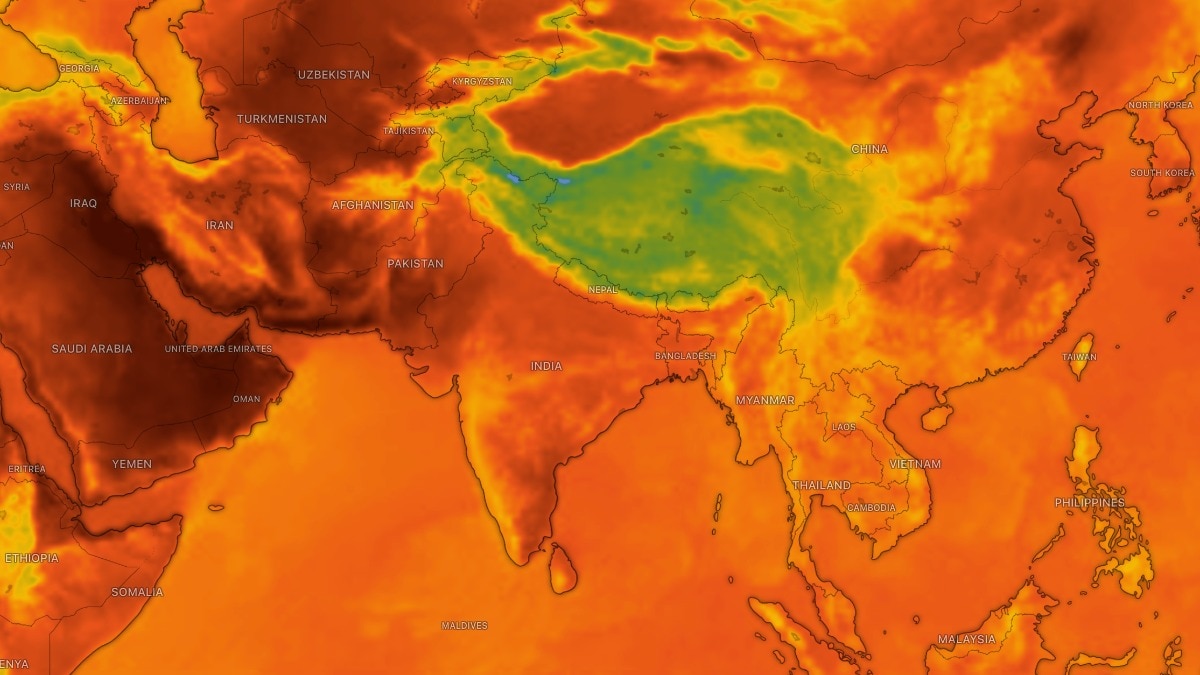
India has said there is no official category called Super El Nino even as scientists warn of an intense Pacific event. The government said India's impact will depend on broader ocean-atmosphere conditions, not El Nino alone.Signs of the strengthening El Niño are already becoming evident globally. (Photo: Windy)Even as climate scientists warn that a powerful El Nino is rapidly strengthening in the Pacific Ocean, the Indian government has clarified that there is no officially recognised category called "Super El Nino."Instead, the India Meteorological Department (IMD) classifies El Nino events as weak, moderate, strong or very strong, based on sea surface temperature anomalies over the equatorial central Pacific.In a written reply in the Rajya Sabha, Minister of State (Independent Charge) for Earth Sciences, Dr Jitendra Singh said that neither the World Meteorological Organisation (WMO) nor the IMD defines a separate "Super El Nino" category.The clarification comes at a time when several international scientists and weather agencies have described the ongoing Pacific warming as exceptionally intense, with some referring to it as a potential "Super El Nino" because of its rapid evolution and expected global impacts. The IMD said it is continuously monitoring the evolution of El Nio. (Photo: Windy) According to the IMD, El Nino conditions first emerged at weak levels in June 2026 before strengthening to moderate intensity in July. Forecasts indicate that the phenomenon is likely to intensify further during the October-December 2026 period and could reach the very strong category.The WMO website mentions that they do not use the term “super El Nino” because it is "not part of standardised operational classifications." However, the government cautioned that the eventual impact on India cannot be determined by El Nino alone."The exact intensity and impacts over the Indian region depend on the evolution of coupled ocean-atmosphere conditions, of which El Nino is one factor," the minister said.El Nino is a natural climate phenomenon marked by warmer-than-normal sea surface temperatures in the central and eastern equatorial Pacific Ocean. The warming alters atmospheric circulation across the globe, often disrupting rainfall patterns, increasing heatwaves and influencing tropical cyclone activity.In India, strong El Nino years have historically been associated with weaker southwest monsoons, although other climate drivers such as the Indian Ocean Dipole and Madden-Julian Oscillation can either amplify or offset its effects. In India, strong El Nio years have historically been associated with weaker southwest monsoons. (Photo: Windy) Despite the government's clarification on terminology, signs of the strengthening El Nino are already becoming evident globally, with many regions experiencing prolonged heatwaves, droughts, wildfires and shifting rainfall patterns.The IMD said it is continuously monitoring the evolution of El Nino along with other climate drivers and regularly issues seasonal forecasts, extended-range outlooks and daily impact-based weather warnings.These advisories are shared with central and state governments, disaster management agencies and district administrations to support preparedness and response as climate conditions evolve through the remainder of the year.- EndsPublished By: Sibu Kumar TripathiPublished On: Jul 30, 2026 16:47 IST
Scientists say Super El Nino is here. Govt says we don't have that category
Full Article
Original Source
Read the full article at Indiatoday →KhanList aggregates and links to publicly available news content. We do not host full articles from third-party sources. Always verify important information with original sources.