
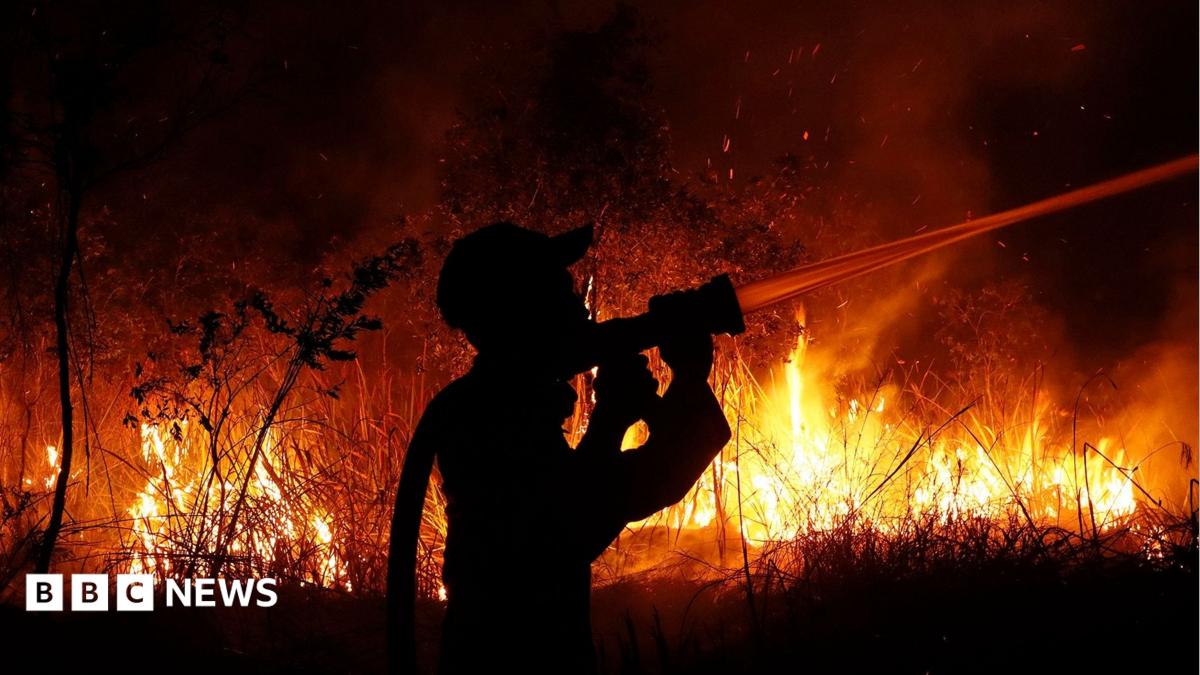
The world is on course for its hottest year on record as the planet is hit with warming from climate change and El Niño, scientists have told BBC News.The warning comes as world leaders and negotiators gather in Turkey on Monday for the opening of COP31, the latest UN climate summit.Berkeley Earth, the independent US research group behind the forecast, said that even with two months of the year left it is 95% confident that 2026 will surpass the previous record set in 2024.The impact of rising heat has been felt acutely in recent months by countries attending COP, with extensive wildfires across Europe and the sudden glacier collapse in Nepal which killed more than 1,000 people."We have had a run of record warm years," said Dr Robert Rohde, of Berkeley Earth. "That is what we expect as global warming progresses… glaciers collapsing, record-breaking heatwaves and droughts."On Friday, the EU's Copernicus climate service, external confirmed that October was the hottest on record.But Rohde warned this was just the start. "There is potential for much larger and much more dramatic changes down the line," he said.The main driver of rising global temperatures has been the increasing concentration of carbon dioxide in the atmosphere, largely caused by burning fossil fuels.The UN's World Meteorological Organization (WMO) published its own report on Monday, external, and although more cautious than Berkeley, it has forecast that 2026 will be among the four warmest years on record.It said that 2027 will provide no let-up, as an unusually powerful El Niño will continue into next year, pushing temperatures higher.WMO Secretary-General Celeste Saulo said it "gives new meaning to the phrase off the charts".Celeste Saulo of the WMO said she could not offer an explanation as to why countries have previously not reached agreement on certain issues, but said "what I see are the impacts of what this lack of consensus generates with more extreme events".The BBC understands that the UK government is reluctant to set any new goals at COP31 and thinks the focus should be on achieving existing agreements.But, on Monday it was reported that the UK government's electric vehicle (EV) targets are expected to be reduced in a move that risks the country's long-term climate goals, according to sustainability groups.And in September the government was criticised by MPs on the International Development Committee, external for cutting its aid budget meaning it could not fulfil previous climate funding commitments.Wealthier nations had agreed at previous COP meetings to triple the amount of money going to developing countries to help them adapt to climate change to at least $85bn (£63bn) by 2035.The latest data from 2024 shows that countries have reached about a third of that figure, but the UN said this week that the current damage from climate change being experienced is "substantial" and much more money could be needed.But many countries have redirected aid budgets towards defence spending and short-term financial relief for households as gas and oil prices spike following the Iran-US war.Governments are also expected to use the forum to discuss global AI policy including the growing demand for energy and water resources from data centres underpinning the technology's rollout.Additional reporting by Miho Tanaka.
Scientists predict 2026 hottest year on record as climate talks begin
Full Article
Original Source
Read the full article at Bbc →KhanList aggregates and links to publicly available news content. We do not host full articles from third-party sources. Always verify important information with original sources.