
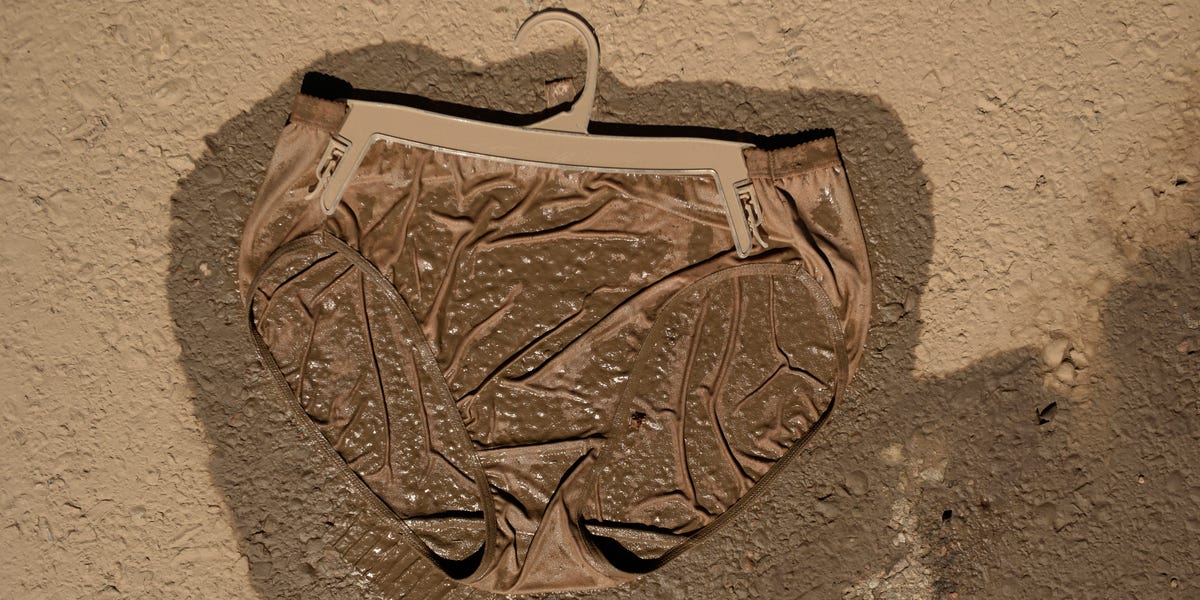
3 min readHere’s what you’ll learn when you read this story:Strong soil health is immensely important for agriculture, carbon sequestration, and providing a habitat for more than half the world’s wildlife, but roughly one third of the world’s soils are degraded. A new study used the rate of decomposition of cotton underpants as part of a citizen science project showing how land use impacts soil health.The study determined that underwear is a good tool for studying soil health and developed a tool known as the Underpants Index.Life begins with dirt. A vast majority of the food we eat originates with soil. Soil helps store carbon, acting as one of the largest carbon reservoirs on Earth. Soil is home to more than half of all species on the planet. To put it mildly, soil is a big deal.Sadly, soil rarely comes up in conversation when talking about the environmental damage brought on by global warming and industrialization, and like so many other facets of Earth’s natural systems today, soil is in crisis.“Soil is full of millions of living organisms that interact with one another,” says Silvia Pressel, a researcher with the Natural History Museum in the U.K. “These organisms have a major influence on soil, such as its formation, structure, and productivity.” The museum estimates that roughly a third of the world’s soil is “moderately to highly degraded,” usually due to soil erosion and poor land management. Healthy soil teems with life, including earthworms, arachnids, insects, fungi, and bacteria—in fact, the organisms in a teaspoon of soil can be more numerous than Earth’s human population.And with so many organisms, soil’s ability to break down material is a strong indicator of its health. The faster something decomposes, the healthier it is.A new study published in the journal Plants People Planet used this idea to create a snapshot of soil health throughout Switzerland. With the help of 1,000 citizen scientists, researchers from the University of Zürich planted more than 2,000 pairs of underwear—yes, underwear—as well as 12,000 teabags across 1,000 locations throughout the country. While teabags are a standard tool for studying soil decomposition rates, which is known as the Tea Bag Index, they require careful handling and specific tools. With the addition of underwear to their study, the researchers hoped to attract more public attention to the soil experiment and to a new soil health metric—the Underpants Index (UI).The briefs in question were organic cotton underpants sold by the Swiss supermarket chain Coop (size small). Participants in the study dug a hole and inserted two pairs of underwear (along with associated tea bags) vertically, one right next to the other—with only the waistband visible at the surface. After 30 days, the first pair of underwear was retrieved along with its teabags, and then the second pair was exhumed a month later.“We demonstrate that underpants decomposition can serve as a simple and easy-to-interpret tool to assess decomposition and provide a first impression of soil health,” the authors wrote. “We observed that underpants decomposition differed among land use types and was highest in private gardens, a land use type that often shows high soil fertility.”The results fell in line with the authors’ general hypothesis that the underwear would degrade faster in soils high in organic carbon, which meant that rates of decomposition were faster in private gardens and arable land.Unsurprisingly, lawns showed the lowest decomposition rates of any land-use category, losing out to permanent grasslands and even permanent crops. In many parts of the world, people have advocated for replacing turf grass because they create fragile monocultures and require a lot of water, which is especially problematic in regions struggling with water availability. With the help of underpants, it’s safe to say degraded soil is another check mark in a lawn’s “con” column.Darren lives in Portland, has a cat, and writes/edits about sci-fi and how our world works. You can find his previous stuff at Gizmodo and Paste if you look hard enough.
Scientists Planted 2,000 Pairs of Underwear in the Dirt. It Revealed a Lot About the Health of Our Planet.
Full Article
Original Source
Read the full article at Popularmechanics →KhanList aggregates and links to publicly available news content. We do not host full articles from third-party sources. Always verify important information with original sources.