
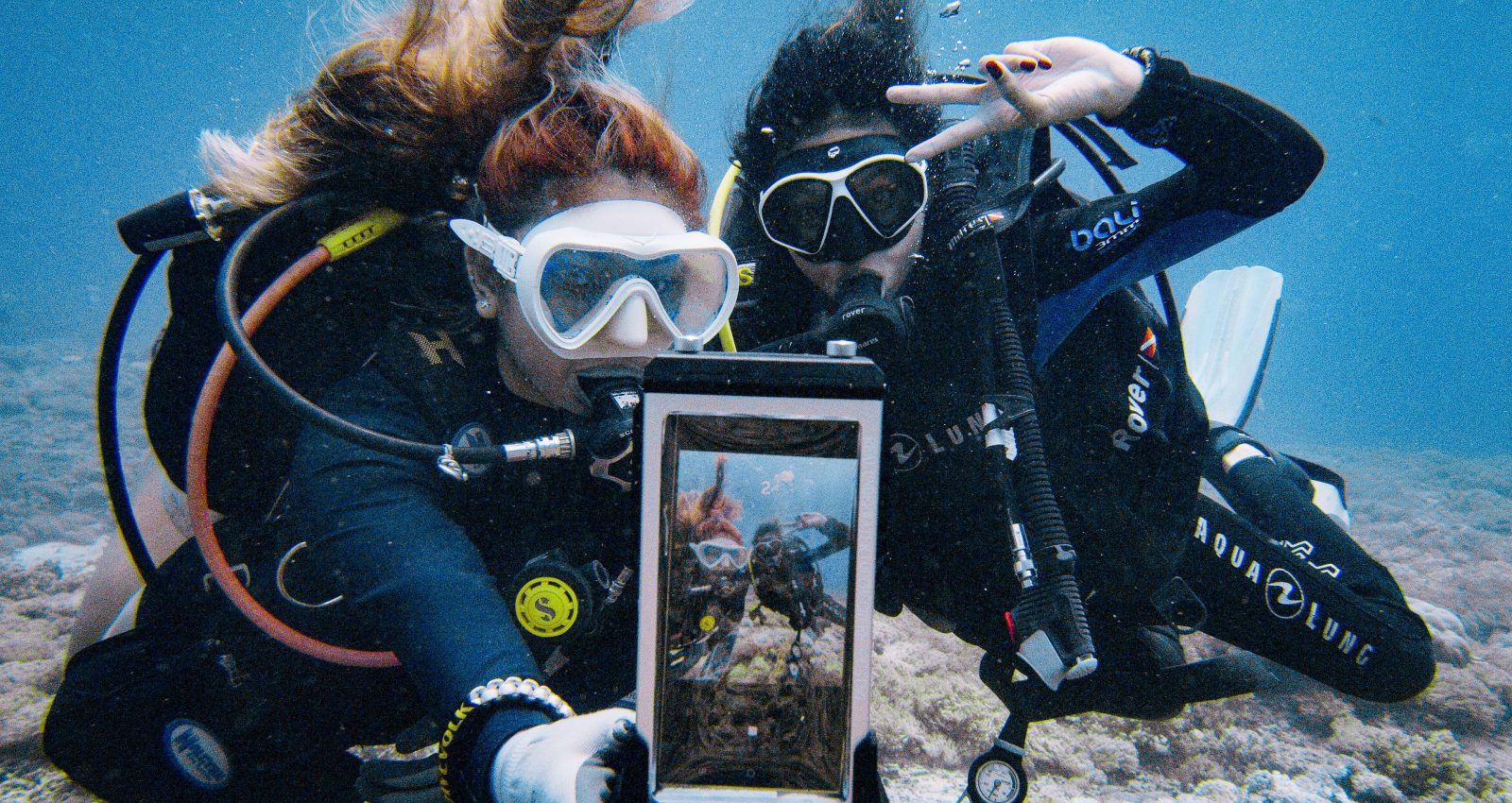
A thriving coral reef is the product of hundreds, sometimes thousands, of years of growth. Layer by layer, these living colonies build on what came before them until they take shape as sprawling ecosystems that shelter fish and soften the force of waves. For something powerful enough to sustain so much life, reefs exist in an acutely delicate balance. Though they cover less than 1% of the ocean floor, coral reefs sustain approximately 25% of marine life. And what may have taken centuries, even millennia, to form can be damaged by something as common as a marine heatwave in only a matter of weeks. That imbalance has made the work happening to protect these fragile ecosystems both necessary and increasingly urgent. But restoring a reef is not as simple as just planting coral. Before that process can begin, teams of local fishers, park rangers, researchers and restoration practitioners need a clear picture of what’s happening beneath the ocean’s surface. “The underwater world is effectively hidden for most people,” says Stuart Sandin, professor of marine ecology at Scripps Institution of Oceanography at UC San Diego. “If we can see where solutions exist, we can find ways to assist nature and find ways to accelerate preservation, management and restoration.” “The underwater world is effectively hidden for most people. If we can see where these solutions exist, we can find ways to assist nature and find ways to accelerate preservation, management and restoration…” Monitoring a coral reef means tracking an environment that is in constant flux. To get meaningful results, researchers must return to the same places over time to document which corals survive, which grow and whether restoration efforts are working. But capturing these changes underwater presents a unique set of challenges. Visibility can vary, and light and color behave differently with depth. One of the primary tools that scientists use to overcome those limitations is photogrammetry, a process that uses overlapping photographs to construct highly detailed 3D models of a reef. “[This] imagery is providing us an opportunity to see corals, to give those corals more time to talk to us, for us to be able to listen to them,” Sandin explains. It’s “creating a model of a landscape so we can study it.” These photogrammetric models allow researchers to preserve a moment in the life of an underwater landscape, then return later and see what has changed. Until recently, collecting imagery at this level could require specialized underwater equipment costing tens of thousands of dollars. Detailed reef mapping has traditionally relied on specialized underwater camera equipment that can be cumbersome and can cost tens of thousands of dollars. A collaboration between Samsung, Seatrees and scientists at UC San Diego’s Scripps Institution of Oceanography set out to make that capability far more accessible. Their solution was Ocean Mode, a custom camera setting on Samsung Galaxy devices designed specifically for underwater reef monitoring. The feature, now available to the public through Expert RAW, allows restoration teams to capture the high-quality imagery needed for photogrammetry with a lightweight, handheld device. For Jenifer Marcela Suarez Moncada, a restoration partner at Galápagos National Park, the difference is immediate. “It’s not the same to take pictures with a phone and a protective case as it is to carry an $80,000 camera underwater,” she says. “The phone is much more functional and gives you confidence because it’s something we already use every day.” The benefit goes beyond making an expensive process more affordable. It empowers communities with the technology they need to protect the reefs that sustain their coastlines and their livelihoods. Ocean Mode is helping local practitioners safeguard the underwater ecosystems that they call home. Across the partnership, that work is taking different forms: In Fiji, Reef Explorer works with local practitioners and youth to grow heat-tolerant coral fragments in underwater rope nurseries for six to 12 months before planting them on reefs that support more than 200 species of hard coral and 250 species of reef fish. In Bali, local restoration teams are growing coral in nurseries and transplanting it onto degraded reefs, creating a habitat for more than 500 marine species. The project also creates living-wage employment for more than 36 local people and supports more than a dozen families. In the Florida Keys, 3,000 tiny coral fragments are growing in land-based tanks. In Costa Rica, local coral gardeners are restoring reefs and learning to map them in 3D. Seatrees works with local restoration partners in Fiji, Bali, the Florida Keys, Costa Rica and the Galápagos Islands. Together, these projects have planted more than 20,000 coral fragments and restored 13,689 square meters of reef, an area roughly the size of two and a half football fields. Using Ocean Mode-equipped Galaxy devices, partners at the Scripps Institution of Oceanography have been able to create 107 3D reef models, turning thousands of underwater images into a living record they can return to again and again. “Imagery is providing us an opportunity to see corals, to give those corals more time to talk to us, for us to be able to listen to it. This procedure is creating a 3-dimensional model of a landscape so we can study them…” And sometimes, what comes back from the reef is something more meaningful than just the metrics. “Being able to document what I saw underwater, both good and concerning, without having to worry about cumbersome cameras or highly technical equipment, allowed me to be both observant and present in the water,” explains Dee Dee Vaughn Smause, co-founder and director of development and communications at Plant a Million Corals Foundation in the Florida Keys. Vaughn Smause has seen firsthand what happens when that evidence reaches people beyond the research team. For people accustomed to hearing about warming oceans, severe bleaching events, disappearing reefs and extreme weather events, the images offer something powerful enough to challenge the inevitability of that story: evidence of what can still be saved. “The thing we hear the most from people is how grateful they are to hear that there is hope for our corals,” Vaughn Smause says. “In a world with so much bad news, to hear about our program and be able to see it with their own eyes gives them hope and a renewed passion for our oceans.” Local restoration teams are using new monitoring tools to document reef recovery and share what they are seeing beneath the surface. That impact is being recognized beyond the communities doing the work. The collaboration earned Samsung, Seatrees and the Scripps Institution of Oceanography at UC San Diego a Gold Halo Award from Engage for Good, North America’s highest honor for corporate social impact initiatives. Awarded in the Best Sustainability or Conservation Initiative category, the recognition highlights how this cross-sector partnership is giving people closest to these ecosystems better tools to understand, restore and protect them. But the work is far from finished. Coral reefs still face enormous pressure from warming oceans and a changing climate, and while technology lets more people see what was once hidden, no camera can solve that on its own. The partnership shows what can happen when each group brings what it knows best: Samsung the technology, scientists the research, and local restoration teams years of knowledge about the ecosystems they call home. As the reefs begin to recover, that combined work offers the rest of us something too often missing from the story of a planet in crisis: proof that individual efforts, big or small, can make a difference.individual efforts, no matter how big or small, can make a difference. Contributions can help grow coral in local nurseries, transplant it onto degraded reefs and monitor the marine life that returns. Learn more about how you can directly support Seatrees and coral restoration, here.
Scientists needed a better way to monitor disappearing coral reefs. Seatrees and Samsung have found a solution that fits in one hand.
Full Article
Original Source
Read the full article at Upworthy →KhanList aggregates and links to publicly available news content. We do not host full articles from third-party sources. Always verify important information with original sources.