
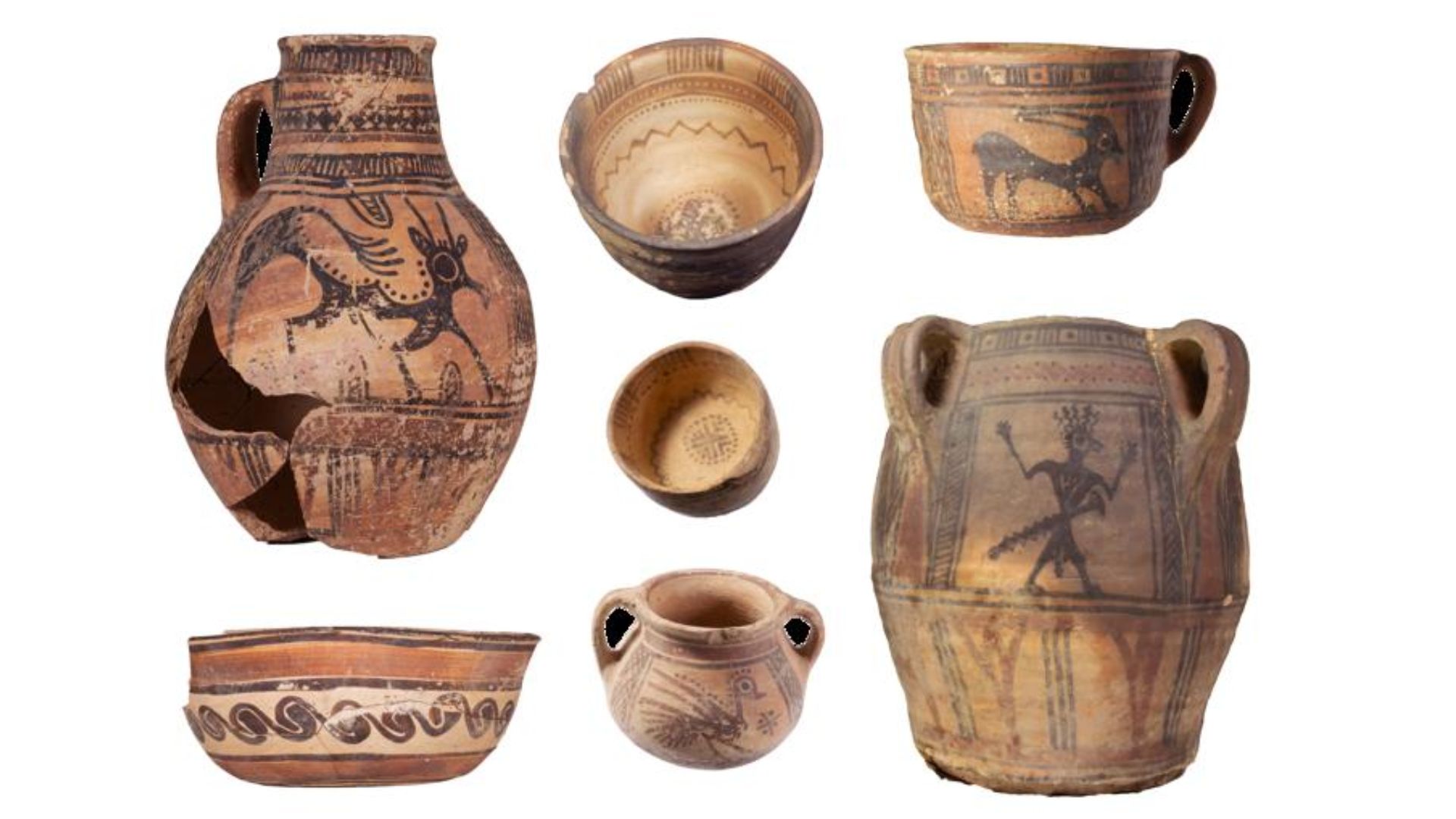
Distinctive pottery made in an Arabian oasis more than 3,000 years ago may have developed many of the characteristics associated with modern brands. Long before logos, advertising campaigns, and corporate trademarks, Bronze Age potters in northwestern Arabia may have discovered something surprisingly familiar: brand recognition. A new archaeological study suggests that a distinctive type of painted pottery known as Qurayyah Painted Ware, or QPW, developed into what researchers describe as an early example of a commercial “brand” around 3,200 years ago. The ceramics were recognizable by their striking black-and-red painted designs, featuring geometric patterns as well as stylized animals and human figures. But according to the researchers, it was not just the pottery’s appearance that made it brand-like. Its consistent production methods, recognizable visual identity, centralized manufacturing, reputation, and spread across distant regions may together represent one of the earliest known examples of brand-making. A product people could recognize The new research, published in PLOS One, examined the origins and development of Qurayyah Painted Ware, which was produced at the oasis of Qurayyah in what is now northwestern Saudi Arabia. The pottery tradition itself appears to have begun earlier, during the late Middle Bronze Age. Over several centuries, however, researchers say it evolved into a more standardized and recognizable product known as QPW 4. The study combined technological, petrographic, and geochemical analyses of pottery fragments recovered from a kiln at Qurayyah. These investigations allowed researchers to trace how the ceramics were produced and compare them with examples found elsewhere. The evidence suggests that the pottery developed a consistent technological identity while maintaining a distinctive visual style. Eventually, similar vessels began appearing far beyond their place of origin, including sites in Jordan and other parts of the region. That combination is what makes the researchers’ argument particularly interesting. More than just decorated pottery A modern brand is not simply a logo stamped onto a product. It is often built around recognition, consistency, reputation, and the relationship between producers and consumers. The researchers argue that Qurayyah Painted Ware displayed many of these characteristics. The pottery was produced using consistent methods, had an unmistakable visual identity, and appears to have been manufactured in a centralized production hub before being distributed across a wider region. By the time QPW 4 emerged, the researchers argue that its standardized production and widespread circulation had created a commodity with significant cultural and commercial recognition. According to the Austrian Archaeological Institute, the researchers identified several characteristics associated with the development of a brand, including visual identity, material consistency, technological continuity, centralized production, export circulation, local imitation, commercial scope, and cultural reputation. In other words, buyers may have recognized what they were getting simply by looking at it. Branding before capitalism The idea is particularly fascinating because it challenges the assumption that branding is a relatively modern invention. There were no advertising agencies or corporate trademarks in Bronze Age Arabia. Yet producers may still have understood the value of making an object visually distinctive and consistently recognizable. The study’s authors are careful to frame Qurayyah Painted Ware as an example of ancient brand-making, rather than directly equating it with a modern multinational brand. Still, the underlying concept may have been surprisingly similar: create a recognizable product, maintain its identity, build a reputation, and distribute it beyond its place of origin. If the researchers are right, one of humanity’s earliest recognizable brands was not a car, a smartphone, or a bottle of soda. It was a beautifully painted pot made in an Arabian oasis more than three millennia ago. Get the latest in engineering, tech, space & science - delivered daily to your inbox.Kaif Shaikh is a journalist and writer passionate about turning complex information into clear, impactful stories. His writing covers technology, sustainability, geopolitics, and occasionally fiction. A graduate in Journalism and Mass Communication, his work has appeared in the Times of India and beyond. After a near-fatal experience, Kaif began seeing both stories and silences differently. Outside work, he juggles far too many projects and passions, but always makes time to read, reflect, and hold onto the thread of wonder.
Scientists may have found the world’s first-ever brand on 3,200-year-old pottery
Full Article
Original Source
Read the full article at Interestingengineering →KhanList aggregates and links to publicly available news content. We do not host full articles from third-party sources. Always verify important information with original sources.