
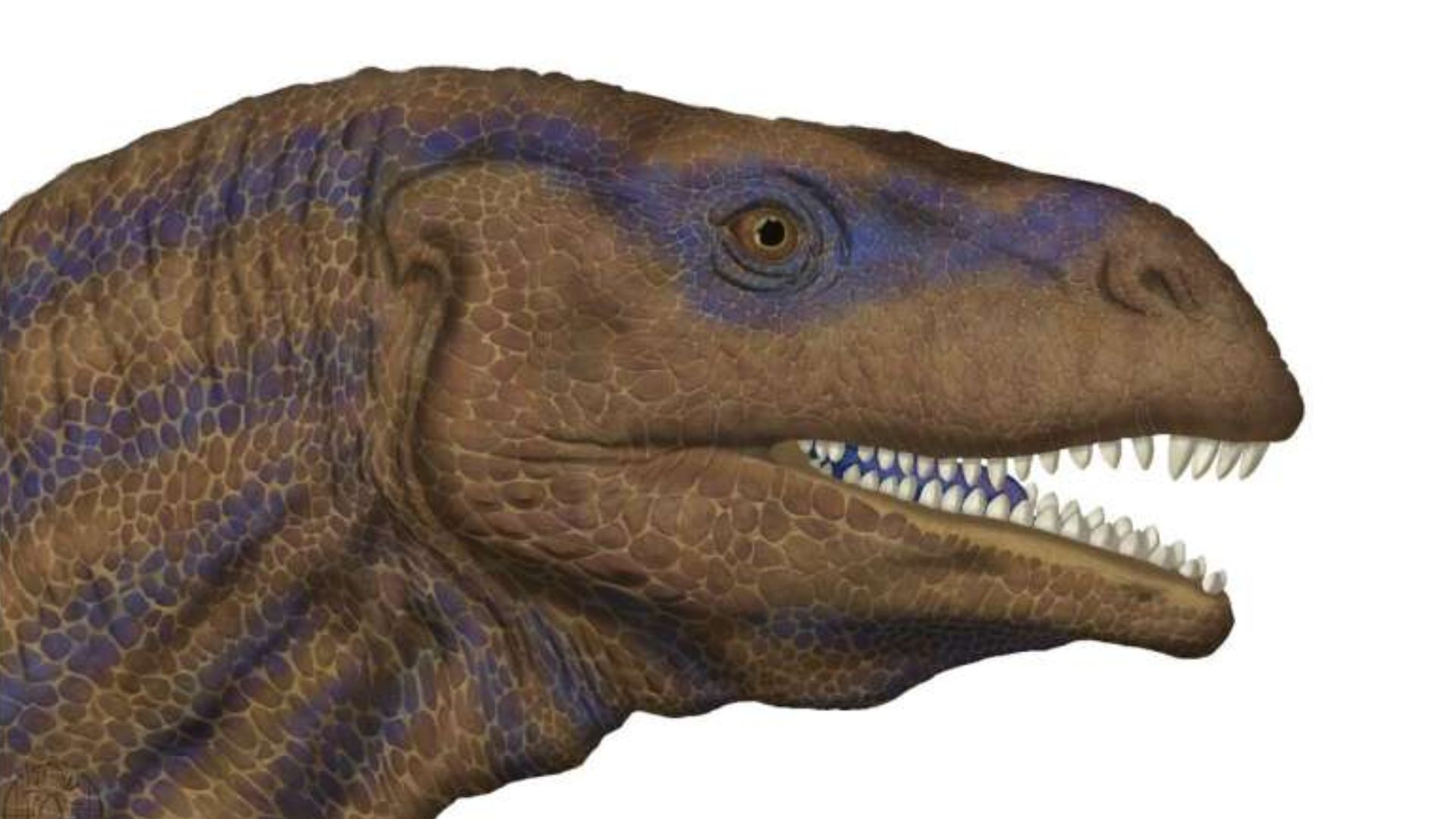
Key TakeawaysNyana belongs to the group of dinosaurs called sauropodomorphs or lizard-footed forms.Nyana was about four times the size of Massospondylus and Mussaurus, of comparable age, making it one of the largest juvenile dinosaurs from that age.Phylogenetic analysis shows that Nyana was either a close relative of Sarahsaurus, from North America, or Ngwevu, from South Africa. Researchers at South Africa’s University of the Witwatersrand have discovered a new dinosaur species that lived nearly 200 million years ago in modern-day South Africa. Dubbed Nyana rooiwalnesis, the dinosaur weighed 880 pounds (440 kg), while still being just two years old. Nyana belongs to the group of dinosaurs called sauropodomorphs or lizard-footed forms. These were bipedal dinosaurs that ate a herbivorous diet. These dinosaurs with large necks and tails eventually evolved into Brachiosaurus and Diplodocus, animals with long tails and long necks, which became the largest animals to walk the planet. The dinosaurs emerged around 230 million years ago and persisted till the Late Cretaceous period, about 66 million years ago, and roamed all the continents. Given their size, it is difficult to find fossil records of the complete animal, since fossil formation requires burial of the creature in its entirety. This is why smaller fossils have been found across continents. The discovery dates back to the late Triassic era, when these early dinosaurs were still evolving. The researchers made their analysis from a fossilized skull, which is a rare find for this age and location in the southern Africa. The fossil was found in 2018, on the outskirts of Qhemegha village in Eastern Cape province. 3D model, age, weight The researchers found incomplete remains of the skull, which was sufficient to generate three-dimensional detailed models. The skull measured 8.4 inches (21.3 cm) and included an almost intact braincase, palate and hyoid, a small bone of the throat. A team of researchers from the University of the Witwatersrand used powerful X-rays at the European Synchrotron Radiation Facility to create the models and then used the features to determine Nyana’s place on the family tree of dinosaurs. Using thin slices of bones from the limb, the team estimated Nyana’s age and growth patterns. The slices showed growth rings, which are similar to tree rings, and showed two lines of growth. This means that Nyana was in its third year of life. Even as it grew to a considerable size, it was still growing at the time of its death and would have grown much larger to reach multi-tonne mass. Nyana was about four times the size of Massospondylus and Mussaurus, of comparable age, making it one of the largest juvenile dinosaurs from that age. Shedding light on evolution While the discovery of a new type of dinosaur is newsworthy, the research findings shed new light on the how early dinosaurs evolved during this period. The researchers suggest that rapid growth emerged during sauropodomorph evolution, before true giants emerged. Phylogenetic analysis shows that Nyana was either a close relative of Sarahsaurus, from North America, or Ngwevu, from South Africa. If Nyana is a sister taxon of Sarahsaurus, it gives paleontologists a biogeographical link between sauropodomorphs of southern Africa and western North America. The research findings were published in Royal Society Open Science. Get the latest in engineering, tech, space & science - delivered daily to your inbox.Ameya is a science writer based in Hyderabad, India. A Molecular Biologist at heart, he traded the micropipette to write about science during the pandemic and does not want to go back. He likes to write about genetics, microbes, technology, and public policy.
Scientists discover new dinosaur species that weighed 880-pound as 2-year-old
Full Article
Original Source
Read the full article at Interestingengineering →KhanList aggregates and links to publicly available news content. We do not host full articles from third-party sources. Always verify important information with original sources.