
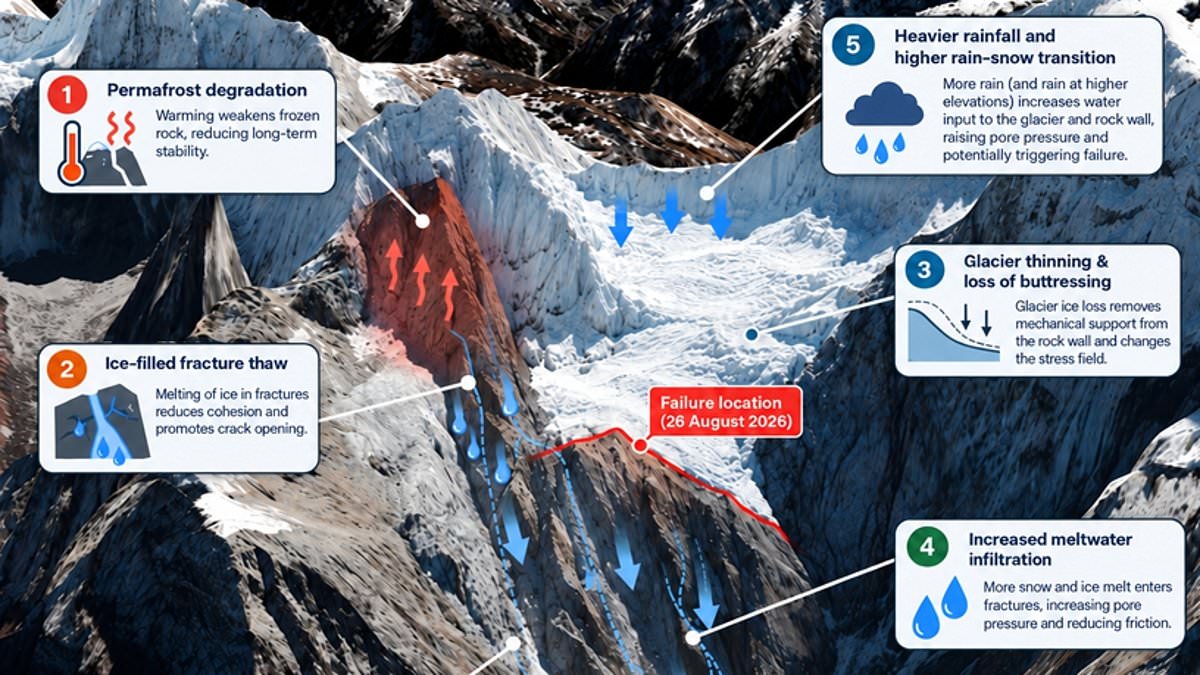
Scientists have blamed climate change for the devastating floods in Nepal last month.The catastrophic event, which took place on August 26, saw a massive section of overhanging glacier and rock fall from Lantang Lirung mountain. This caused an enormous flood of water, ice and debris that swept downstream, killing over 1,300 people – with more than 5,000 still missing. Now, experts from the World Weather Attribution say that climate change contributed to permafrost thaw and glacial thinning that likely influenced the collapse. Worryingly, the scientists say this could just be a taste of what's to come as global temperatures continue to rise. Professor Friederike Otto, Professor of Climate Science at Imperial College London, said: 'Without much faster action to transition to zero fossil fuel emissions we will inevitably see more disasters of this scale occurring in the years to come.' Rather than a single extreme weather event, they describe the event as a 'compound crisis' with several causal factors The catastrophic event, which took place on 26 August, saw a massive section of overhanging glacier and rock fall from Lantang Lirung mountain. This caused an enormous flood of water, ice and debris that swept downstream, killing over 1,300 people – with more than 5,000 still missingFor their analysis, the team looked at the impact climate change had on last month's disaster. Rather than a single extreme weather event, they describe the event as a 'compound crisis' with several causal factors. Firstly, they highlight the glacier thinning, which they say is a result of decades of atmospheric warming. This thinning lifted the altitude of the freezing threshold on the high Himalaya by around 100m per decade, according to the experts. In the process, this exposed ice and permafrost deep in the bedrock to higher and longer thaw temperatures, weakening mountain slopes.Meanwhile, a previous earthquake is 'likely to have also further preconditioned the slope for collapse', according to the team. They explained: 'Although its specific contribution to this disaster cannot yet be confirmed, a massive 7.8 magnitude earthquake in 2015 may have further contributed to the slope failure alongside other geological and climatic factors.'Looking at the temperatures in the region around the time of the disaster, the researchers found that both July and August were the warmest on record. What's more, high snowfall in October and November last year added large amounts of water in the months preceding the disaster. Nepal floods: A compound crisis Decades of warming have melted the glacierThis has pushed the freezing threshold line upward by around 100 metres of altitude per decadeThis has resulted in glacier recession and thawing occurring in permafrost within rock fractures that historically hold high mountain walls together, rendering them unstable A massive 2015 earthquake is likely to have also further preconditioned the slope for collapse Professor Walter Immerzeel, Mountain Hydrologist at Utrecht University, said: 'We are witnessing fundamental, irreversible shifts in Himalayan mountain environments. 'Climate change from the burning of fossil fuels is pushing the freezing line – the zero–degree isotherm – upward by roughly 100 metres per decade, exposing perennially frozen ground and bedrock to thaw conditions that are longer and warmer than before. 'When you combine high–elevation permafrost degradation with glacier retreat and record summer heat, the structural integrity of these mountain walls is compromised. 'The catastrophic impacts of what can then happen are clear for all to see.' Worryingly, even if prevention measures are put in place now, we could see similar events in the near-future, the researchers warn. That's because past glaciers and high-altitude permafrost respond over decades to temperature rises – meaning past warming is 'already locked in'. Manjeet Dhakal, Director of Climate Analytics South Asia, added: 'The magnitude of this disaster is testing Nepal's response capacities and the limits of adaptation. 'Every fraction of a degree of warming matters. 'Science must now drive urgency: deeper and faster global emission reductions, greater investment in understanding complex mountain risks, strengthened monitoring and early warning, climate-resilient development, and international climate finance support at the scale and speed that frontline countries like Nepal need.'
Scientists blame climate change for Nepal's devastating flash floods - and warn similar disasters are 'inevitable' as global temperatures continue to rise
Full Article
Original Source
Read the full article at Dailymail →KhanList aggregates and links to publicly available news content. We do not host full articles from third-party sources. Always verify important information with original sources.