
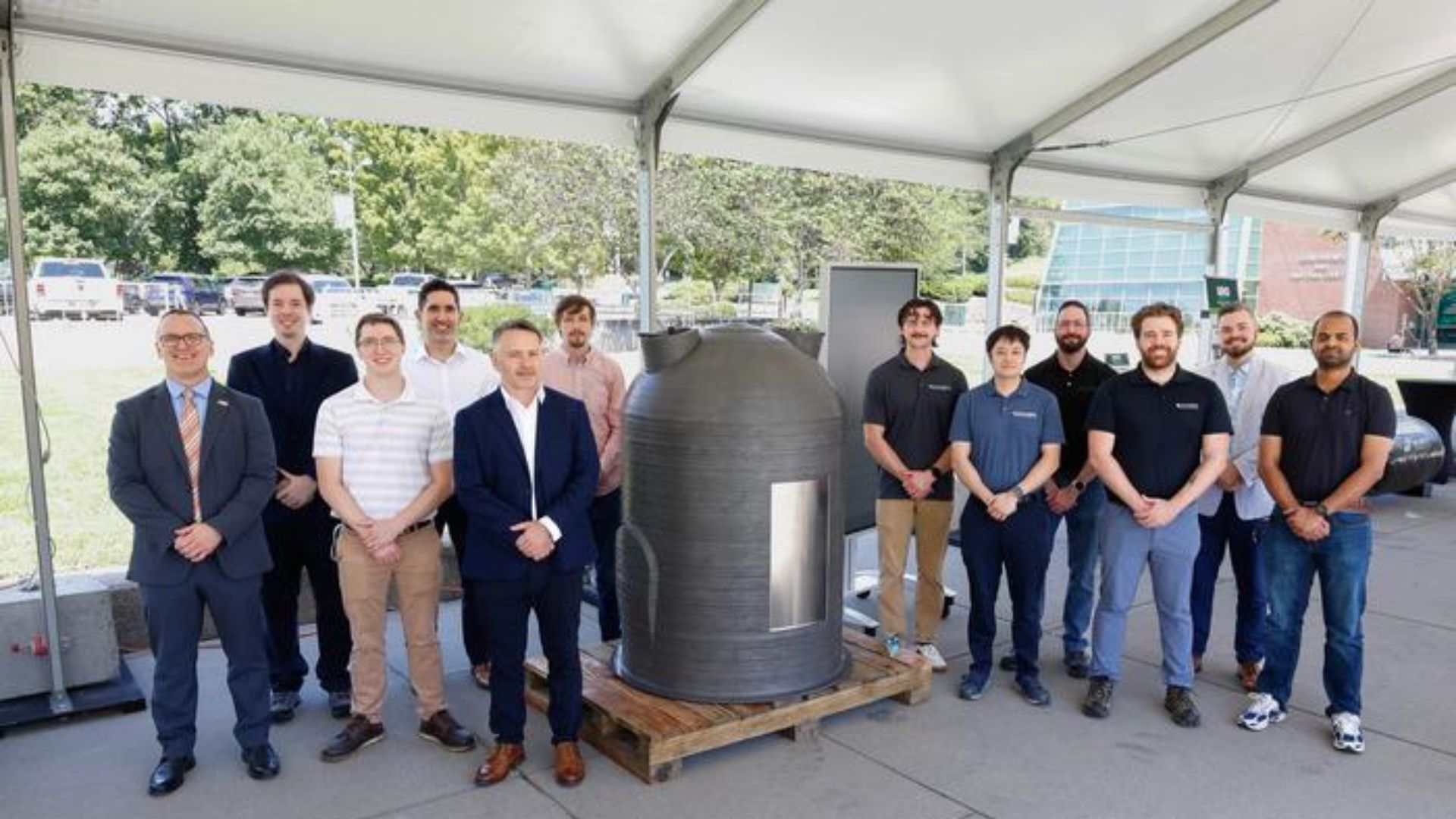
Oak Ridge National Laboratory (ORNL) and industry partners are deploying advanced manufacturing technologies, such as heavy 3D printing and AI-driven automation, to repair broken US industrial supply chains. For instance, inside an advanced Tennessee facility, a giant three-armed robot called MedUSA crafted a three-by-five-foot nuclear pressure vessel by guiding molten steel into place. Nearby was a large 12-foot model of an impact limiter, made from strong plastic instead of the usual wood. These were battle tests for the future of American industry. America’s industrial sector is facing severe operational hurdles, driven by irregular supply chains and a shortage of skilled workers. These issues have created extreme delays in infrastructure sectors like hydropower, where acquiring major custom components can now take over ten years. Over 350 leaders gathered at ORNL for the Materials and Manufacturing Innovation Days. They discussed ways to speed up the adoption of advanced manufacturing technologies. The goal of M2IND was simple yet ambitious: remove the administrative and technical obstacles slowing advanced technology, and turn laboratory breakthroughs into factory-floor reality before time runs out. “We want to make sure we have input from industry to help guide our research and ensure that the work at Oak Ridge and the Manufacturing Demonstration Facility (MDF) is valuable to U.S. manufacturers and takes into account the supply chains needed to commercialize new technologies,” said MDF Director Ryan Dehoff. Fast-track advanced manufacturing The event featured two large 3D-printed nuclear energy structures. Researchers worked with the University of Maine to print a glass-fiber polymer model of an impact limiter. This massive component protects spent nuclear fuel shipping containers during transport and replaces traditional wood designs. Scientists also used a three-arm robotic system to print a steel pressure vessel with complex domed geometry. This project shows how additive manufacturing can produce large metal parts that usually face production issues. Standard reactor vessels use large-scale forging and welding, which face severe domestic capacity limits. The 3D-printed vessel served as a test case to evaluate additive manufacturing as a viable alternative. Supply chain issues Participants highlighted urgent needs for resilient supply chains, alternative materials, and faster part qualification. They also pushed to combine manufacturing with AI, robotics, and digital engineering. New partnerships were formed to quickly turn laboratory research into practical tools for manufacturers. Representatives from four Department of Energy offices and defense officials joined leaders from energy, manufacturing, and technology sectors at the event. Together, several key obstacles facing American industry were identified. These challenges include limited local capacity for large metal parts and long component lead times. ORNL formed key industrial partnerships to bring research into practical factory use. Yet, as forum participants repeatedly emphasized, printing a part is only half the battle. Getting it certified for real-world use is where momentum often dies. To bridge that gap, ORNL announced a joint research effort with Idaho National Laboratory to standardize digital qualification methods across different facilities Researchers hope to give regulators the data needed to certify 3D-printed nuclear and energy components in months rather than years. They plan to do this using real-time sensors, machine learning, and defect-tracking algorithms during the build process.With new partnerships signed with energy titans like SLB and Kairos Power, the push is clear. Urgency has replaced routine. America is racing to rebuild its domestic manufacturing core, starting right on the laboratory floor.Get the latest in engineering, tech, space & science - delivered daily to your inbox.Mrigakshi is a science journalist who enjoys writing about space exploration, biology, and technological innovations. Her work has been featured in well-known publications including Nature India, Supercluster, The Weather Channel and Astronomy magazine. If you have pitches in mind, please do not hesitate to email her.
Scientists 3D print steel pressure vessel for nuclear reactors using three robots
Full Article
Original Source
Read the full article at Interestingengineering →KhanList aggregates and links to publicly available news content. We do not host full articles from third-party sources. Always verify important information with original sources.