8 min readOver the past year, my boyfriend has gotten really into tennis… like, really into tennis. He bought himself a nice tennis racquet and I gifted him a pair of court shoes for his birthday. A few times a week, he’ll hit against a nearby tennis wall or play with friends for hours. Little does he know, while it might just be a new hobby to him, it could actually be increasing his lifespan.In 2018, a Danish study went viral with its findings on the longevity-related benefits of tennis. Researchers observed 8,577 Danish residents, ages 20 to 93, from 1991 to 2017, and discovered that those who regularly played tennis lived almost 10 years longer than their sedentary counterparts. While the study didn’t observe other popular racquet sports like padel or pickleball, the conclusion nevertheless supports a strong association between racquet sports and longevity. (This even gave the U.S. Open its slogan in 2024, when the tournament branded itself the “world’s healthiest sport.”)Meet the Experts: Gabrielle Lyon, DO, is a fellowship-trained physician and the author of Forever Strong: A New, Science-Based Strategy for Aging Well. Vonda Wright, MD, is an orthopedic sports surgeon and founder of Skeletal Longevity. Deborah Kado, MD, is a geriatrician and co-director of the Stanford Longevity Center. Vijay Daryanani, DPT, is a physical therapist, personal trainer, and site supervisor at the Harvard-affiliated Spaulding Rehabilitation Hospital.“The beauty of racquet sports—tennis, padel, pickle, all of those—is that they’re everything in one,” says Vonda Wright, MD, an orthopedic sports surgeon and founder of Skeletal Longevity. You’re getting aerobic conditioning, bursts of high-intensity exercise, brain stimulation, dopamine hits… the list goes on.Still, picking up a racquet isn’t the only way to get those benefits. Below, experts dive into how tennis and other racquet sports can contribute to longevity—and how you can replicate those same effects in other workouts.Benefits of Racquet Sports for LongevityWhen it comes to longevity, the goal isn’t just about adding more years to your life—it’s about feeling good throughout those years, says Deborah Kado, MD, a geriatrician and co-director of the Stanford Longevity Center.What makes racquet sports like tennis so great for longevity in particular is that they require a multitude of faculties to perform well, all of which play a critical role in giving you more quality years. These are the things that racquet sports really get right when it comes to longevity.Racquet sports are great for cardiovascular health.Heart health is essential for longevity. In fact, the number one killer of American men and women is heart disease, says Dr. Wright.Aerobic exercises like racquet sports are super important in boosting heart health because they (a) maximize the amount of blood the heart can pump and (b) keep your resting heart rate as low as possible, explains Dr. Wright.In tennis, you’re constantly running across the court and intermittently sprinting, which all help get the blood pumping. That’s even more true if you’re playing tennis as opposed to pickleball or padel, since tennis courts are a lot larger and thus require you to cover more surface area, says Vijay Daryanani, DPT, a physical therapist, personal trainer, and site supervisor at the Harvard-affiliated Spaulding Rehabilitation Hospital.The proof is in the pudding, too. A 2018 study published in the British Journal of Sports Medicine found that participation in racquet sports—including tennis and badminton—showed a 59 percent reduction in cardiovascular disease mortality and a 47 percent decrease in all-cause mortality.Don’t forget pickleball, people! As more middle-aged and older adults flock to pickleball leagues, the sport has benefits for their cardiovascular fitness, blood pressure, and cholesterol, adds Gabrielle Lyon, DO, a physician, Women’s Health advisory board member, and author of Forever Strong: A New, Science-Based Strategy for Aging Well.Beyond Racquet Sports: You can get the heart health benefits from a wide range of cardio workouts, from brisk walking to running to cycling to swimming to dancing. As long as you regularly get your heart rate elevated for at least 150 minutes per week, you’re doing A-OK, per the American Heart Association.It improves balance.Balance is critical for longevity, too, especially among elderly people. “Retaining our balance and going from one foot to the other is critical for longevity in preventing accidents,” says Dr. Wright. In tennis and other racquet sports, you’re constantly teetering from one foot to the other. That lateral movement is huge, adds Daryanani, because we often don’t move backward, diagonally, and left to right nearly enough in our daily lives—which all help improve dexterity, quickness, and muscle strength, too.A 2026 study found that eight weeks of playing pickleball specifically reversed pre-frailty (the intermediate stage before adults become frail) in older adults and improved their functional fitness. That’s largely because the sport involves a great deal of coordination, stability, and balance.Beyond Racquet Sports: Dance is another great way to enhance balance (and get cardio benefits!). Dance not really your thing? Go for balance and agility exercises instead.It’s great for muscle strength.Muscle strength is another major component of healthy longevity. “Everyone says they’re looking for longevity hacks, but muscle is the ultimate one,” says Dr. Lyon.Why is muscle strength so important, though? The more muscle you have, the more comfortably you’ll be able to live. It supports your joints, bones, and everyday functioning—especially as you age.Plus, more muscle also means more room to dispose of glucose after a meal, which is important for metabolic health, Dr. Lyon says. Metabolic dysfunction is a driving factor behind conditions like type 2 diabetes, obesity, and cardiovascular disease—all of which affect your longevity. “Muscle strength and quality all track with lower all-cause mortality,” Dr. Lyon says.Tennis is one way to build and maintain that muscle strength (though regular strength training is what really allows you to build it in bigger amounts). A 2019 study published in Sports Health found that those who played tennis regularly had significantly better grip strength and knee strength compared to nonplayers, along with overall better musculoskeletal health.Still, experts say tennis works best as part of a well-rounded exercise regimen. Daryanani recommends pairing two days of a racquet sport like tennis or pickleball with three days of cardio lifting, though the ideal mix depends on your goals, fitness level, and schedule.Beyond Racquet Sports: The best way to build muscular strength is to incorporate resistance training into your schedule at least two times per week.It’s also a workout for your brain.What makes racquet sports so awesome for longevity is that they’re not just great for your physical health—the benefits go so much deeper.Because tennis is such a strategic, fast-paced game, it challenges your brain and forces it to make split-second decisions. “[You] have to anticipate a shot and adjust in real time, which creates cognitive load, and thinking and movement are both associated with a healthier brain,” explains Dr. Lyon. It pays off: a 2018 study found that elderly tennis players experienced faster processing speeds and reaction times compared to their nonplayer counterparts.Beyond Racquet Sports: Dance is another great workout for your brain, Dr. Kado says, because you’re constantly learning new choreography while coordinating complex movements.It’s a social sport. Social connection is one of the most overlooked ingredients for healthy aging, but racquet sports naturally build it in. As we age, maintaining social relationships becomes even more essential—as a matter of fact, it’s critical for our health.“A lot of research has suggested that social connections, as we get older in particular, are key to longer, healthier lives,” says Dr. Kado. In fact, research from a 2025 study strongly suggests that older adults who maintain strong social connections can drastically reduce their chances of an early death.Tennis and pickleball don’t just get you moving, but also create regular opportunities to spend time with friends, meet new people, and maintain relationships that can become harder to prioritize as work, family, and other responsibilities pile up.Beyond Racquet Sports: You don’t need to pick up a racquet, but finding a form of exercise that allows you to socialize is key here. Join a rec league, text your friends and ask if they’d like to take up a new sport with you, or become a regular at your local group fitness studio. Team sports work great, but you can just as easily have a buddy join you for more solo sports too, like bringing them along on your walk, to the gym, or on a bike ride.Lastly, it may help boost your mood.It’s no secret that mood and attitude can play a role in longevity—and if you genuinely enjoy a sport like tennis or pickleball, that could be part of the reason it’s good for you. “Exercise is almost the most effective treatment in terms of mood,” says Dr. Kado. That’s largely because cardiovascular exercise, like tennis and other racquet sports, triggers a surge of dopamine and other feel-good chemicals. Plus, it ties back to that social component—there’s something powerful about moving your body while spending time with people you enjoy.When it comes to tennis in particular, the sport can definitely boost your mood. In a 2025 study, researchers found that college students who played tennis in particular experienced fewer depressive symptoms compared to those who didn’t play.As for how it all ties back to longevity, a 2019 study originally published in Proceedings of the National Academy of Sciences revealed that optimism is closely associated with longevity, with researchers finding that people with a more optimistic outlook were more likely to live past age 85. Plus, optimism can even have an impact on your physical strength, according to research. In a 2024 study published in JAMA Psychiatry, scholars found that higher optimism was associated with better grip strength and being able to perform more chair stands in postmenopausal women.Beyond Racquet Sports: The mood-boosting benefits may have less to do with tennis itself than with doing an activity you truly enjoy. “I think it’s more about people finding their passion about what they like and doing it regularly,” Dr. Kado says. Whether that’s swimming, dancing, or even bowling, finding a form of movement you look forward to and want to keep doing is what matters most.No matter what you do, remember to ease into things.If you’re feeling inspired to pick up a racquet, do so slowly. It’s important to ease into a new sport to avoid injury, Daryanani says. “A lot of people get too intense into these sports, and that’s why we see a tremendous amount of injuries,” he explains.Cross-training is also a great way to support strength and reduce injury, adds Daryanani. And if you experience any pain, don’t wait to get it checked out by a health care professional rather than pushing through it.Find the Perfect Women’s Health Training Program for YouJustin SteeleRona Ahdout//Hearst OwnedZoë Hecht is a California-based writer and editor who enjoys writing about beauty, fashion, lifestyle, and pop culture. She graduated from Loyola Marymount University, where she received her B.A. in English. Other than Women’s Health, her work can be found on Byrdie, Teen Vogue, and more. When she’s not writing, you can find her reading, sipping coffee, and scrolling through Pinterest.
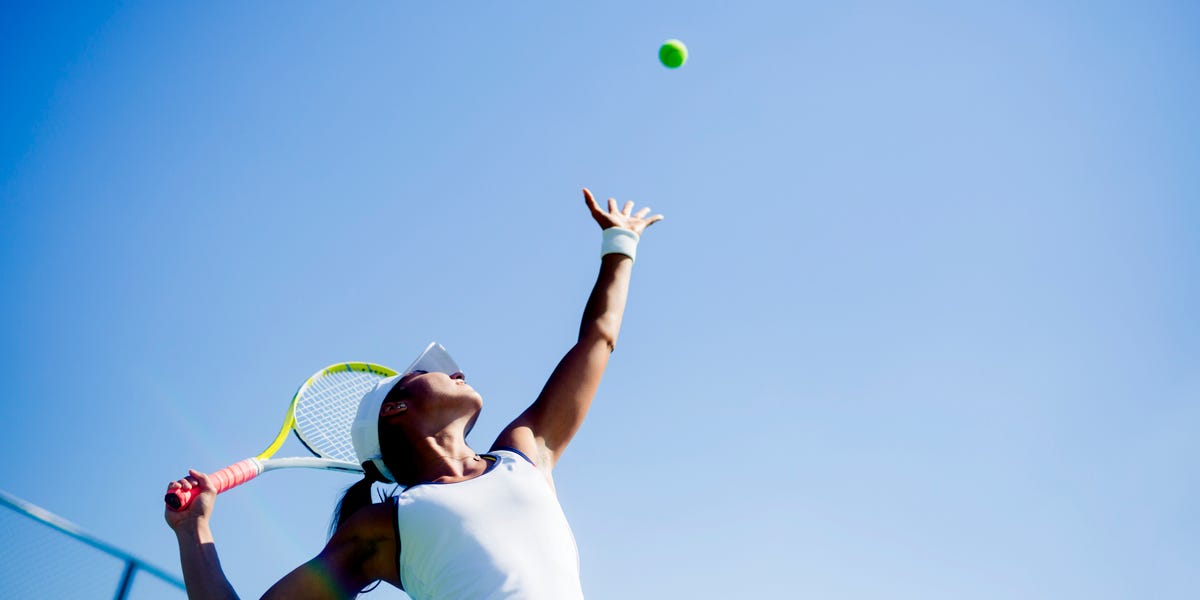
Science Says Racquet Sports Can Help You Live Longer, but It’s Not the Equipment That Matters—Here’s What Really Adds the Years
Full Article
Original Source
Read the full article at Womenshealthmag →KhanList aggregates and links to publicly available news content. We do not host full articles from third-party sources. Always verify important information with original sources.