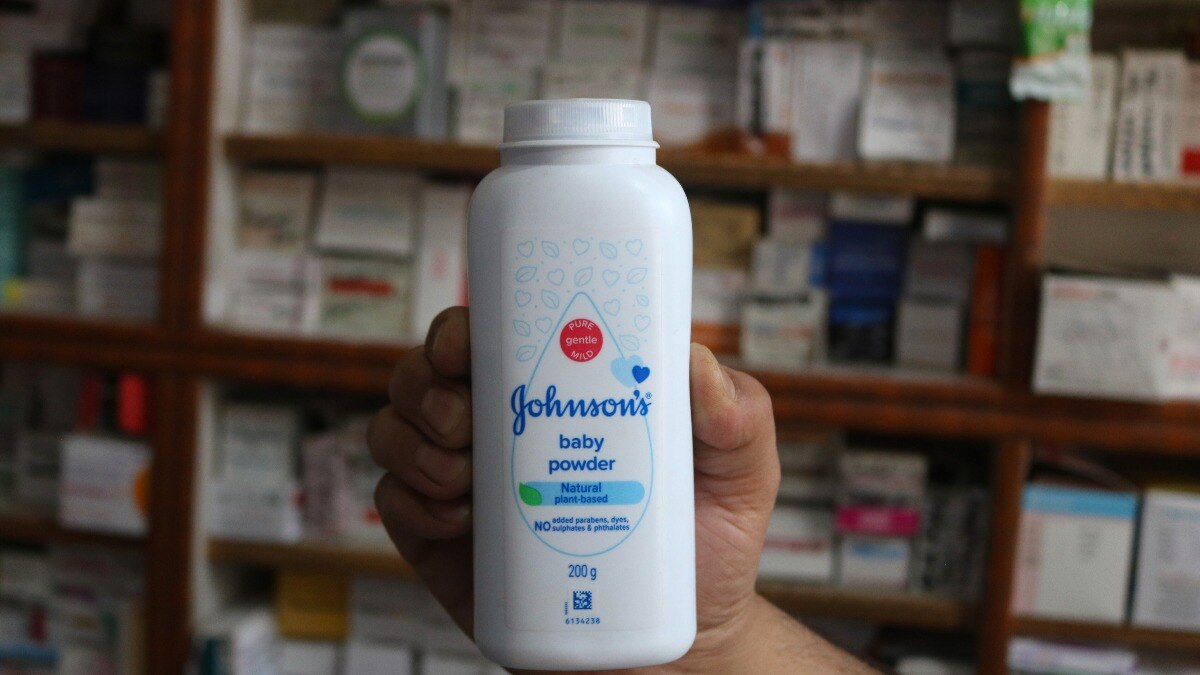
Johnson & Johnson has offered a fresh multibillion-dollar settlement to resolve lawsuits alleging its talc-based powders caused cancer. The renewed focus underscores the divide between asbestos-linked mesothelioma claims and contested ovarian cancer evidence.Johnson & Johnson's baby powder litigation has returned to the spotlight after the company offered a fresh multibillion-dollar settlement to resolve tens of thousands of lawsuits alleging that its talc-based products caused cancer.The legal battle, which has stretched for more than a decade, centres on two distinct cancer claims – mesothelioma (a rare and aggressive malignancy in the lungs) and ovarian cancer – with different scientific explanations and varying levels of evidence.While J&J has consistently maintained that its talc products are safe and do not cause cancer, the lawsuits and scientific debate have kept questions over talc's safety alive.The latest settlement proposal comes after years of litigation and repeated attempts by the company to resolve claims through bankruptcy-related mechanisms, many of which were rejected by US courts. Plaintiffs have alleged that prolonged use of J&J's talc-based powders led to cancer, while the company has denied any wrongdoing or causal link. Separately, J&J announced in 2022 that it would discontinue talc-based Johnson's Baby Powder globally during 2023 and switch entirely to cornstarch-based formulations, including in India.Currently, Johnson's baby powder sold in India uses cornstarch rather than talc.TWO CANCER CLAIMS Although often grouped together, the lawsuits involve two different cancers and two different scientific theories, pharma industry insiders explained.The first is mesothelioma, a rare cancer affecting the lining of the lungs and other organs. These cases are directly tied to asbestos exposure. Talc and asbestos occur naturally in proximity underground, meaning talc can become contaminated during mining if not carefully separated.Asbestos is a well-established human carcinogen, and exposure is known to cause mesothelioma. Plaintiffs in these lawsuits have argued that some talc-based powders contained asbestos contamination, exposing users over long periods.Internal company documents reported by Reuters earlier had alleged that some Johnson & Johnson talc products were found to contain traces of asbestos over several decades and that the company did not disclose this information to regulators or the public.J&J has disputed these allegations and has consistently maintained that its talc products were asbestos-free and met regulatory standards.The second and far larger group of lawsuits involves ovarian cancer. Here, the scientific debate is more complex. Some plaintiffs also argue that asbestos contamination may have contributed to cancer risk.Others contend that talc itself, even if free of asbestos, can migrate through the female reproductive tract after prolonged genital use, triggering chronic inflammation that may contribute to ovarian tumour development.EVIDENCE REMAINS MIXEDUnlike the established link between asbestos and mesothelioma, evidence connecting talc itself to ovarian cancer remains inconclusive.Over the past few decades, several observational studies have reported a small increase in ovarian cancer risk among women who regularly used talc powders in the genital area. However, other large studies and pooled analyses have failed to find a statistically significant association.Because ovarian cancer is relatively uncommon and many studies rely on participants recalling past product use, researchers have found it difficult to establish a definitive cause-and-effect relationship.Dr Niranjan Naik, vice chairman, surgical oncology, Paras Health, Gurugram, said the evidence on talc-based powders and ovarian cancer remains "mixed," with some studies suggesting a small increase in risk from long-term genital use, while other large analyses have found no clear association.He added that concerns also stem from the possibility that naturally occurring talc deposits can sometimes be contaminated with asbestos, a known carcinogen. Given the uncertainty, he said avoiding the routine application of any powder in the genital area and maintaining good intimate hygiene is a reasonable precaution.Scientific agencies have also drawn distinctions between asbestos-contaminated talc and talc itself. Asbestos is universally recognised as a human carcinogen.By contrast, the evidence on asbestos-free talc has remained the subject of ongoing scientific evaluation and debate, with no universal consensus that cosmetic talc directly causes ovarian cancer.India Today has reached out to J& J India for comments on the latest development. This copy will be updated if and when a reply is received.- EndsPublished On: Jul 29, 2026 13:51 IST
Science behind J&J baby powder's link with two cancers
Full Article
Original Source
Read the full article at Indiatoday →KhanList aggregates and links to publicly available news content. We do not host full articles from third-party sources. Always verify important information with original sources.