
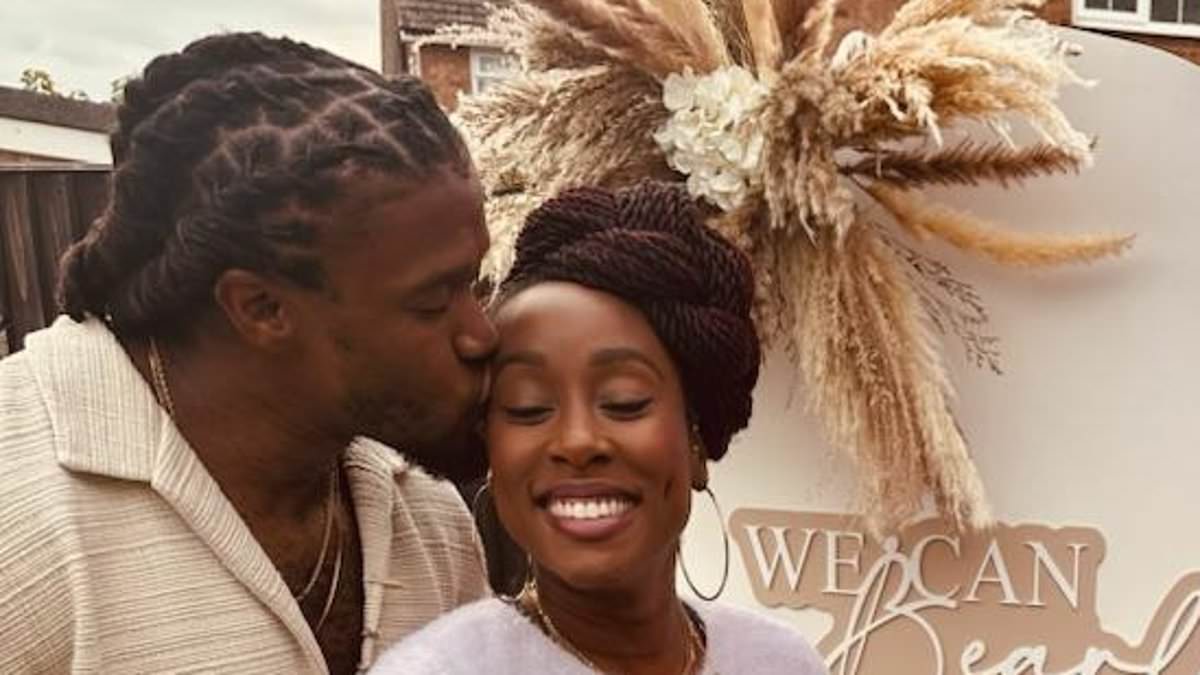
A Place In The Sun host Scarlette Douglas is expecting her first child with her fiancé Kyle Murray. The presenter, 39, announced the news in an Instagram post on Sunday, proudly showing off her bump in a crop top while Kyle planted a kiss on her cheek. She captioned the image: 'The exciting news is finally here! We’re over the moon to announce… We’re having a baby!!!!!!'Scarlette was inundated with well wishes from her followers, although many were surprised to hear the news given she had feared for her fertility not that long ago. In 2024, the presenter revealed she had frozen her eggs, explaining: 'I never thought I'd be 37 with no man, no husband, and no baby.' Yet in a whirlwind turn of events, Scarlette met fitness coach Kyle at the gym, got engaged in March this year and they are now preparing to expand their family. Scarlette Douglas is pregnant! A Place In The Sun host, 39, is expecting her first child with fiancé Kyle Murray two years after freezing her eggs because she was single and childlessJust this year, Scarlette spoke to the Daily Mail about her egg freezing journey, explaining she feared her career had got in the way of having children. She said in May: 'My career has been my baby. I've loved growing it and nurturing it. I've always felt, when am I gonna find the right time to settle down to have kids?'And I think a lot of the times, women can be made to feel guilty if they are working hard, and they're focusing on their career, but then also trying to be a mum. 'So, for me I would never want to not give my child everything, because I'm focusing on my career so much.'Egg freezing took the weight off of, I have to find a man right now because I'm getting older. 'And society tells you, if you've not had kids by the time you're 35, then forget it or be a geriatric mum.'But [egg freezing] did take a weight off of trying to find just anybody to have a child with, and also it took a weight off that I can focus on my career, and I can have a child later on in life.'Scarlette documented her egg freezing journey on Instagram, saying that she wanted to spread awareness because 'women, especially in the black community, don't talk about it.' She added: 'It's important for other women to know it's OK to freeze your eggs, do not be ashamed of it.'If you are older and you don't have a partner or have kids yet, it doesn't mean there's anything wrong with you, it just means that it hasn't been your time right now.' In 2024, the presenter revealed she had frozen her eggs, explaining: 'I never thought I'd be 37 with no man, no husband, and no baby'In March Scarlette was left in tears during a hospital visit amid her ongoing fertility journey.The star took to Instagram and told how she was in hospital for an egg-retrieval procedure that left her feeling emotional.She told her followers: 'Well, I'm going to be honest, I was very uncomfortable going in today ladies.'The trigger injection really did exacerbate the bloating and lower abdominal pain and the closer it was getting to my egg retrieval the more uncomfortable I was becoming. I had to sit on my left side for most of the day!'Scarlette told how she became teary ahead of the procedure because no one could accompany her.She wrote: 'Everything was explained thoroughly and I felt in good hands. I did shed a little tear just before the sedation went in, mainly because I was scared and nervous, but also because you have to do it all on your own; no one can come in with you.'Anyway, best sleep I’ve ever had, came out, was in pain so they gave me some more pain relief, hung around for roughly an hour and a half afterwards and just as I was ready to leave the recovery room, I was told of my 24 eggs that were collected, 19 were viable for freezing!!!!! I was over the moon!'That was more than I could have ever imagined and so I was and am so so happy that, to this point, it has all been worth it.'What is egg freezing? How much does it cost? And is it safe? Everything you need to know about the procedure What does it involve? An initial evaluation with a fertility specialist will likely involve blood tests, a pelvic ultrasound scan and a discussion of your medical history.If you proceed with egg freezing, the first stage of the process, known as 'ovarian stimulation', will start. This involves hormone injections to stimulate the ovaries to produce multiple eggs rather than the one egg that is typically and naturally released each month. This treatment entails multiple visits to the fertility clinic over a few weeks, with your blood hormone levels and ovaries regularly monitored.When the time is right for them to come out, a medical professional will use an ultrasound guided needle and, with a suction device, remove the eggs — seven to 14, on average, for women aged under 38 — from the ovarian follicles.The extracted eggs will be transported into the laboratory, evaluated, and flash-frozen by an embryologist — using an ultra-rapid procedure called vitrification — and then typically placed into a flask containing liquid nitrogen. Storage at very cold temperatures, below -150C (-238F), allows the eggs to remain viable for use at a later date.When you want to use them, the eggs will be thawed and those that have survived intact will be injected with your partner's or donor's sperm.How long can eggs be stored?Women in the UK can now store their frozen eggs for up to 55 years. This rule, which also applies to sperm and embryos, has been in place since July 2022, when the duration increased from the previous 10-year limit. However, women will need to renew their consent for a clinic storing their eggs every 10 years.And those who frozen their eggs before July 2022 and want them to be stored for longer than 10 years need to contact their clinic to see if it is possible.How much does it cost?The entire processes from freezing eggs to thawing in the UK costs £7,000 to £8,000, on average.While having your eggs collected and frozen will clock up a bill of around £3,350, this is just one part of the process. Hormonal medication that needs to be taken to stimulate egg production before the procedure costs approximately £500-£1,500 on top of that. Storage costs are extra and vary between clinics but tend to be between £125 and £350 per year, according to HFEA and Royal College of Obstetricians and Gynaecologists. Thawing eggs and transferring them to the womb costs an average of £2,500. Which clinics offer egg freezing? The HFEA is responsible for licensing and inspecting UK fertility clinics, and they publish scores for each fertility clinic inspected. Available licensed UK clinics can be found on the HFEA website by entering a postcode. How safe is the procedure? According to the HFEA, IVF is 'mostly very safe'. Some women however do experience side effects from their fertility drugs.These are usually mild, but in extreme cases women can develop ovarian hyperstimulation syndrome (OHSS), a potentially serious complication of fertility treatment. It can range from mild to severe, the Royal College of Obstetricians and Gynaecologists say. Mild OHSS is common and usually gets better with time. More severe cases require specialist care and hospital admission.Key symptoms of OHSS to be aware of include mild abdominal swelling, discomfort and nausea in mild cases. Severe OHSS signs involve extreme thirst and dehydration. A serious, but rare, complication is also formation of a blood clot - thrombosis - in the legs or lungs.How successful is it?Egg freezing should be considered an insurance policy rather than a guarantee, according to embryologists. Success rates are largely dependent on the woman's age when they are frozen, but experts say what also matters is the total number of eggs available for use. Just like when utilising fresh eggs, not every egg will fertilise, not every fertilised egg will result in a viable embryo, and not every viable embryo will lead to a live birth. One US study found that the chance of a live birth among women using their own frozen eggs was 39 per cent overall.This rose to 51 per cent among those who were younger than 38 when they froze their eggs.
Scarlette Douglas is pregnant! A Place In The Sun host, 39, is expecting her first child with fiancé Kyle Murray two years after freezing her eggs because she was single and childless
Full Article
Original Source
Read the full article at Dailymail →KhanList aggregates and links to publicly available news content. We do not host full articles from third-party sources. Always verify important information with original sources.