
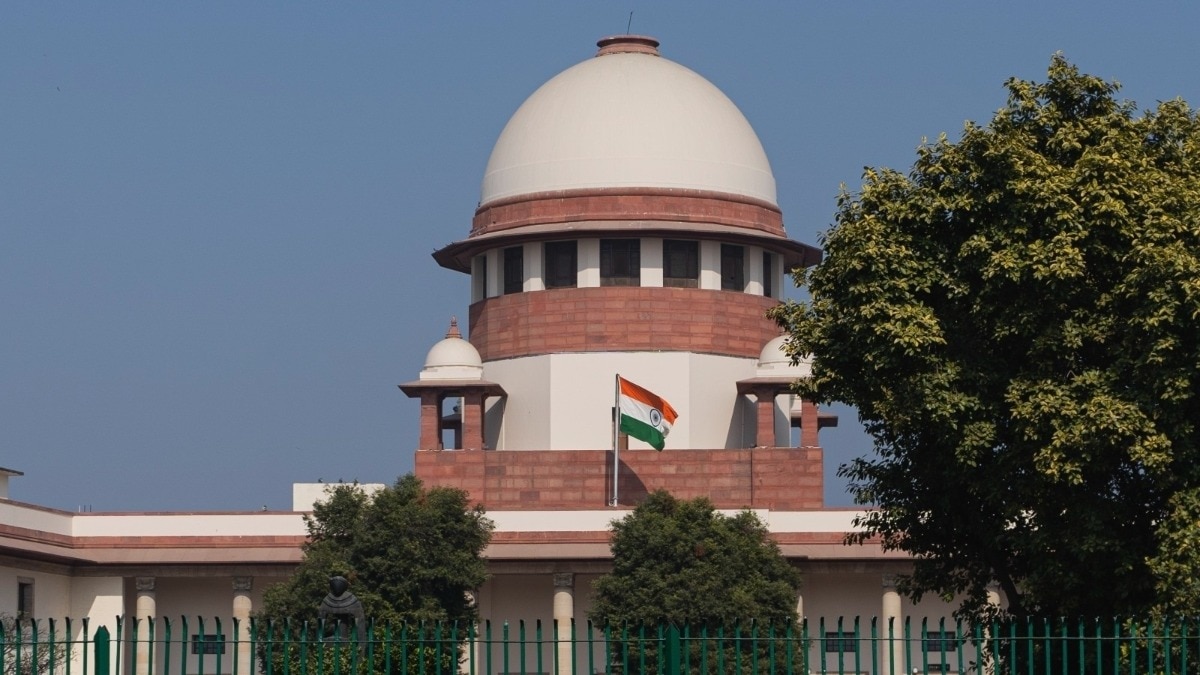
The Supreme Court has questioned State compliance reports on menstrual hygiene facilities in schools and ordered surprise inspections. It has also asked States and UTs to spell out existing gaps, causes and timelines for fixing them.To assess the situation on the ground, the court directed District Education Officers (DEOs) to form teams of teachers to conduct surprise inspections of schools across their respective districts (File Photo: ITG)The Supreme Court has expressed dissatisfaction with the manner in which States and Union Territories have reported compliance with its directions on menstrual hygiene facilities in schools, saying some responses appeared to be a mere formality and did not adequately reflect the situation on the ground.A bench of Justices JB Pardiwala and R Mahadevan was monitoring compliance with its directions in the Jaya Thakur v Government of India case when it examined the latest reports submitted by the Centre and the States and UTs. The court said that while substantial progress had been made, more needed to be done to make the right to menstrual health meaningful for schoolgirls.SC FLAGS DISCREPANCIES IN STATE REPORTSAccording to the Union government's affidavit, 39,439 girls' toilets had earlier been identified as needing to be made functional. Of these, 30,458 had been constructed, 4,236 were under construction and 4,745 remained as a gap.The court, however, found discrepancies between some States' claims of complete or near-complete compliance and the data they had submitted. For instance, several States reported saturation in toilet facilities despite having fewer toilets accessible to children with special needs than their total number of schools. The court also flagged discrepancies in handwashing facility data submitted by Assam and questioned Tamil Nadu's claim of saturation of gender-segregated toilets.Similar discrepancies were found in data relating to sanitary-napkin vending machines and distribution in Karnataka, Jammu and Kashmir, Odisha and Arunachal Pradesh. The court also flagged gaps in sanitary-waste disposal data submitted by Bihar, Gujarat, Delhi, Jharkhand, Rajasthan and Uttar Pradesh. The Punjab report, meanwhile, was found to be illegible.STATES ASKED TO REPORT GAPS, NOT JUST ACHIEVEMENTSThe Supreme Court has now changed the manner in which States and UTs will have to submit their compliance reports.Instead of merely stating what facilities have been provided, future reports will have to identify the number of schools that still lack functional gender-segregated toilets, usable water connectivity, accessibility and privacy, menstrual absorbents and functional waste-disposal systems.States will also have to specify the reasons behind each gap and the time required to bridge it.The court said authorities should be particularly vigilant about the needs of children with disabilities and ensure that school infrastructure is accessible to them.SURPRISE INSPECTIONS ORDERED ACROSS DISTRICTSTo assess the situation on the ground, the court directed District Education Officers (DEOs) to form teams of teachers to conduct surprise inspections of schools across their respective districts.The inspections will examine compliance with the directions issued by the court, including the availability of toilets, water, menstrual absorbents, waste-disposal facilities and menstrual hygiene management measures.States and UTs have also been directed to place on record the findings of these inspections and feedback received from students.SC CHANGES SANITARY-NAPKIN REQUIREMENTThe Supreme Court also modified its earlier requirement concerning the type of sanitary napkins to be provided free of cost in schools.The earlier requirement for oxo-biodegradable sanitary napkins complying with ASTM D-6954 standards has been replaced with a requirement for biodegradable, biocompatible and compostable sanitary napkins complying with ISO 17088 read with IS 5405 standards.The court referred to materials such as bamboo, jute, banana, starch and corn as possible sources for biodegradable and compostable sanitary products. It also encouraged States to gradually move towards more environmentally sustainable menstrual absorbents, including reusable sanitary napkins, menstrual cups and period underwear.The latest proceedings stem from the Supreme Court's directions in Jaya Thakur v Government of India, concerning implementation of the national Menstrual Hygiene Policy for School-going Girls.The directions cover adolescent girls in Classes 6 to 12 and require States and UTs to ensure functional gender-segregated toilets with usable water connectivity in government as well as private schools, along with washing facilities, soap and water.The court had also directed schools to provide sanitary napkins free of cost and establish menstrual hygiene management corners with emergency supplies such as spare innerwear, uniforms and disposable pads.The matter is next listed before the Supreme Court on September 29, 2026.- EndsPublished By: Mridusmita DekaPublished On: Sep 17, 2026 13:44 IST
SC flags gaps in menstrual hygiene facilities, orders surprise school inspections
Full Article
Original Source
Read the full article at Indiatoday →KhanList aggregates and links to publicly available news content. We do not host full articles from third-party sources. Always verify important information with original sources.