
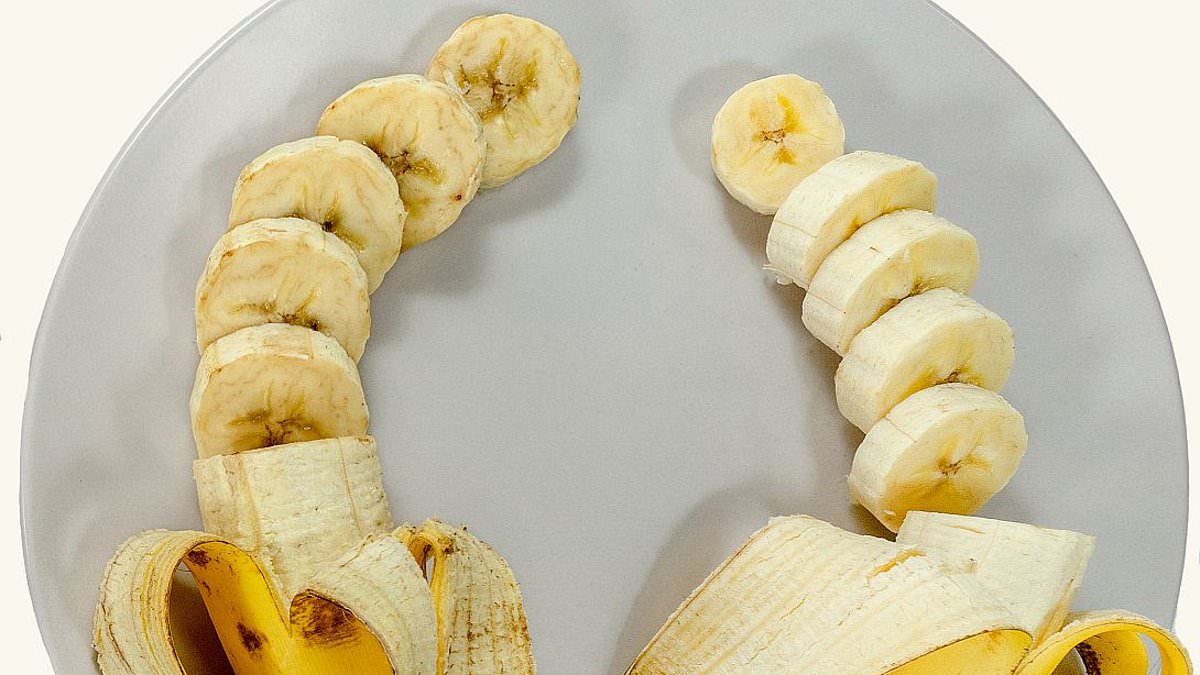
Published: 05:09 EDT, 28 September 2026 | Updated: 05:13 EDT, 28 September 2026 For many people, there's only a tiny window between a banana being too green to eat and too brown to tempt anyone.But scientists now believe they have solved the problem, developing a gene–edited variety that stays fresher for longer.Experts at Tropic Biosciences, a UK company based in Norfolk, used a technique known as CRISPR–Cas9 to edit three genes that cause the fruit to brown.The changes stop the plant from producing an enzyme called polyphenol oxidase (PPO) which drives the browning process.Turning off the enzyme means the bananas will last for up to a day once they have been peeled or cut – making them easier to use in dishes such as fruit salads, smoothies and banoffee pie.This variety has now reached the final approval stage before it can be legally sold to the public. And, if given the green light, they could soon be available in your local supermarket. The new variety of banana (right) lasts longer and does not brown as easily as traditional varieties (left)The notice, published by the Department for Environment, Food and Rural Affairs (DEFRA), states that around 20 per cent of bananas are discarded due to browning.'The process of enzymatic browning can affect fruit appearance, taste and texture and can result in significant losses of banana fruit yields,' it reads.Figures suggest around a million bananas are thrown away every day in the UK because they ripen so quickly.The notice explains that the new gene–edited variety 'is intended for import, retail and consumption purposes akin to conventional banana fruit'.The genetic tweaks are also thought to make the bananas better able to withstand any bumps or bruises en route to shops.The plant will be allowed to be sold legally in England if Tropic submits the bananas to the Food Standards Agency for the usual food safety checks.Earlier this year, the bananas were given regulatory approval to be sold in Japan and Brazil.'Tropic's non–browning banana introduces a game–changing attribute: it stays fresh, yellow and appetising long after peeling and slicing,' the company said.'Launched commercially in 2025, Tropic's non–browning banana was the world's first new banana variety in more than 75 years, delivering the same taste and texture consumers expect while remaining fresh for longer after cutting. Scientists used a technique known as CRISPR–Cas9 to edit three genes that cause the fruit to brown'By reducing spoilage and extending usability, the variety supports new retail opportunities, more efficient distribution and lowers the environmental footprint of banana consumption.'Gene editing involves making small, specific changes to the existing DNA of a product, or removing a section of DNA.The process differs from genetic modification, which adds new genes to a crop.Earlier this year scientists announced they had tweaked the DNA of the strawberry plant, keeping them in season for longer.Increasing the availability of British strawberries would reduce reliance on imports from Spain, Morocco and Egypt during the cooler winter months.Gene–edited tomatoes, which contain as much Vitamin D as two eggs or 28g tuna, are also up for review with DEFRA.Meanwhile researchers say they have bred cows with 'elite genetics' that could see tastier steaks, burgers and mince on supermarket shelves in the UK in just three years.WHAT IS CRISPR-CAS9?Crispr-Cas9 is a tool for making precise edits in DNA, discovered in bacteria.The acronym stands for 'Clustered Regularly Inter-Spaced Palindromic Repeats'.The technique involves a DNA cutting enzyme and a small tag which tells the enzyme where to cut. The CRISPR/Cas9 technique uses tags which identify the location of the mutation, and an enzyme, which acts as tiny scissors, to cut DNA in a precise place, allowing small portions of a gene to be removedBy editing this tag, scientists are able to target the enzyme to specific regions of DNA and make precise cuts, wherever they like.It has been used to 'silence' genes - effectively switching them off.When cellular machinery repairs the DNA break, it removes a small snip of DNA.In this way, researchers can precisely turn off specific genes in the genome.The approach has been used previously to edit the HBB gene responsible for a condition called β-thalassaemia.
Say goodbye to brown bananas! Gene-edited fruits could soon be sold in UK supermarkets
Full Article
Original Source
Read the full article at Dailymail →KhanList aggregates and links to publicly available news content. We do not host full articles from third-party sources. Always verify important information with original sources.