
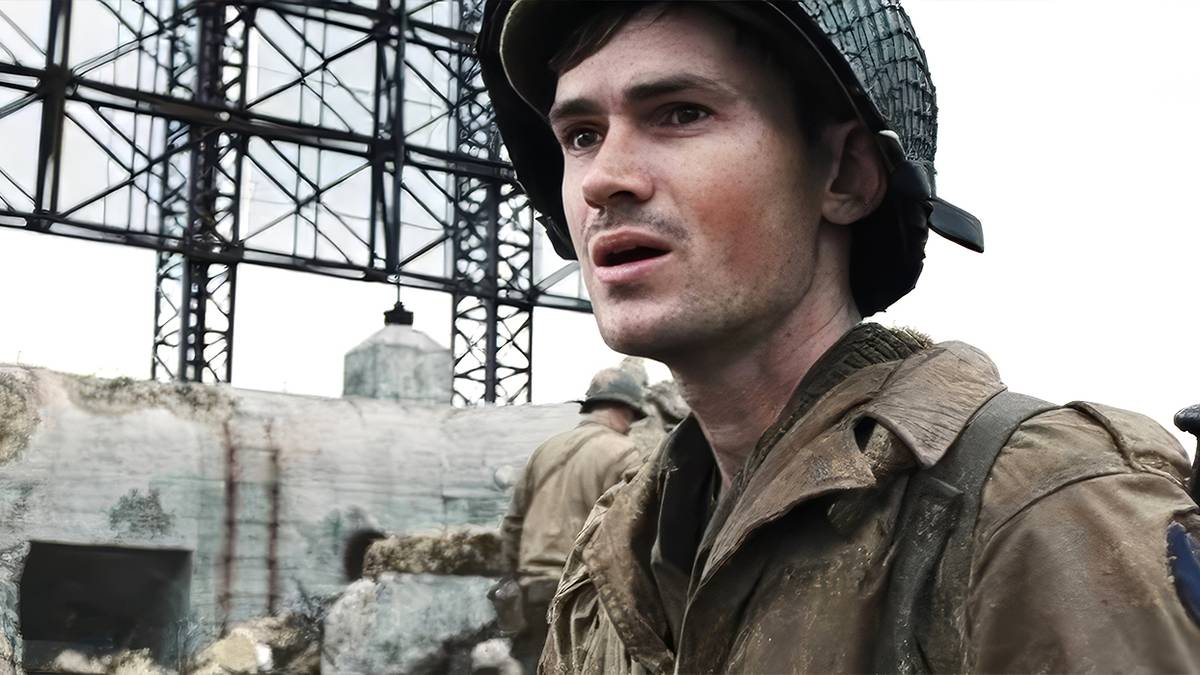
28 Years Later, the Greatest WWII Movie's Final Quote Still Officially Defines the Genre Image via Paramount Pictures Published Nov 5, 2026, 5:04 AM EST Thomas Butt is a senior writer. An avid film connoisseur, Thomas actively logs his film consumption on Letterboxd and vows to connect with many more cinephiles through the platform. He is immensely passionate about the work of Martin Scorsese, John Ford, and Albert Brooks. His work can be read on Collider and Taste of Cinema. He also writes for his own blog, The Empty Theater, on Substack. He is also a big fan of courtroom dramas and DVD commentary tracks. For Thomas, movie theaters are a second home. A native of Wakefield, MA, he is often found scrolling through the scheduled programming on Turner Classic Movies and making more room for his physical media collection. Thomas habitually increases his watchlist and jumps down a YouTube rabbit hole of archived interviews with directors and actors. He is inspired to write about film to uphold the medium's artistic value and to express his undying love for the art form. Thomas looks to cinema as an outlet to better understand the world, human emotions, and himself. As a pure artistic object, Saving Private Ryan certainly remains the most influential World War II movie in Hollywood history, regardless of personal taste. While Steven Spielberg helped shape many facets of pop culture, his most remarkable accomplishment may be cementing the public’s image of WWII, including the troops who stormed the beaches on D-Day, the championing of the Greatest Generation, and the unyielding patriotism that has helped give this dark period a glossy hue. Visually, thematically, and emotionally, Saving Private Ryan established the iconography of the global conflict in the 1940s between the Allies and the Axis Powers. Being such a touchstone for American history, the film allows Spielberg to deploy his signature sentimentality, but even for its most devout fans, its final line may still be a tad treacly. "Tell me I'm a good man," an elder Private James Ryan (Harrison Young) implores to his wife at the gravesite of Captain John Miller (Tom Hanks), in a line worthy of eye rolls from cynics. But deep down, it speaks to the pathos of the Greatest Generation. 'Saving Private Ryan' Explores the Human Value of War Image via DreamWorks Pictures Perhaps the most unexpected twist in Saving Private Ryan comes from the fact that the old man in the present-day-set prologue is not Captain Miller, but rather Private James Ryan (Matt Damon), who embraced the Captain in his final moments and heard his last words, "Earn this." This line in itself is worthy of deep analysis as an interpretation of what it means to be a proper American who fights for their country. After the climactic battle, the film returns to the present day, where an overwhelmed Ryan, reflecting on Miller's last words and his rescue mission, turns to his wife and makes a simple but heavy request of her. "Tell me I'm a good man," he says, in a heart-wrenching moment that Spielberg, cinematographer Janusz Kamiński, and composer John Williams amplify through their respective crafts. For many, this moment is inexcusably saccharine, and it reflects Spielberg's inability to refrain from tugging at our heartstrings, which reads as especially cloying for a gritty and horrifying portrait of war and not E.T. the Extra Terrestrial. Rather than sitting with Ryan's trauma, Spielberg uses this ending to construct a sweeping statement about the honor and legacy of those who fought in WWII. Despite its unsubtle execution, Spielberg interrogates the worth of combat from a veteran's perspective, as Ryan's PTSD could understandably cause him to forget why anyone was there on the beaches of Normandy and risking their lives. Soldiers witnessed so much bloodshed and chaos that they need to be reminded that their souls haven't corroded. 'Saving Private Ryan's Final Line Reflects America's Longing for Validation However, beneath the obvious emotional manipulation and last gasp of jingoism lies a scathing indictment of the Greatest Generation and Americans' lack of self-fulfillment. As with many of Spielberg's emotional beats, often labeled cheaply sentimental (the misunderstood ending of A.I. Artificial Intelligence most notably), "Tell me I'm a good man" represents something more poignant than what's on the surface. 50 years prior, Private James Ryan was the focus of a risky, unpopular rescue mission. After the squad's initial frustrations over saving a lone soldier in a conflict that caused the death of hundreds of thousands of Americans, they learned the value of human life and revered Ryan and his uphill battle. Even after being saved and admired as a surrogate son by Captain Miller, Ryan still carries a sense of insecurity and doubt about his worth. It's natural for someone to believe that they are a burden, and that is surely amplified for the elderly veteran visiting the WWII memorial. When recounting the memories of that fabled meeting with Miller, Ryan is in demand of personal validation from his loved ones. No matter how hard America plays the rah-rah jingoistic hits, the people on the battlefield still need assurance that what they did was noble. American culture celebrates WWII as a necessary, triumphant defeat against the Nazis, but for Ryan, combat never felt like a clear battle between good and evil. This kind of need for emotional fulfillment, despite insisting that they are not swayed by these feelings, is essential to the American male experience. Saving Private Ryan honors the Greatest Generation, but it's not afraid to reveal its people's repressed vulnerability. A longing for validation would follow with the Greatest Generation's progeny, and the sense that American men are generally unhappy, regardless of their success, is more relevant than ever today. Private James Ryan needs direct confirmation of his morality, as losing all your siblings in a war makes you lose sight of what's proper in the world. Release Date July 24, 1998 Runtime 169 minutes Director Steven Spielberg Following the Normandy Landings, a group of U.S. soldiers go behind enemy lines to retrieve a paratrooper whose brothers have been killed in action.
’Saving Private Ryan’s Final Quote Still Officially Defines WWII Movies 28 Years Later
Full Article
Original Source
Read the full article at Collider →KhanList aggregates and links to publicly available news content. We do not host full articles from third-party sources. Always verify important information with original sources.